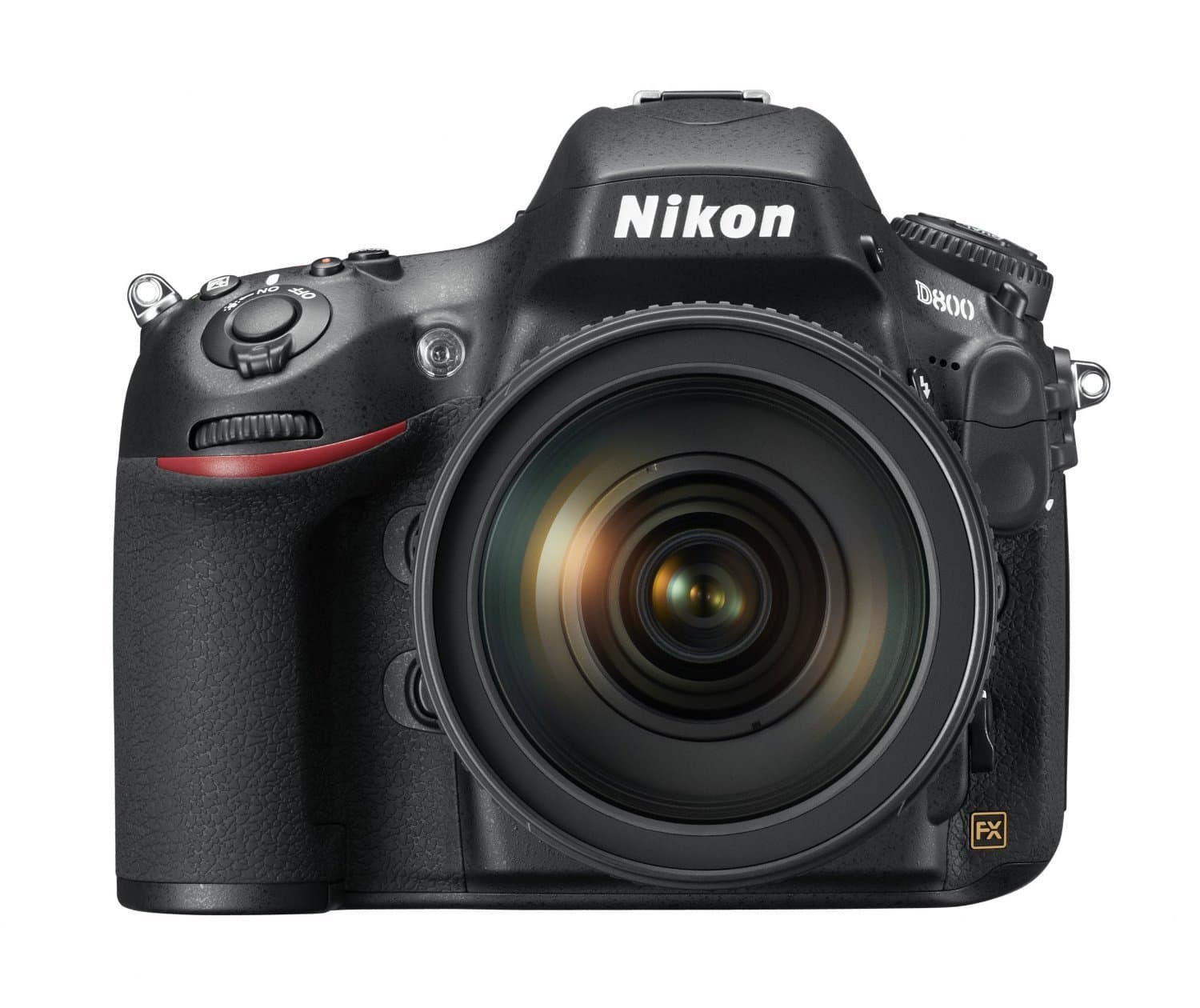
🚀 Elevate your craft with the Nikon D800 — where every pixel tells a story.
The Nikon D800 is a professional-grade full-frame DSLR featuring a 36.3MP FX-format CMOS sensor, advanced 51-point autofocus system, and Full HD 1080p video recording. Designed for photographers and multimedia pros demanding exceptional image quality, it offers intelligent Auto ISO with focal length-based shutter speed control, a rugged magnesium alloy body with weather sealing, and a bright 3.2-inch high-resolution LCD. Ideal for studio, commercial, and landscape photography, the D800 balances cutting-edge performance with versatile operation to unlock creative potential.
| ASIN | B0076AYNXM |
| Age Range Description | Adult |
| Are Batteries Included | Yes |
| Aspect Ratio | 1.30:1 |
| Auto Focus Technology | Continuous, Face Detection, Live View, Multi-area, Phase Detection, Selective single-point, Single, Tracking |
| Autofocus | Yes |
| Autofocus Points | 51 |
| Best Sellers Rank | #168,764 in Electronics ( See Top 100 in Electronics ) #258 in DSLR Cameras |
| Bit Depth | 16 Bit |
| Brand | Nikon |
| Built-In Media | Battery, Body Cap, Instruction Manual, USB Cable |
| Camera Flash | Hot Shoe, PC Terminal |
| Camera Lens | Lens not included; Nikon F-mount accommodates a wide range of AF lenses |
| Color | Black |
| Compatible Devices | Nikon F (FX) mount devices |
| Compatible Mountings | Nikon F (FX) |
| Connectivity Technology | HDMI, USB |
| Continuous Shooting | 6 |
| Crop Mode | 1.30:1 |
| Customer Reviews | 4.4 out of 5 stars 542 Reviews |
| Digital-Still | Yes |
| Display Fixture Type | Fixed |
| Display Resolution Maximum | 921,000 |
| Display Type | LCD |
| Effective Still Resolution | 36.3 MP |
| Expanded ISO Minimum | 100 |
| Exposure Control | Aperture priority (A), Automatic, Manual, Shutter-priority (S) |
| File Format | NEF (RAW): 12 or 14 bit, lossless compressed, compressed or uncompressed, TIFF (RGB), JPEG |
| Flash Memory Type | Compact Flash (Type I), SD/SDHC/SDXC UHS-I compliant |
| Flash Memory Video Speed Class | V30 |
| Flash Modes | First-Curtain Sync, Auto, Red-Eye Reduction, Second-Curtain Sync, Slow Sync, Slow Sync/Red-Eye Reduction |
| Focal Length Description | 300 millimeters |
| Focus Features | Multi-CAM3500 FX Phase detection with 3D tracking |
| Focus Mode | Manual Focus (MF) |
| Focus Type | Automatic with Manual |
| Form Factor | Mid-size SLR |
| Global Trade Identification Number | 04960759134653 |
| HDMI Type | Type C Mini HDMI |
| Hardware Interface | USB |
| Has Color Screen | Yes |
| Has Self-Timer | Yes |
| ISO Range | 100 - 6400 in 1, 1/2 or 1/3 EV steps (50 - 25600 with boost) |
| Image Capture Type | Stills & Video |
| Image stabilization | Digital, Dynamic, Optical |
| Item Weight | 1 Grams |
| JPEG Quality Level | Basic, Fine, Normal |
| Lens Type | Nikon F-mount |
| Light Sensitivity | ISO 50 - 25600 |
| Manufacturer | Nikon |
| Maximum Aperture | 3.5 Millimeters |
| Maximum Focal Length | 300 Millimeters |
| Maximum Image Size | 6.3 Inches |
| Maximum Shutter Speed | 1/8000 Seconds |
| Memory Slots Available | 1 CompactFlash© (CF) card and 1 Secure Digital (SD) card |
| Memory Storage Capacity | 4 GB |
| Metering Methods | Multi, Center-weighted, Average, Spot |
| Minimum Focal Length | 55 Millimeters |
| Minimum Shutter Speed | 30 seconds |
| Model Name | Nikon D800 |
| Model Number | 25480 |
| Model Series | D800 |
| Movie Mode | Yes |
| Night vision | No |
| Optical Zoom | 1 x |
| Photo Sensor Resolution | 36.3 MP |
| Photo Sensor Size | Full Frame |
| Real Angle Of View | 0.39 Degrees |
| Recording Capacity | 6 Minutes |
| Remote Included | No |
| Screen Size | 3.2 Inches |
| Self Timer | 10 Seconds |
| Sensor Type | CMOS |
| Shooting Modes | High dynamic rang |
| Skill Level | Professional |
| Special Feature | 921,000-dot TFT-LCD with 170° wide-angle viewing |
| Specific Uses For Product | Photography |
| Supported Image Format | NEF (RAW), TIFF (RGB), JPEG, NEF (RAW)+JPEG |
| Supported Media Type | ProductImage |
| Total Still Resolution | 36.3 MP |
| Total USB 3.0 Ports | 1 |
| Total USB Ports | 1 |
| Total Video Out Ports | 1 |
| UPC | 018208922062 018208254804 |
| Video Output | HDMI |
| Video Resolution | FHD 1080p |
| Viewfinder | Optical |
| White Balance Settings | Auto |
| Write Speed | 6 fps |
| Zoom | manual |
J**L
A review without the same info over and over...
I am not going to give a full review of this camera since it is likely you are already well aware of much of what is out there. That being said, there are a few things I have noticed which there don't seem to be much feedback on which I would like to highlight. For point of reference I am coming from a D700 and have many of the high end FX lenses. One of the absolute best improvements (aside from obvious things like resolution, improved DR etc.) is the Auto ISO feature. Am I the only one who loved this on my D700 and love it even more on the D800? Nikon has tweaked the min shutter speed setting on this so it is a little more intelligent. Instead of just saying 1/50 or whatever you want as the min (this would be a decent setting for a wide lens) the D800 takes it 1 step further and allows it to float relative to the focal length. In other words 1/50 with a 200mm lens might be a little low in my opinion but the D800 will set it to 1/200 (following the 1/ FL rule). Furthermore, you can tell the camera to set it faster or slower (there are 5 levels with the mid setting as 1/FL) so the same 200mm lens will have some multiple (or fraction) applied to this as well. I like the one step up setting so my 200mm lens never shoots with a shutter less than 1/400. This makes it so much easier on longer length lenses and especially zooms like the 70 - 200 where you might jump around and going back into the menu is a pain to set the min shutter each time... Call me lazy but I love this feature - great addition. EDIT: After shooting 2,000 shots or so with the D800 (and especially with any longer non-VR lenses) I see why this feature has been added... With the D700 the 1/FL rule seemed to work just fine, especially with VR equipped lenses (most non caffeine junkies can get away with far less). With the D800 this rule just doesn't work as well and will produce mixed results. With a D700 and my 24-70 I would shoot at ISO 100, 50mm and 1/50s all day long. On the D800 I have found it is better to go to 1/100 or even a little higher with ISO 200 or higher - the ISO change is a lot less noticeable than the increase in sharpness due to the shutter. With the 14-24 this "new" rule (haven't decided yet if the new rule should 1/2*FL or 1/3*FL) isn't too hard to follow but with the 70-200 I find myself pushing the ISO frequently of changing the setting down a bit due to the presence of VR (I use the VRII model). I honestly would not have guessed that the increase in MP would require this much of a change in technique but it does. Of course you can always downsample and still be better off than where you were with the D700 so don't take this as a negative to the camera - just a required change in technique in my opinion. When I first wrote this review I loved the new feature and I still do now but there is one change they now need to make: Recognize VR equipped lenses and allow conditional rules such as 1/2*FL with VR and 1/3*FL without. None the less I just change the setting in "my menu" when I use a 16-35VR or 70-200VR (although the longer one can sometimes benefit from just leaving it) and the end result is the same but Nikon made it 90% of the way on the new feature, why not round it out. I did also pick up a grip and use rechargeable AAs simply to add weight & this also helps but D800 + grip + 8 rechargeable AAs + 70-200 is not something I walk around with for hours on end. Other more minor comments: - This is less about Nikon as it is about Adobe but it caught me off guard: LR3 will not read D800 RAW files nor will it ever! You either have to use a converter (add more workflow steps which is unacceptable in my opinion) or upgrade to LR4. I suppose I can see both sides but it is annoying to say the least. Adobe should really support this in LR3. It made me want to use Aperature instead but I also use PCs so that is just a pain. - Built in HDR is a joke. Any respectable HDR shooter will bracket with at least 5 frames and likely use Photomatrix or something similar. It also does not work if you shoot RAW - only JPG and only 2 images hence the joke. Your probably not buying the camera for this anyway. - The quiet mode is also useless. Fractionally less noisy than the std and a waste of a spot on the dial. - The + / - on the image zoom is backwards from the D700. Just takes some getting used to... - Folks, it is a 36mp sensor; you will need a bigger drive and 16GB cards barely scrape by now. I am finding 14 bit lossless compression files in the 50mb range - directly after a format the camera reads 200 available images on the 16GB card. A 2GB card is like an old roll of film now for 25 "exposures" LOL. I get that wedding shooters are going to need a lot more bigger drives but you can't have more detail without more space... Yes, people say you can downscale but this poses a serious workflow bottleneck for me. I have also found that in addition to more drive space working with these large files, particularly in PS & HDR SW with a dated dual-core 2.4GHz CPU and 4 gigs of ram in 32 bit mode requires patience. I hate waiting. EDIT: I have underestimated the PC side of the equation on this camera upgrade. I had to buy a new computer with a lot more muscle to handle a 7 or 9 image RAW stack to be sent to Photomatrix. These get really big and processor hungry. I got a PC with dual quad core (8 total) 3.2GHz XEONs and 16GB of RAM. The processors are far more important than the RAM I have found so get a faster processor and 8GB if you must to save $. It costs as much as a nice lens or even a bit more but keep in mind it is used for every image I take... Worth the upgrade in my mind and something to consider if you have an aging PC / Mac. - 100% viewfinder vs 95% on the D700 doesn't sound like much but it is really a welcome improvement. - I have now started buying SD cards to compliment the CFs I already used with my D700. For whatever reason tests I have done on my computer show I am getting faster write speeds out of a 60mb/s Sandisk EX Pro CF card than I get out of a 95mb/s Sandisk Extreme Pro SD card. Same manufacturer but the CF cards just seem to be faster. They are also more expensive - go figure. - I have never owned a D7000 but I hear the auto focus settings (selecting) are the same on the D800. It is way different than the D700 and took me 10 minutes just to figure out how to adjust from AF-S to AF-C. Hint: it is on the front (the side button) to the left of the lens when looking thru the viewfinder. - It has been said before but the fact that this thing has similar high ISO performance compared to the D700 with 3x the resolution deserves a slow clap from Nikon. Really, impressive. I have no issue with using ISO 1600 in auto ISO mode and for certain types of shots see little downside to 3200 unless you are seriously pixel peeping. - Their product launch and way they rolled this out and so dramatically underestimated demand is the exact opposite. Once you have one (a good one without some of the early mfg issues) though you seem to forget all the frustration of the wait. These are just the initial impressions since I have only had the camera for a week or so and shot < 1,000 images. So far very impressed thou and would do it again in a heartbeat. Lastly, in case you are also wondering, I have since cold my D700. Given it still has amazing value I just could not justify it as a backup body and there were few if any advantages that I could really see. I can see wedding photographers scooping these up though as they are a great balance of performance and file size if you are getting into the 4 digit file counts per shoot.
K**D
Great camera! Please do not pixel peep
Let me first state that this camera will not make you a better photographer. Not even close. It may even make you a worse photographer. Why? because the hand shaking that was forgivable before will now be more evident at 100% zoom. Wait, why are you pixel peeping a 36MP camera? For pixel peepers, avoid this camera at all cost! I'll explain more below. The beauty of a high megapixel camera is that it makes your pictures better at the same megapixel size as your last camera! Let me explain this, for most lens, sharpness differences can be viewed at 100% zoom. Unless you print at gigantic 36MP, which only a very small percentage of pros will be using, it's moot. Now, when you downsize a picture, the pixels are interpolated. Lens that were previously unacceptable at 12MP all of a sudden look pretty decent at 12MP downsized from 36MP! For example, a picture that was taken with slight motion blur at 100% pixel peep will disappear when I re-size it to 12MP. That's the thing, most will not print a 36MP picture at 36MP! You will have to resize it to make prints! It's pretty insane to upload 36MP JPEGS to make 4x6 prints anyway. Although someday, I will hang a 36MP picture on my wall. So what's the purpose of getting a 36MP? First, high ISO noise will be interpolated out of existence when downsized. Second, blurriness will be sharpened out of existence when downsized. Third, your not so sharp lens at 100% will look pretty darn good downsized. You need to compare the pictures produced at the printed size and not at 100% zoom! If you take a picture of your face and zoom in at 100%, it'll be pretty unflattering with all the pores and stuff. Same concept here. So if you buy this camera just to view pictures at 100% zoom, you will all be disappointed because that simply is not the point. Coming from a D90, these are the things that are better. 1. Full frame. Your 50mm prime now has a real 50mm FOV rather than a fake 75mm FOV. 2. Bokeh. You get to see more of that 50mm FOV which means the bokeliciousness that were lost on the D90 is now there. The further you go away from the focus point, the softer the bokeh is. When the DX picture is truncated, you lose that bokeh. This is why full frame appears to have better bokeh. 3. ISO. When downsized, my ISO 6400 looks like ISO 100 on a 12MP. Maybe I'm exaggerating a little...but not by much. 4. Sharper image with the same lens. Yes, at 100% zoom, all the short-comings are there to see. At 12MP downsized, it will look very great. 5. Cliff Mautner looking pictures. Yes, I went there. I've always looked at those nice midday pictures where Cliff take pictures of his models in front of a green background (trees) and the model's faces has that cool looking rim lights... yeah, I can replicate that! Except his models are better looking. Is this due to the better sensor or the better imaging processor? 6. Better dynamic range. When the sun's beating down on you at high noon, dial the exposure compensation down -2EV, shoot without flash, and then fix the under exposed parts without blowing out highlights. Tada, natural light at high noon without flash! Very nice, Nikon! I have no green cast. I have no out of focus focus points (that I know of). My beep on focus function is broken. I turn it on, but it doesn't beep. I don't know why. At 100% zoom, my prime doesn't look that sharp at F1.8 as it does at F4. But I don't care. If you want a camera to test out lens sharpness, this camera is it! But don't blame me if you proceed to throw them all in the trash to buy sharper lens. Is this a better camera than the D700? It depends. Is it worth the $1300 premium for the added functionality? Is a $3000 Channel purse worth $1300 more than a $1800 LV purse? A purse doesn't even take pictures and you sure as heck can't downsize it on command! And yet my wife buys a new one each year. For me, yes it's worth it! I'm referring to the camera, not the purse. Then again, if you were reading carefully, I previously own a D90 not a D700. As a final note, I'm going to read more books on photography because this camera tells me what I'm terrible at it. I look at the pictures on Flickr that people took using this camera, then I compare it with my pictures, all I want to do is to punch myself in the face. If I become a better photographer as a result of owning this camera, then I guess the $3000 is worth it. This is the Internet. Feel free to tell me I'm idiot and that I'm wrong in the comments. Update 6/23/12: (1) The beep issue was resolved by deleting bank A and then use bank B. Unfortunately, my camera has the left focus issue. Most of my lens are fine, however I borrowed a friend's 24-70mm and the left most focus definitely has a problem on this one. In liveview, it works fine. I'm going to wait a few months to see what Nikon says about this before sending it in for repair.
D**L
Fantastic Upgrade
Writing review as a former d200 then d300 and now d800 user. I have been using the d800 for several months now with a variety of lenses in a range of shooting situations. I use the camera for a mix of professional work which includes portraits and product stills, and for fun. Controls: I upgraded from my d300 because I dropped it and the flash was no longer working. The transition has been relatively smooth although I do find that I have had to relearn and remap a few of the controls. The switching of the + and - zoom controls still gets me, and I do miss the old auto focus mode selector that used to be on the back of my d300. I like having the bracketing button in easy access have it set to easily shoot in camera HDRs. Overall I find the control layout an improvement from the d300 especially the one touch live view button, and simple toggle between AF and MF. Using DX lenses: I still use my 17-55 DX lens with the d800 and right now am very happy with the results. I have my custom button set to switch between FX, 1.2x, and DX crop modes which is a lifesaver when using my old 17-55. Past its widest settings I like to use this lens in the 1.2x crop mode to get nice detailed 25mp images without too much vignetting. I have a 27" imac an on this size screen I cannot tell the difference between a 15mp dx cropped image and a 36mp full frame image but for large prints it may make a difference. One thing I do love about shooting the full 36mp resolution however is penalty free cropping. I had to be careful on my 12mp d300 about not cropping to much and loosing image quality but now I will crop out half of a 36mp file still be floored by the amout of detail. Overall I see no problem with using my DX lenses with the new camera and actually enjoy the added flexibility and creative potential they provide. I sometimes enjoy the circular image the 17-55 creates at its widest setting at the FX crop. ISO: Based solely on my observations I would say the d800 gains about 2 2/3 stops in ISO quality. Before, I would shoot my d300 up to ISO 400 and be completely satisfied with noise, dynamic range, and color quality. With the d800 I can now bump up to ISO 2500 and be completely satisfied with image quality. In low light situations I find bumping the d800 to ISO 5000 is about as high as I am willing to go before the image quality starts to degrade significantly. Auto ISO works much better and is easier to setup. RAW vs JPEG: I like to shoot RAW + JPEG and find that most of the time I am happy with the JPEG. Reading reviews I thought that RAW would provide a HUGE headroom in the shadows and while I find there is a good amount of data in the shadows I would say no more than a stop. Files are very detail but you can definitely see the effects of the anti aliasing filter and sometimes I wish I had sprung for the d800E. By default RAW images are not especially sharp and I almost always need to bump up the sharpness in software. On a positive note in the thousands of pictures I have shot I have yet to see moire. Metering: I find that the metering is much better on the d800 than d300. I rarely switch away from multizone metering as it is just very good at figuring out the scene and I dont have to use a lot of exposure compensation either. Live view: Live view is a VAST improvement from the d300 which was almost unusable. Having a button to quickly pull up live veiw is great! Although live view focusing still leaves quite a bit to be desired it will eventually find focus in most lighting situations. Auto focus: About the same as the d300. Fast and dependable as long as you can find a point with good contrast to lock onto. Overall: I am very happy with my d800 purchase. I recently purchased the 50mm 1.8 and have been using this for shallow depth of field and low light shots and think the color quality and sharpness of this combination is just outstanding. If I could think of a complaint I would say the Live View focusing could be better, and the battery life is not quite as good as my old d300 which was just insane. The build quality is also just a tiny notch below the d300 but overall feels very professional. The rear screen on the d800 is great and I have not had any color tint problems. The left focus problems that have plagued so many other users has not been an issue for me. I would say everything about the d800s image quality is a step better than the d300 and the main thing it has been doing for me is allowing me to shoot more freely. I shoot looser crops because I know I can always crop in without losing quality, and I rarely worry about how high I have take my ISO which used to be a constant worry with the d300. I debated for a long time which camera would suit be best as an upgrade for my d300. I went between waiting for a d300 successor, getting a used d700, slimming down with an OMD-E5, buying a d600 or going for the d800. A direct d300 successor would have been nice but the added depth of field with full frame was a big decider for me as I shoot a lot of portraits. The OMD would be great but I am already pretty heavily invested in Nikon glass and was not ready to compromise on low light image quality. For me the d600 was just to plasticy and I was not happy with the control setup. In the end I am very happy with my decision although every once and a while when I am shooting landscapes I wish I had gone for the d800e.
F**A
Potentially fantastic camera marred by AF issues, poor Nikon service.
When you purchase this camera, you first and foremost pay for the sensor. And it is an outstanding sensor. It has very high resolution (36MP), very good high-ISO performance, and a color fidelity not seen in previous Nikon digital cameras. The pictures coming from this sensor are downright stunning. The camera features are OK. Only 4FPS, but when you consider the high bandwidth needed for pushing 36MP, that was to be expected. Somewhat disappointingly, Nikon decided to cripple the 16MP DX-format output to just 5FPS, even though the camera clearly is capable of more. You do get "HD" video, but I haven't been very impressed by the video output. You certainly aren't getting 2MP of video resolution. Besides, any old camera has video these days. Overall, single lens reflex technology is starting to look old, and Nikon is not doing much innovation to keep it up to date. Even though the D800 has an improved AF module, edge and corner auto-focus points are inaccurate, and even the center AF points can be hit-and-miss. It seems the auto-focus is not able to keep up with the high megapixel count. It would be nice if Nikon offered something like focus-bracketing to compensate for the inaccuracy inherent in using phase-detect auto-focus, but no such luck. Phase-detection AF in general is getting long in the tooth, compared to the new mirror-less cameras out there that offer extremely fast and accurate contrast-detect auto-focus. Nikon's version of contrast-detect AF, available in "live-view" mode, is sluggish and inaccurate by comparison. This of course assumes the AF module works in the first place. There is some kind of manufacturing defect with the AF module in the D800, causing the left AF points to be wildly off, especially when using fast wide-angle lenses. I have tried three D800 cameras, and they all have this problem. I strongly suspect this issue affects all D800 camera bodies to varying degrees. Given that your new D800 is likely to have the same AF issue, and given that the sensor is so demanding it will expose every single flaw of every one of your lenses, expect to send both your camera and lenses in to Nikon for service. And this is where the bad news begins.... Nikon service & support is very poor. In my experience, they are slow to respond, and repairs are sloppy. It usually takes a week or even two for technical support to get back to me, and another two-three weeks for service to evaluate the camera or lens. And even then, they almost never take the issue seriously on the first try, meaning you have to send the camera back in for a re-repair, which takes another three-four weeks. My D800 has been in for service twice, and I still have the same auto-focus issue, so I have to send it in a third time. Overall this means I will end up being without my new camera for a total of three months since purchasing it. Be ready for a similar experience! I think this level of service is unacceptable given the price point of this camera, and things have gotten worse since they closed down the El Segundo call center recently. Finally, a note on the D800 and Nikkor lenses: the 36MP D800 sensor exceeds manufacturing tolerance on Nikkor lenses. I have tried multiple copies of the new 85mm f/1.8 for example, and they all show tilted lens elements. The same is the case with the 50mm f/1.8. Same with the new 24-85 f/3.5-4.5 VR. Each type of lens shows it's own kind of deviations, but interestingly, the defects are the same across samples, indicating a manufacturing issue. This isn't necessarily a big deal unless you plan to do landscape photography or other critical work where sharpness across the entire field is important. But it's something to be aware of if you plan to take maximum advantage of the high-resolution sensor. Apart from that, many Nikkor lenses resolve surprisingly well on the D800. You are going to have far more trouble getting sharp pictures due to focusing inaccuracy and camera shake than due to soft lenses! Given the difficulties inherent in taking full advantage of the high-resolution sensor, and the well-known defects with the AF module, it's worth considering carefully if it's worth it before you buy. And keep your old camera for a while after your purchase - you're going to need it while your brand new D800 is being serviced.
S**G
Great camera, astonishing details!! ...updated
You all know what the specs of this camera are. I won't lose your time with that. I have the camera for about 20 days and here are my impressions so far. In the beginning I was very upset by the Mpx number. After just the first shoot, I have to tell you - I don't want to have a camera with small resolution any more. Period! The level of details is astonishing! The images are excellent even straight from the camera - with no edit at all. The dynamic range is excellent. Also the AF is very good. It literally sees in the dark. I tried to take pictures in dark room at night (no light - all lights turned off) and the AF assistant light was enough to focus, without even hunting. I wasn't able to see ANYTHING, because it was complete dark, but the camera did. Daytime I never experienced any problems with the AF. I believe the fast AF and details level are also determined by what lens you use (and I have really good optics), but I do compare with D700 and D7000 and there is significant improvement. I like the ergonomics. It's comfortable to hold, even for quite long time. I like the screen resolution, but it does have that slight greenish tint (if that's bothering you it can be changed in the settings). The only things I don't like are: There is a slight noise even in low ISO values - 400 and above, but it is only when you look at 100% and the noise is very fine grade, extremely easy to remove in LR. I would also like to see some more customization options for some of the buttons - like I never use the WB (well almost never) and since I shoot RAW, for me this is quite useless button. I currently own the Sony NEX-7 and I'm impressed with the level of customization of that camera. You can do all your settings just with your thumb - A, S, ISO, etc. I really would enjoy to see at least some of this on D800. Overall, D800 is a dream camera - I highly recommend it to everyone! ~~~~~~~~~~ Update 1 ~~~~~~~~~~~ (after 4 months of use): Lowering my score to 2 stars. I do not change my mind on what I've written before about this camera. Everything is correct, except with one - the AF. I said I didn't have problems with my AF, but surely now I do. And it's the commonly spread left AF points problem. I did not discover it in the beginning, because I rarely use the very left AF points. Few months after the camera was on the market, I started to read reviews, describing this problem, but since I haven't experienced those, I neglected to test myself. Until one day, when shooting outdoor I saw my images come extremely soft and blurry (with 24mm 1.4G lens). I tested with the 16-35mm - same thing. 50mm 1.4G - same. I had inconsistent problems with my 85mm 1.4G lens while ago, thinking first that it is caused by backfocusing. After I talked with the technical department from Nikon I realized that this could be caused by the fact I was shooting kids, and you never can be sure how fast they move, etc. However - this was something different now. I now remembered what I read about the left AF points and when I got back home, I decided to test myself. I downloaded some charts, put those on the wall and started testing my D800. It clearly had problem with AF when the left points are used. The problem is bigger with wide angle lenses at big apertures(small numbers) - especially with 24mm at f/1.4. It fades away after f/5.6-f/8. And as you switch from wide-angle to tele lenses it also fades, even at big apertures. That's why it is not very easy to discover the problem, until you don't fell in a situation like mine, or just decide to test your camera in the beginning. I contacted Nikon, sent them multiple pictures and they requested the camera for check. I'm waiting now (already about 10 days) and meanwhile reading the latest review from Mansurov's website (how the guy received his camera with fixed left AF, but they screwed up his center AF, which is worse). I hope it will be different with my camera and everything will be ok, but I know Nikon from before - it's not easy to deal with them when have troubles with your equipment. So wait for my second update, once I receive the camera back. Until then my score is 2 stars. ...and it could go either way.. ~~~~~~~~~~ Update 2 ~~~~~~~~~~~ (after 3 weeks in Nikon's service center): I can say the camera is repaired in general. I did the tests again and it's fine, but you can still see small difference in sharpness when use left AF points (more top left now, than middle and bottom), but it is acceptable, keeping in mind that this is visible ONLY with my 24mm at f/1.4. At f/1.8, f/2, etc. it is sharp. With the 50mm at f/1.4 is sharp now too. There is another issue though - the pictures taken with LiveView are sharper, than the ones taken using the viewfinder. I'm sending the camera back to be fine tuned. I'm also changing my review to 4 stars - this is otherwise awesome camera, but there are still few issues! Hope Nikon will do a better QC next time. ~~~~~~~~~~ Update 3 - The last one ~~~~~~~~~~~ (after many months of use): I'm raising back my score to 5 stars. The camera is so amazing, that one easily forget all bad experience with left AF points (or whatever else) in the past.
K**H
Finally, it's here!
I just happened to be reading a Nikon rumor website the night the D800 was introduced in Japan so was able to order it from Amazon within minutes of when they put it online. Sure enough, it shipped the first day they had it in stock and now I have it! I would class myself as an advanced amateur. I've switched back and forth several times between Canon and Nikon but since the D7000 came out I've been pure Nikon. With this camera I am feeling really good about my decision. For me, this is the ultimate camera. Useful for landscapes, weddings and macro but also good enough for my kids' soccer matches using a DX lens. I've only just unboxed the camera so don't have a whole bunch of observations but I will share what I see so far. My first picture was numbered 53, which I found odd. I reset the counter. I tried "quiet" mode, but I don't find it so quiet. With a mirror that large, it will be hard to make it truly quiet. Really all it seems to do is delay the return (flip down) of the mirror until you let off the shutter. No big deal. Focus is very quick. The feel of the camera is very solid and the shutter sound is nice, with authority, although not as sharp a sound as I remember from the D700 (which I tried briefly). Compared to the D7000 that I've been shooting for well over a year now, it looks classier. Specifically I like the fact that it does not have any shiny stuff on it. The rubber (or whatever it is) has a great feel to it. I tried the AF-S Micro 105mm, the AF-S Micro 60mm and the AF-S 50mm 1.4. All performed beautifully. As an aside, I did not like the fact that the 105, despite being a pro lens, is now made in China. Yeah, I know the quality is probably identical to the Japanese made version but it just rubbed me the wrong way. I found a nice used one on eBay that was made in Japan. Saved money too! It was bought in anticipation of the D800, so today is the first I've shot it. Nice lens, looks very sharp and focuses very quickly. Back to tested lenses, I then tested a 20mm 2.8 AI-s (non auto focus) lens that I also bought specifically for the D800 because it is supposed to be very sharp. And I figure I don't need auto focus for landscapes. By the way, the lens was bought brand new (it is still made). Great feel. Anyway, to make it work correctly I had to set the non-CPU lens data so that the camera would know the focal length of the lens and understand the f-stops. I assumed that I would have to set the lens at f22 and then use the command dial to set aperture but actually you set it on the lens itself and the camera recognizes the setting (but only after you set the non-CPU lens data). Prior to setting the data, the camera calls f2.8 f0, f4 it calls f1, f5.6 it calls f2, etc. After setting the lens data, the f-stops are registered and recorded correctly. Finally, I tried a DX lens, the AF-S 18-200 II that I used mostly on the D7000. I plan to continue to use this lens for sports and the like because of the 1.5x magnification and the faster shutter compared to using real FX lenses. When you look through the viewfinder, around the outside of the view you see a black circle since a DX lens cannot completely cover the FX sensor. You also see a black rectangle corresponding to the area that will actually be captured. It's nice. Also, this happens automatically since the camera recognizes that you have a DX lens mounted. I believe you can purposefully set an FX lens to DX mode too, discarding the outside part of the frame, but I did not try this. One advantage to using a DX lens (or an FX in DX mode) is that you can get a faster maximum frames per second. I did not test how many frames per second I got (I presume it was 5 as the specs state) but I did test how many frames I could take before the buffer filled up and the frame rate dropped. I was shooting NEF only. The camera took about 20 frames at full speed before slowing. The card in use was a Lexar Pro SDXC Class 10 (133x) 64GB card. One other thing that my D7000 didn't do but the D800 does is allow easy access to change the Auto ISO settings. Now, you hold the ISO button and spin the rear command dial to change the target ISO (basically the minimum ISO in Auto mode) and what's new (to me at least) is that you can spin the front command dial to turn Auto ISO on and off. On the D7000, as far as I know you had to delve into a menu to do that.
S**O
Finally...D800 Nirvana! After multiple tries, I have NO LEFT AF issues!
Update - 2/25. At last...long last I believe that I have a copy of the D800 that is defect free! I love this camera and did not want to give up on it...it just feels right and takes amazing pictures. I went through 8 copies - starting with my first purchase back in June from BB stores.....it had the left focus point issue. I returned it and purchased from Amazon...proceeding to exchange twice and all three from Amazon had the left focus point issue much to my dismay! I decided to give up on the D800 and ultimately ended up trying the D600 out. Compared to the D800, the D600 felt cheap and not nearly as intuative - I hated the dials and missed the layout of the D800...not to mention the focus area was limited and also mine had the dreaded oil spots on the sensor. It went back and I gave the D800 another try from Amazon....on my 6th exchange from Amazon (which arrived in early February) I finally got a body that rocks! (Serial number is 3056XXX). Admittedly I was a little jaded and after a quick test assumed it had the LF issue. I even went so far as to purchase a refurb from BH (at a $300 savings) assuming that the refurb would have been corrected. Well I did an in depth compare between my 2 Amazon bodies (that were purchased new serial 304 and 305xxxx) and the refurb and I realized a couple of things: The refurbished body had not been refurbished at all...it was the worst performer of the three...and with a shutter count of only 7 when I received it, it was clear not a lot of diagnostics were done by Nikon...if any at all! The 304xxxx that was my original (2nd time) purchased D800 from Amazon did in fact have the left forcus issue. The 305xxxx body from Amazon did not! For sure the left side focused noticeably sharper in live view than in using the left autofocus point, but so did the right side....they were equally better in live view than they were in standard autofocus....AND THAT IS TO BE EXPECTED!! Live view (especially when using the outer focus points) is always more acurate than standard AF! (it is also far slower). Needless to say, I am happy I stuck it out and I truly believe I have a defect free body. I am happy with the results and am really enjoying shooting with this camera. It is an amazing camera with INCREDIBLE dynamic range! I won't give it five stars just due to the extreme hassle I had with so many of these bodies, but I am bumping my review to 4 stars and I absolutely think that if you get one of these cameras today and if it is in the 305xxxx, it would be a five star for you too! Enjoy! This is an amazing AMAZING camera, with (for me) very intuitive controls and a dynamic range beyond belief. Although some from both sides of the AF issue might argue "why three stars", I am in the middle of the arguement....my thoughts are even with the AF issue, there are so many other great things about the camera, that it still ranks 3 stars. This is partially why I have not given up on getting a good copy. This was number 5 for me...it was an exchange for defective copy number 4. The fourth one was better than the 5th, so I kept number 4, and am waiting until the end of my return period to hopefully get a 305xxxx camera that is error free.
C**D
Nikon's D800 Is The New Legend
Nikon's D800 will go down in history as one of their best dslrs ever made. The D700 used to be go to classic. It was the first affordable FF DSLR from Nikon to incorporate a full frame digital sensor (a year after the D3), but it's title as a classic will fall to the D800. In almost every single aspect the D800 is a better camera than the D700 ever was. The D810 did little to improve the overall experience of the D800. When you use both cameras as I have you see the disparity between marketing claims in real life performance. All of the claims for a more balanced shutter and less vibration of the D810 did little to mitigate or improve the outcome. When you add in the fact that the D810 is a camera that doesn't quite handle as well as the D800 nor sound as good, for example by removing the rotating metering dial around the AEL lock button, and quieting the shutter sound, the D810 is no longer really much better at all. The slightly faster frame rate does not bring it into the category of being a good sports or action camera therefore the specification itself is a bit useless. The D800 will shoot up to 6FPS with an attached grip using the 1.2x and DX crop modes, 5fps without the grip. In order to really jump up in any performance overall you have to purchase the D850. That camera right now is about four times as expensive as the D800 used. The resolution advantage if you want to call it that, is very much minimal at best, at least for most practical circumstances. Nikon's D850 has also turned out to not be that good of a sole performer for action and sports (D series are MUCH better) again making you question what you're really getting for all that extra money. In the real world not much, although admittedly the D850 looks like a much better camera on paper and you're never going to convince a D850 owner to the contrary. Understandable, of course. Working photographers such as myself know that we do not live by marketing claims or by paper specifications. We live by judging a camera's performance in real time in real life circumstances. I've owned or used extensively all three of the 800 series cameras from Nikon, and I can tell you that the D850 is really not much of an upgrade from previous iterations practically speaking. I own several bodies in multiple camera formats because I like to use a camera that works best for a particular type of photography. The 800 series cameras work best for everything except action work. There are other cameras such as the D series pro level cameras and the D500 that are better suited to this type of work. I see many photographers trying to buy one camera body to do everything well, in the end they only end up disappointed because their camera will not live up to all the unrealistic expectations that a marketing department or specifications of the camera would have you believe they could fulfill. Real life is everything, unless you just want to collect cameras that collect dust and compare their mathematical specifications in la la land. From a working photographer's perspective though, the D800 is a fantastic classic legendary camera, and may go down as Nikon's best full frame camera for the dollar of all time. That is why I think it will dethrone the legendary D700 here in the near future. The bang for the buck is amazing. This is not to say that other cameras cannot perform better in certain aspects of performance, that is not my claim at all. The claim I make is that there is a loss on your return of investment when you purchase its successor cameras. The value proposition of the D800 is much higher and the performance is at least 90 to 95% as good as its successors. Marketing departments and shills dominate most of the airwaves online and in writing, this unfortunately is bolstered by forum "heroes" that defend their brands and purchases. That is not the world that a professional photographer lives in. Not at all. Therefore my opinion is going to be soundly different than the majority you may read out there. I'm perfectly happy with this fact because I know in the end most people will end up coming to the same conclusion eventually, if and when they become working photographers. The newer mirrorless cameras still do not focus as well as dslrs in critical circumstances for action sequences, and they probably won't ever surpass, but may catch up, to DSLR performance in this respect. Camera companies want you to buy their latest cameras so they do not go out of business. Of course that is very understandable but that doesn't mean that their promises through their marketing departments will live up to your expectations as a photographer. If you would rather listen to wisdom and save a lot of money, then this review is for you. The D800 is a reliable tank of a camera that is pleasurable to use, consistent, durable enough for generations of ownership, and priced in the used market for an extraordinarily great deal. It's image quality is some of the best that has ever been. Take some advice from a working photographer who has used nearly every DSLR or high-end mirrorless camera offered by almost every manufacturer.
TrustPilot
1天前
2 周前