We remain fully operational. Our teams are working around the clock to ensure your deliveries continue safely.

下载应用程序


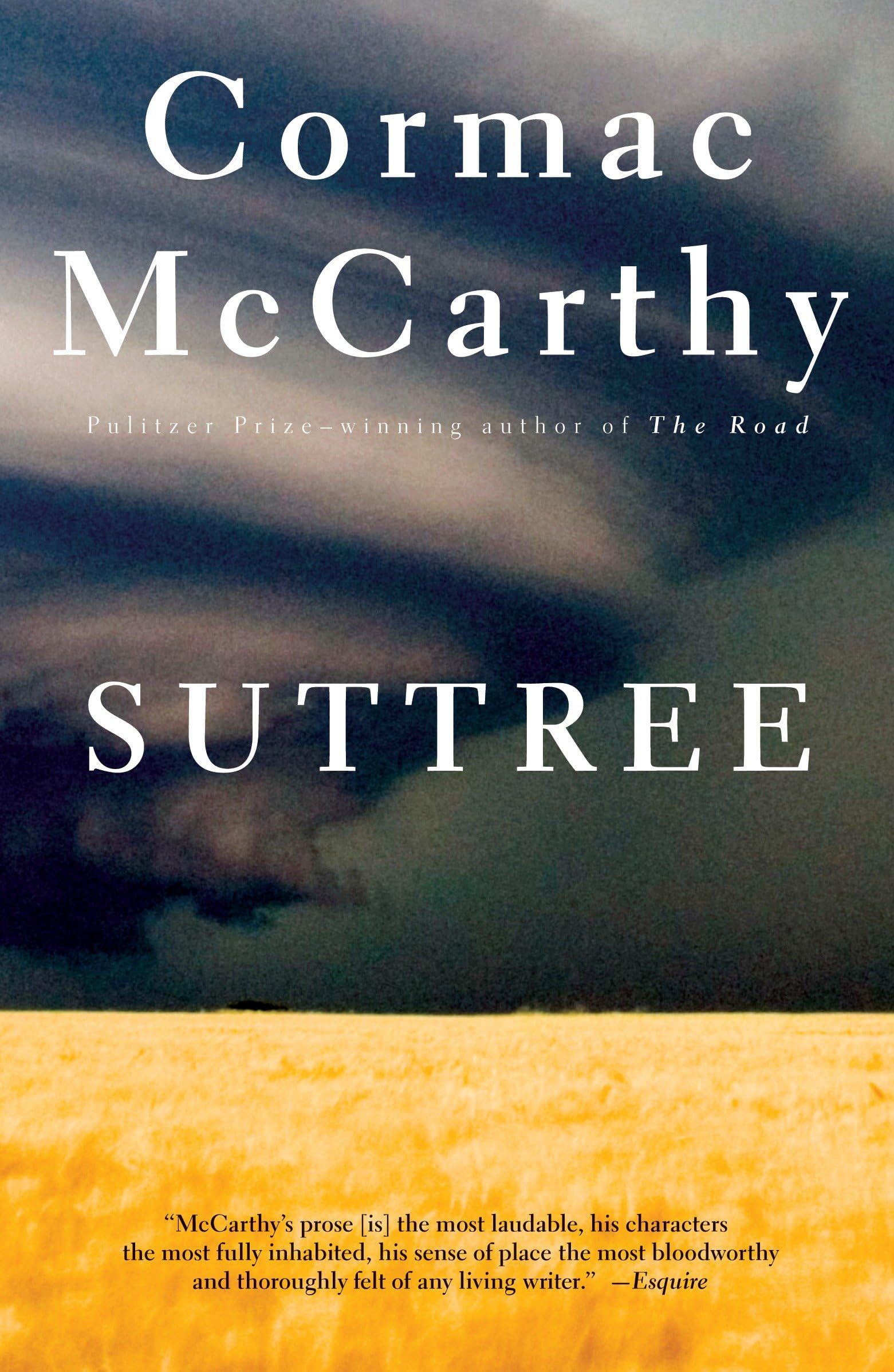
Suttree (Vintage International) [McCarthy, Cormac] on desertcart.com. *FREE* shipping on qualifying offers. Suttree (Vintage International) Review: This Is An American Classic For A Reason - This novel is linguistically dense, wrapped in metaphor and symbols, and tells the story of Suttree, a man who's abandoned his family, and bums around on his boat, struggles with poverty, meets a colorful cast of characters dealing with the same challenges, and goes about day to day life as chaos ensues. It's a fun, entertaining read that has all the hallmarks of Cormac McCarthy, while being his most wordy, poetic, and lyrical novel. A meditation on loneliness and the American dream. Review: One man’s years dwelling in the Lower Depths - Having previously read six of Cormac McCarthy’s other novels, I have come to expect certain characteristics of his prose and subject matter. I have never seen a quotation mark or a comma in one of these novels. I have seen plenty of ‘ands’ and periodic elevated or grandiose language used when describing depraved, violent, or ugly, disgusting, visceral matters involving bodily fluids i.e., blood, vomit, feces, various infections. I know that McCarthy never cuts his readers any slack or gives them any more explanation than absolutely necessary, although in each of the novels there is a narrative plot thread, something linear or chronological on which to hang the linguistic structure. Even this is often missing in his 1979 novel, ‘Suttree’, and that makes writing a review more difficult. ‘Suttree’ is the last of the early period of McCarthy’s novels with a setting in the American South, namely Knoxville, and there are presumably autobiographical parallels with McCarthy’s own experiences living in that region in his earlier years. The premise is simple: Cornelius Suttree, a young man who came from an affluent family, deserted his wife and young son and the material comforts of his previous life to live among the lower classes in the Knoxville area—the small-time criminals, prostitutes, the homeless, the hand-to-mouth denizens of the lower depths of society. The novel occurs during the first half of the 1950’s. Suttree, often referred to as Sut, Bud or Buddy, or Youngblood, lives in a houseboat docked below one of the bridges of the Tennessee River. He goes out in his skiff to catch fish that he will sell to local markets, hopefully for enough to stay stocked in beans and coffee. The explanation for why Suttree would leave his former life to live life on the margins of survival is never made clear. He does express grief upon learning of his young son’s death and after the former in-laws drive him away from the funeral he returns later to start burying his son’s grave with a heartbreaking frenzy. That is the most demonstrative he ever gets throughout the novel. We get the impression that he is educated, more intelligent, more articulate than most of the bottom-dwellers with whom he associates. Suttree spends much of his time drinking and being in the wrong place at the wrong time, a lifestyle risk of living among thieves and homeless people. This explains why he ends up serving several months in a workhouse for being an accessory to a failed robbery attempt—he was driving the getaway car. While in the workhouse he meets the most comic character in the novel, Gene Harrogate, a skinny simpleton who seems predestined to follow his most idiotic impulses to predictably disastrous ends. When asked what brought him to the workhouse, Gene explains that he was having sex with watermelons in a farmer’s patch and got caught after he had already gratified himself with the entire crop. ‘They tried to get me for beast, beast…Bestiality? Yeah, but my lawyer told em a watermelon wasnt no beast. He was a smart son of a bitch. Oh boy, said Suttree.’ Suttree feels some sense of responsibility for Harrogate, as if he has inherited some idiot son as a surrogate for the son he lost. This leads him later to dig under wreckage beneath a bank when Gene tried to rob a bank with dynamite and exploded a water main by mistake, burying him in sewage. Suttree finds him and resuscitates him. Suttree is for various reasons unable to sustain any kind of romantic relationship. He has a clandestine affair with the teenage daughter of a man with whom he has been collecting mussels and harvesting pearls to sell, unsuccessfully. The affair ends, not with any discovery by the father but when the girl is buried in a landslide. Later, he has a relationship with a prostitute who brings him money reportedly from generous payments from satisfied customers but then, as everything seems to be going well, she has a complete mental breakdown. The theme of death and burial flows through the novel, culminating in Suttree’s own accounting of what he did with his life, what meaning he found in his life. ‘Tilting back in his chair he framed questions for the quaking ovoid of lamplight on the ceiling to pose to him: Supposing there be any soul to listen and you died tonight? They’d listen to my death. No final word? Last words are only words. You can tell me, paradigm of your own sinister genesis construed by a flame in a glass bell. I’d say I was not unhappy. You have nothing. It may be the last shall be first. Do you believe that? No. What do you believe? I believe that the last and the first suffer equally. Pari passu. Equally? It is not alone in the dark of death that all souls are one soul. Of what would you repent? Nothing. Nothing? One thing. I spoke with bitterness about my life and I said that I would take my own part against the slander of oblivion and against the monstrous facelessness of it and that I would stand a stone in the very void where all would read my name. Of that vanity I recant all.’ ‘Suttree’ is also perhaps McCarthy’s most profound novel. Like all of McCarthy’s other novels that I’ve read it deals with death as it occurs individually as well as conceptually, but the death in ‘Suttree’ is not so specifically the result of violence committed from the masculine urge to hunt and kill as became his specialty in his next few novels. ‘Suttree’ is McCarthy’s longest novel and it also has the most saturated prose. There are passages of great beauty that evoke Shakespeare. It is difficult to write a coherent review of a novel that can not be easily summarized or assessed. I think that Suttree, like Thoreau, has sought to live life deliberately, to know that he has perceived the sensory substance of living, which always carries death within it, by living among others who scrape by for daily existence and are one step away from oblivion. This novel is dense enough to bear rereading. Perhaps within a couple of years I will re-read it. I’m certain that I’ll discover aspects I missed this time around and when I do, I’ll hopefully be able to write a more enlightened review.


| Best Sellers Rank | #19,549 in Books ( See Top 100 in Books ) #97 in Westerns (Books) #163 in Contemporary Literature & Fiction #890 in Literary Fiction (Books) |
| Customer Reviews | 4.4 out of 5 stars 2,198 Reviews |
C**R
This Is An American Classic For A Reason
This novel is linguistically dense, wrapped in metaphor and symbols, and tells the story of Suttree, a man who's abandoned his family, and bums around on his boat, struggles with poverty, meets a colorful cast of characters dealing with the same challenges, and goes about day to day life as chaos ensues. It's a fun, entertaining read that has all the hallmarks of Cormac McCarthy, while being his most wordy, poetic, and lyrical novel. A meditation on loneliness and the American dream.
B**B
One man’s years dwelling in the Lower Depths
Having previously read six of Cormac McCarthy’s other novels, I have come to expect certain characteristics of his prose and subject matter. I have never seen a quotation mark or a comma in one of these novels. I have seen plenty of ‘ands’ and periodic elevated or grandiose language used when describing depraved, violent, or ugly, disgusting, visceral matters involving bodily fluids i.e., blood, vomit, feces, various infections. I know that McCarthy never cuts his readers any slack or gives them any more explanation than absolutely necessary, although in each of the novels there is a narrative plot thread, something linear or chronological on which to hang the linguistic structure. Even this is often missing in his 1979 novel, ‘Suttree’, and that makes writing a review more difficult. ‘Suttree’ is the last of the early period of McCarthy’s novels with a setting in the American South, namely Knoxville, and there are presumably autobiographical parallels with McCarthy’s own experiences living in that region in his earlier years. The premise is simple: Cornelius Suttree, a young man who came from an affluent family, deserted his wife and young son and the material comforts of his previous life to live among the lower classes in the Knoxville area—the small-time criminals, prostitutes, the homeless, the hand-to-mouth denizens of the lower depths of society. The novel occurs during the first half of the 1950’s. Suttree, often referred to as Sut, Bud or Buddy, or Youngblood, lives in a houseboat docked below one of the bridges of the Tennessee River. He goes out in his skiff to catch fish that he will sell to local markets, hopefully for enough to stay stocked in beans and coffee. The explanation for why Suttree would leave his former life to live life on the margins of survival is never made clear. He does express grief upon learning of his young son’s death and after the former in-laws drive him away from the funeral he returns later to start burying his son’s grave with a heartbreaking frenzy. That is the most demonstrative he ever gets throughout the novel. We get the impression that he is educated, more intelligent, more articulate than most of the bottom-dwellers with whom he associates. Suttree spends much of his time drinking and being in the wrong place at the wrong time, a lifestyle risk of living among thieves and homeless people. This explains why he ends up serving several months in a workhouse for being an accessory to a failed robbery attempt—he was driving the getaway car. While in the workhouse he meets the most comic character in the novel, Gene Harrogate, a skinny simpleton who seems predestined to follow his most idiotic impulses to predictably disastrous ends. When asked what brought him to the workhouse, Gene explains that he was having sex with watermelons in a farmer’s patch and got caught after he had already gratified himself with the entire crop. ‘They tried to get me for beast, beast…Bestiality? Yeah, but my lawyer told em a watermelon wasnt no beast. He was a smart son of a bitch. Oh boy, said Suttree.’ Suttree feels some sense of responsibility for Harrogate, as if he has inherited some idiot son as a surrogate for the son he lost. This leads him later to dig under wreckage beneath a bank when Gene tried to rob a bank with dynamite and exploded a water main by mistake, burying him in sewage. Suttree finds him and resuscitates him. Suttree is for various reasons unable to sustain any kind of romantic relationship. He has a clandestine affair with the teenage daughter of a man with whom he has been collecting mussels and harvesting pearls to sell, unsuccessfully. The affair ends, not with any discovery by the father but when the girl is buried in a landslide. Later, he has a relationship with a prostitute who brings him money reportedly from generous payments from satisfied customers but then, as everything seems to be going well, she has a complete mental breakdown. The theme of death and burial flows through the novel, culminating in Suttree’s own accounting of what he did with his life, what meaning he found in his life. ‘Tilting back in his chair he framed questions for the quaking ovoid of lamplight on the ceiling to pose to him: Supposing there be any soul to listen and you died tonight? They’d listen to my death. No final word? Last words are only words. You can tell me, paradigm of your own sinister genesis construed by a flame in a glass bell. I’d say I was not unhappy. You have nothing. It may be the last shall be first. Do you believe that? No. What do you believe? I believe that the last and the first suffer equally. Pari passu. Equally? It is not alone in the dark of death that all souls are one soul. Of what would you repent? Nothing. Nothing? One thing. I spoke with bitterness about my life and I said that I would take my own part against the slander of oblivion and against the monstrous facelessness of it and that I would stand a stone in the very void where all would read my name. Of that vanity I recant all.’ ‘Suttree’ is also perhaps McCarthy’s most profound novel. Like all of McCarthy’s other novels that I’ve read it deals with death as it occurs individually as well as conceptually, but the death in ‘Suttree’ is not so specifically the result of violence committed from the masculine urge to hunt and kill as became his specialty in his next few novels. ‘Suttree’ is McCarthy’s longest novel and it also has the most saturated prose. There are passages of great beauty that evoke Shakespeare. It is difficult to write a coherent review of a novel that can not be easily summarized or assessed. I think that Suttree, like Thoreau, has sought to live life deliberately, to know that he has perceived the sensory substance of living, which always carries death within it, by living among others who scrape by for daily existence and are one step away from oblivion. This novel is dense enough to bear rereading. Perhaps within a couple of years I will re-read it. I’m certain that I’ll discover aspects I missed this time around and when I do, I’ll hopefully be able to write a more enlightened review.
P**Y
Sutree
I was attracted to this McCarthy because I knew Knoxville in the 1950s as kid (and later in the 1970s-80s). I don't recognize the trash-strewn sections and derelicts described by McCarthy. They were apparently well hidden from Gay and Market Streets. Ft. Loudon Lake, the Tennessee River in that region, is dear to my heart. The book is well-written, interesting, exhibits many archaic words. Everyone in the book is either drunk or getting drunk, was in prison or is likely headed for prison, lives in a shack or under a bridge. The main character, college educated Sutree, can't say 'no' to a drink and runs only with other derelicts and alcoholics. He shows a deep, nihilistic egoism, can't help anyone (first, not himself) and runs from people close to him who need help, including a young girl who provides him with nearly the only sexual pleasure he gets in the book. Hard to classify the character. Alcoholic, to some degree sociopathic. Knoxville and Ft. Loudon were pleasant places, measure one, but you don't discover that in this book, although the characters do go to Regas' Restaurant, the famous Knoxville steak house of the 1950s whenever they have a few bucks burning a hole in their pockets. I missed one thing that characterized Ft. Loudon Lake in the 1950s: outboard pleasure and fishing boats, the lake was full of them. Ol' Sut must have felt a wake or two whilst setting out trotlines or relaxing on his houseboat, but there's nary a mention of that in the text. The characters and setting are real. Memorable is the mother who mourned her 'fallen warrior' after the oversized brute was killed in a last drunken brawl. Brings to mind the host of poor Scot-Irish descended boys in E. Ky. who seemed born only for fighting, and who'd use any excuse to pick a fight if they thought they could whip you. Gittchi a copy 'n read it, ol' Sut 'n th' City Mouse'll stay withyee, yee won't be able ta git riduvem even if yee want to.
J**2
Great read
McCarthy never disappoints
J**S
Cosmological Flares
I prefer not to recount the story line but to rather give a few thoughts about the overarching nature of the story that emerges over the course of the novel. C.M.'s Suttree simply gets at the challenges and strains, as well as the pleasures and beauties, of the human condition. The "freakish imaginative flair" of his story noted by the Times Literary Supplement reviewer, quoted on Amazon, is most evident and striking in Suttree's cosmological insights or experiences unleashed by some of his dire moments. These cosmological -- or, to use C.M's word, "galactic" -- flairs impose Suttree's flashes and fevers on the reader in such a way that the reader is felt to virtually share those experiences. This aspect of the novel emerges gradually, but when they appear they are immediate and fully impressed on the reader with C.M's poetic descriptions and metaphors. Suttree contains rather graphic scenes described in some places in jaw-dropping, disturbing detail: e.g. a borderline gang-rape scene, a natural disaster with violent effects on the human body, and a murder by gunshot to the face. The literary effect C.M. achieved might be the same as seeing these things in person: namely, the effect of staring or continuing to look back at the shocking image, or, in the course of the story, reading that detail over several times in attempt to comprehend it as if you were there witnessing the shocking event. These sorts of detailed scenes may not at all be for the faint of heart (I've not yet read Blood Meridian and so wonder what I'm in for there.) Finally, the minimalist nature of C.M.'s writing style is marvelous. If you just have to have quotation marks about the words of the actors, you will get none in this book. And I don't believe you will find any punctuation other than periods, a few commas, and fewer question marks -- nothing else. However, if you are following the story and its characters' conversations and can glean and imagine the emotions, body behaviors, tones of voices, etc. provided by context or the descriptions, the story simply springs to life. No quotation and exclamation marks, in my experience of the novel, leaves it up to the reader to furnish that aspect of the story for him or herself. I think this is a brilliant literary effect. My first C.M. read was The Road some years ago, which impressed me. After Suttree, I'll most certainly be reading more of C.M.
R**H
Masterful writing wasted on an unworthy subject
Suttree is a trajedy of sorts. Lots of bad things befall Cornelius Suttree the main character, but the main trajedy is that Suttree chooses to basically be a bum throughout the book, hardly lifting a finger to alter his downward path. He is presented as somehow being above it all, when in truth he is down in it just as much as the other low figures in the book. Suttree has a great quality of being open and caring to those around him no matter how low their station is. But the detachment [noted on the book jacket] that Suttree displays makes the depth of that feeling he has towards others kind of suspect. McCarthy does an incredible job of showing the rich humanity of the invisible poor in the book. The writing in general seemed like the author had something to prove, esp. regarding vocab, which I didn't notice as much in other books he has written. At times it was distracting and annoying instead of impressive. Overall, this book of McCarthy's can't hold a candle to others I have read of his. I guess it was worth the read, but the deep, overarching themes of his other works seemed absent here.
F**9
Episodic Southern Oddssey, the sum being bigger than its parts
“Dear friend now in the dusty clockless hours of the town when the streets lie black and steaming in the wake of the watertrucks and now when the drunk and the homeless have washed up in the lee of walls in alleys or abandoned lots and cats go forth highshouldered and lean in the grim perimeters about, now in these sootblacked brick or cobbled corridors where lightwire shadows make a gothic harp of cellar doors no soul shall walk save you.” Cormac McCarthy’s Suttree is a book that is hard to pin down and figure because it is so much, and really hard to legitimately describe in few words. And Suttree has McCarthy’s identifiable signature and style stamped all over it, which may put some readers off. Cornelius Suttree, the book’s central figure, has given up a life from his immediate family and lives as a fisherman in the slums of Knoxville. We are never really given much in the hows and whys of this separation, but there are points where we can infer and make our own speculations. The book is in one way a journey, both metaphorical and literal, a rambling series of episodes through Cornelius Suttree’s point of view. Suttree’s peers and allies are hopeless, derelict, and lonely, but there is a common bond and (dare I say) comradery amongst their group that contrasts sharply with the feeling of alienation. And, while a dreary tone pervades most of the book and exhibits much of the city’s slums and underbelly, there are points where the story and plot turns darkly comical. In a larger sense, the book is a meditation on death, destruction, and the alienation of the individual amid the human experience. McCarthy’s book, as others have attested to, is quite dense, ponderous and verbose; however, it is equally dark, profane, bizarre, and disturbing. Along the way we meet miscreants, derelicts, criminals, grotesques, and degenerates of various types. Yet, somehow, wading through all this, McCarthy’s book does have some humor and does offer hope and redemption. I felt that some of more interesting characters from the novel were Gene Harrogate (“country mouse”), Ab Jones (owner of the tavern), and Reese (another fisherman), all of whom Suttree develops friendships with. Harrogate, whom Suttree befriends in jail, is dumb as a box of rocks, and gets into trouble of all kinds through his stupid plans and decisions, but he simply is a fresh breath of air from the bleakness, a well-timed comic relief. Many of the other characters and individuals are reminiscent of a Flannery O’Connor book in their grotesqueness. In some ways, McCarthy’s Suttree is like the drunk and vulgar cousin of Steinbeck’s Cannery Row. There aren’t many books that you could call sophisticated, poetic, bizarre, dream-like, profane, literary, trashy, symbolic, philosophical, humorous, and reflective all in the same breath, but somehow Suttree manages to be all that, and then some. It really is a book all its own. .
K**E
this is a great novel. It takes us into worlds that seem ...
Although at times the narrative is overwritten, with more figures per sentence than anything since Thomas Wolf, this is a great novel. It takes us into worlds that seem extravagantly imagined and then convinces us that they are real. The characterization is rich. Suttree, the main character, is a strange concatenation of cynic and innocent, menial and intellectual, good friend and irresponsible drunk. The book takes a perspective on the humblest, the oddest, the most unconventional that is warmly accepting and more so than most liberals, back in 1979, could even envision. The poor, Blacks,homosexuals,and the barely sane are judged totally on their intrinsic merits. The most wretched of the earth are portrayed with a real, if not humorless, tenderness hard to find in a writer so unsentimental as McCarthy. What it is to be cold, what it is to be hungry are so vivid that I find myself appreciating food and fireside more than I had before reading this.I think of the shivering "unaccommodated man" in Lear and the convict, Abel Magwitch, so cold and feverish that his teeth rattle against the neck of the bottle as he tries to drink- Shakespeare could show us this and Dickens too, but those two afflictions, hunger and cold, common, I'm afraid, to most of the people alive and most who have ever lived, are rarely shown as bitingly as McCarthy shows them. I think McCarthy is our greatest living writer, and I base that judgement on his later books such as The Border Trilogy, No Country for Old Men, and The Road. Nevertheless, his earlier works are far more worth reading than almost any contemporary novels I can think of.
TrustPilot
3 周前
1 周前