We remain fully operational. Our teams are working around the clock to ensure your deliveries continue safely.

下载应用程序


Buy anything from 5,000+ international stores. One checkout price. No surprise fees. Join 2M+ shoppers on Desertcart.
Desertcart purchases this item on your behalf and handles shipping, customs, and support to Hong Kong.
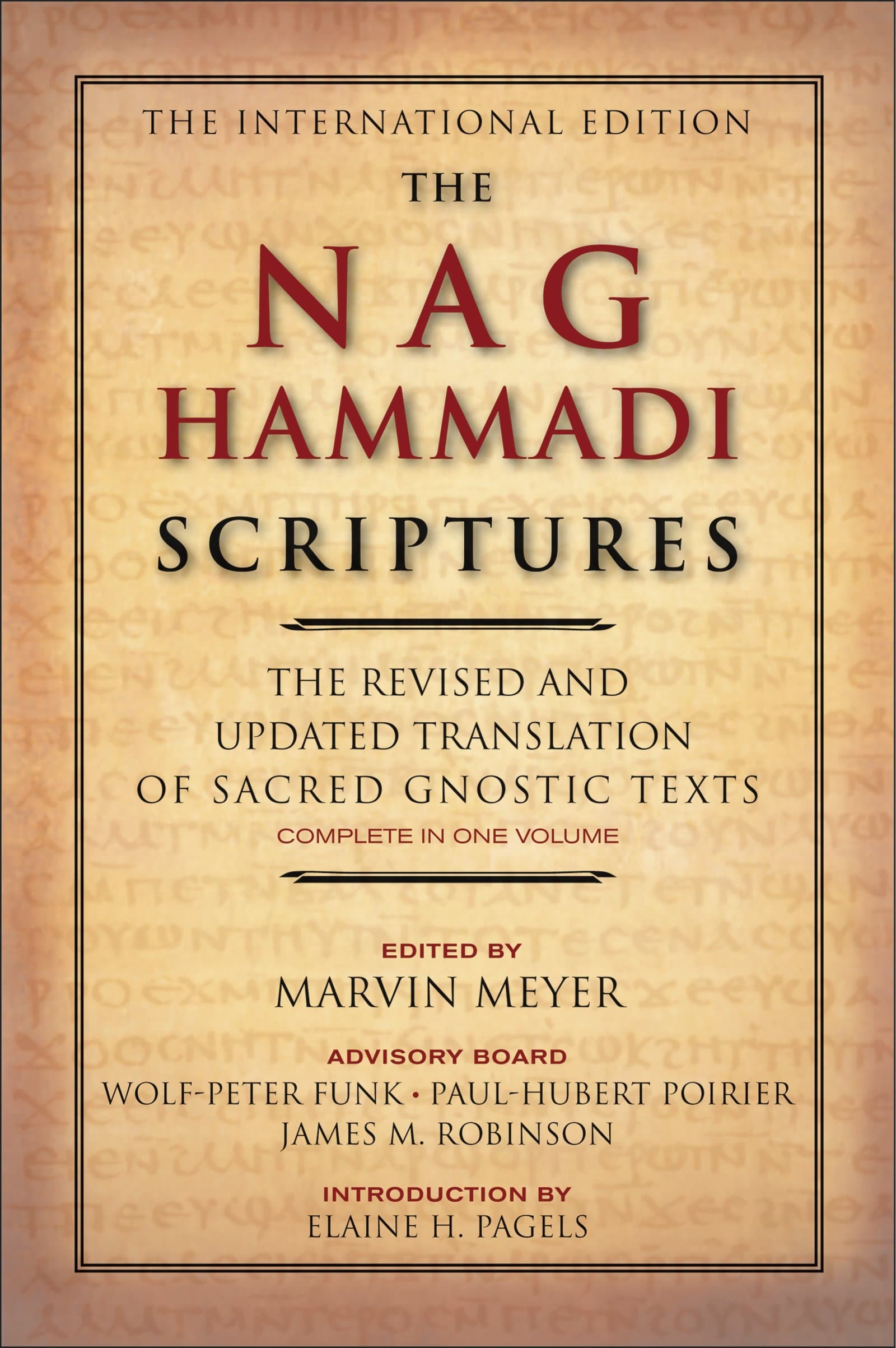
The Nag Hammadi Scriptures: A Study of Gnostic Scriptures and Early Christian Thought [Marvin W. Meyer, Elaine H. Pagels, James M. Robinson, Wolf-Peter Funk, Paul-Hubert Poirier] on desertcart.com. *FREE* shipping on qualifying offers. The Nag Hammadi Scriptures: A Study of Gnostic Scriptures and Early Christian Thought Review: Quality products. - Good pricing. Excellent condition. Prompt shipping. No issues! Thank you. Review: Quite a bit to think about ... - This isn't a book! It's actually a magic portal through which the reader tumbles from one dimension to another. Sometimes the results are unsettling, but one is always left believing that, however much new got found in the next dimension, a lot is still there waiting to be discovered. The blah cover of Nag Hammadi Scriptures makes it look like just another dry, boring now-let's-study-the-Bible type book. Instead it's a ticket for fascinating time travel out of the present and back to a murky, confusing past; from one civilization to another; from one rigid belief system to another; from one religion to another. You get bounced from reality to myth, and then all the way back again -- provided you still want to return. This ancient anthology is an impressive job of scholarship and clear translation, and it oozes with bunches of helpful footnotes, introductions and leads for further study. If it has a flaw, I think it is that, found here and there throughout the volume, are faint hints of traditional Christian ideas. Sometimes one senses the editors may be trying a little too hard to reconcile some orthodox Christian belief or other with what they assume the ancient authors were saying or thinking. And the book certainly wants to make you believe that everyone with a point of view needs to have earned a degree from some obscure school of theology or religion. But ignore all that. If you buy the book, you've got the right to make up your own mind about what it says. And if there ever was a topic about which everyone's entitled to their own slant, this must be it. As all readers will, I have a bias. I am a very devout Buddhist, steeped primarily in the religious traditions of Sri Lanka. The revelations I derived from the Nag Hammadi Scriptures were that passage, after passage, after passage is at least compatible with (and sometimes nearly identical to) Theravadan Buddhist teaching, and that both Gnostic ideas and Buddhism seem closer to one another than either one does to today's Christian practices. All of which suggests to me that, though the world doggedly perpetuates and exalts countless images of, names for and ideas about "gods", you don't have to be a great scholar or professional theologian to recognize that, in the end, there is after all only one. To me this book argues most eloquently that, whoever or whatever that god may be, a wise search for him/her starts by a dive deep within the human psyche.
| Best Sellers Rank | #2,903 in Books ( See Top 100 in Books ) #3 in Gnosticism (Books) #16 in History of Christianity (Books) #16 in Christian Church History (Books) |
| Customer Reviews | 4.7 4.7 out of 5 stars (4,403) |
| Dimensions | 9.1 x 6.1 x 1.7 inches |
| Edition | First Edition |
| ISBN-10 | 0061626007 |
| ISBN-13 | 978-0061626005 |
| Item Weight | 10.4 ounces |
| Language | English |
| Print length | 844 pages |
| Publication date | May 26, 2009 |
| Publisher | HarperOne |
F**D
Quality products.
Good pricing. Excellent condition. Prompt shipping. No issues! Thank you.
R**R
Quite a bit to think about ...
This isn't a book! It's actually a magic portal through which the reader tumbles from one dimension to another. Sometimes the results are unsettling, but one is always left believing that, however much new got found in the next dimension, a lot is still there waiting to be discovered. The blah cover of Nag Hammadi Scriptures makes it look like just another dry, boring now-let's-study-the-Bible type book. Instead it's a ticket for fascinating time travel out of the present and back to a murky, confusing past; from one civilization to another; from one rigid belief system to another; from one religion to another. You get bounced from reality to myth, and then all the way back again -- provided you still want to return. This ancient anthology is an impressive job of scholarship and clear translation, and it oozes with bunches of helpful footnotes, introductions and leads for further study. If it has a flaw, I think it is that, found here and there throughout the volume, are faint hints of traditional Christian ideas. Sometimes one senses the editors may be trying a little too hard to reconcile some orthodox Christian belief or other with what they assume the ancient authors were saying or thinking. And the book certainly wants to make you believe that everyone with a point of view needs to have earned a degree from some obscure school of theology or religion. But ignore all that. If you buy the book, you've got the right to make up your own mind about what it says. And if there ever was a topic about which everyone's entitled to their own slant, this must be it. As all readers will, I have a bias. I am a very devout Buddhist, steeped primarily in the religious traditions of Sri Lanka. The revelations I derived from the Nag Hammadi Scriptures were that passage, after passage, after passage is at least compatible with (and sometimes nearly identical to) Theravadan Buddhist teaching, and that both Gnostic ideas and Buddhism seem closer to one another than either one does to today's Christian practices. All of which suggests to me that, though the world doggedly perpetuates and exalts countless images of, names for and ideas about "gods", you don't have to be a great scholar or professional theologian to recognize that, in the end, there is after all only one. To me this book argues most eloquently that, whoever or whatever that god may be, a wise search for him/her starts by a dive deep within the human psyche.
J**R
Theological broadening to take place
I've only started reading, for the dedicated reader for sure, interesting material
R**S
Just my thoughts after reading it from cover to cover.
Being firmly planted in the holy bible, I decided to read other texts written around the birth of Christianity. I would like to think this book was well worth what I paid for it. I would have preferred a simple version with just a quick forward on the history of the text, and then the texts itself, as I found the authors ramblings to be a bit too educated. The books I found to be the most "Christian" or inspired (if you will) were: The Treatise on Resurrection Exegesis on the soul The Book of Thomas The acts of Peter and the Twelve Apostles Excepts from Plato's Republic Excepts from the Perfect Discourse (Don't let the opening sentences fool you LOL), and The teachings of Silvanus (Only up to page 507. Which is great, by the way. Once it gets into the sections on 507 called Know Yourself, I feel that another author took over, adding to an existing text. It clearly dives right into heavy Gnostic thought. Seemingly penned by the same author as many of the other wholly Gnostic texts.) The rest of the texts were/are what I would assume to be wholly Gnostic. I know the entire work is assumed to be Gnostic texts, but many of these clearly come from the same mind, if not the same hand. While I won't claim to know which is and which is not of holy inspirations, I will say many seemed to me to be complete works of fiction using AD Christian characters, such as the Apostles. Those that do this use heavy use of dialog between individuals, and use language we today would expect a common liar, or story teller to use. "Now it's like this..." "I'll tell you why they are completely wrong..." "I... I... I..." and make many attempts to retell key events, often making note as to why people like Moses were wrong, and why they are right. Other books seem like an attempt to Greek-ify Christianity by giving names to a multitude of angels and spirits, and breaking the heavens up into real estate. Basically an attempt to introduce or manipulate Christianity into what the Greek religion was around that time... a multitude of gods. That's not to say such structure does not exist in the heavens, but sometimes the safest and quickest way to the truth is to admit you don't know. I know as humans we always want to believe we are missing something. That there is some sort of secret we have yet to find. Or at least those who actually search in the first place. As such much of this book seems to be an attempt by people of those eras trying to put into words what they think or clam to know (or understand), using the layman's philosophy of the time, which by today's standard we would say those individuals were "Talking in Circles", as they said much, but in the end, really said nothing at all. But... because of the way they said it, some readers might assume the point alluded them. If you are a heavy bible reader (believer), then you know there is a flow, or common mind (Holy Spirit?) from cover to cover, and as such most of the texts found in this book simply do not follow that flow, and others down right seek to dam it up or reroute it altogether. But I believe there are treasures to be found here, some heavily Gnostic, but on point, like The Treatise on Resurrection, and others seemingly inspired, such as the first section of The teachings of Silvanus. So my advise is to grab a copy and read it, but don't expect that magic pill that is going to illuminate the true path to salvation, because that path you may already have within the mystery Christ was the answer to. What you will find, are a few gems that will keep you on track in the same ways Paul and his fellow apostles do with their letters. It is certainly worth a read.
L**A
Quem quer conhecer mais a fundo o gnosticismo tem que ler esse livro.
P**A
Fantastic
M**F
The book is very interesting but, unfortunately, the print is small and will strain your eyes after a while.
R**N
Great! Love it and the understanding you get. Beautifully worth it!
A**R
There is a wealth of knowledge in these gospels that should have been in the Bible. I absolutely adore this book