Desert Online General Trading LLC
Dubai, United Arab Emirates
Desert Online General Trading LLC
Dubai, United Arab Emirates
Full description not available
C**S
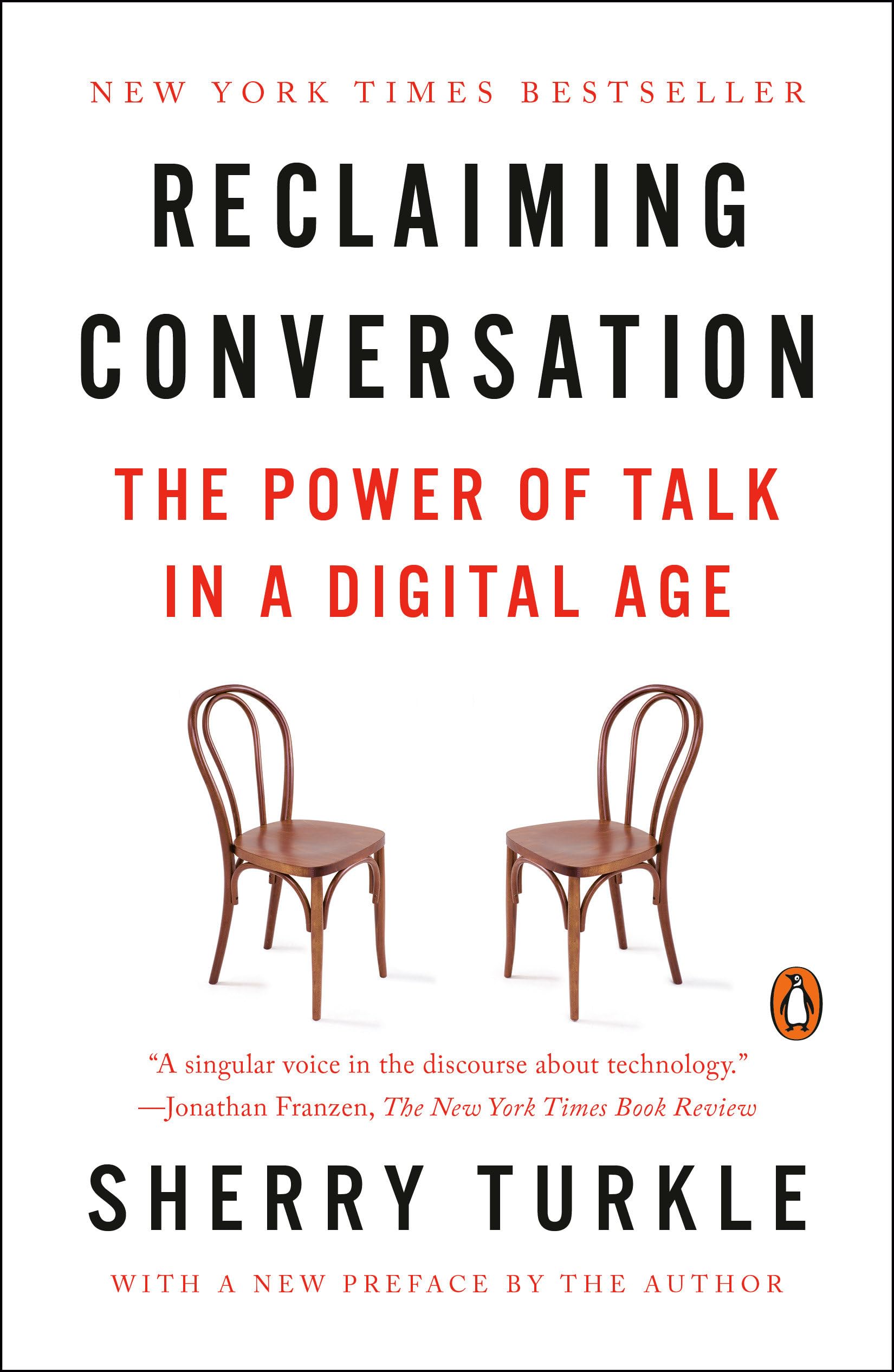
This book is IMPORTANT - we need to keep talking about technology and our relationships
When I walk around campus these days, I see a sea of students glued to their phones. People walk to class swiping away or with headphones in, barely making eye contact with another. In the dining hall students wait in line surrounded by other students, but the focus on their phone makes it seem as if they have forgotten anyone else was even there. As I walk into class, I feel the silence of the room as students sit in their chairs, catching up on social media rather than getting to know each other.Though my experience may differ from yours, it’s caused me to ask lots of questions lately about the role of technology in our day to day lives and its impact on our social connections. If you care about this topic at all, READ THIS BOOK!It is hard to know where to begin with the amount of research, practical wisdom, and challenging questions this book contains. Turkle’s primary assessment could be boiled down to this: technology, despite all its positives, is radically degrading conversation and face to face connection; face to face connection and conversation is still vital for the development of empathy, fulfillment, and relational satisfaction; we need to keep thinking about how we balance technology in our own lives so we can reclaim conversation.For me, I resonate with this assessment as it rings true not only to what I’ve observed in my work with college students, but also in reflecting on my own relationship with technology and its impact on close relationships. One particular excerpt from Turkle’s book floored me: researchers have found a 40% drop in empathy in college students over the last two decades. Let me repeat, a 40% DROP IN EMPATHY! Why? Because you can’t develop empathy over text in the same way you can as sitting across from someone, seeing the pain and hurt you’ve caused them in their eyes, and bearing the discomfort that often is associated with these face to face conversations. So what do we do? We text about it, email, or post on social media, rather than talking face to face or even making a phone call.I could go on and on, but there truly is too much in this book to even scratch the surface. Here’s a few other highlights for those with potential interest:* Solitude is tougher and tougher to come by, but critical in our own development and our ability to show up for others. At least for me, I know technology has made solitude more challenging.* People hate boredom, and therefore they tap out of conversations too quickly. Some of the richest conversations are on the other end of boredom, and no meaningful relationship can totally avoid what Turkle calls “the boring bits”* Technology is seductive, and it is not our failure of will power. We have to acknowledge that technology has much more power than we sometimes admit, and create structures to mitigate its ever-present influence* Technology, though it has positives, will never replace face to face conversationI’ll admit my review is passionate, and that I may come off as a doomsday-er. And before closing, I’ll readily acknowledge (and Turkle does too) that technology has had many, many positive impacts. One in particular is the incredible communities that have emerged online to give voice and community to those previously on the margins, many of whom identify in ways that have created experiences of marginalization and bullying. But we can acknowledge these positives things while also admitting that technology is extremely seductive, and it is not without consequences. Read this book, and if you hate it, leave some comments and let’s dialogue about it. I think it is important, even given the irony of online dialogue about a book that so passionately advocates for more face to face conversation ;)
K**R
Digitally Induced Affective Disorder and Possible Antidotes
Our attachment to digital forms of communication, especially smart phones, may be responsible for the emergence of symptoms that are strikingly similar to other affective disorders.To call it a Digitally Induced Affective Disorder (DIAD) is exaggeration, but not a casual one, certainly not enough to keep this title from the top of a nonfiction must-read book list for 2015. True, it’s not a parallel directly drawn by Sherry Turkle in Reclaiming Conversation (Penguin, 2015), a book that the Harvard Bookstore chose to feature in its “holiday hundred” — one of eight in the science and technology category.But take a closer look at the symptoms she associates with the decline of nuanced conversation. The clinical similarities between DIAD and other affective disorders become striking.Ms. Turkle’s central observations about DIAD should be alarming, and not only to practitioners in the humanities.A few of those observations:-It’s “more than a flight from conversation. This is a flight from the responsibilities of mentorship.”-Employers are struggling to maintain employee attention in meetings and conferences.-Conversations are increasingly fragmented. The mere presence of a phone on the table changes what people talk about.-There is “a 40 percent decline in the markers for empathy among college students, most of it within the past ten years. . . a trend that researchers link to the new presence of digital communications.”-“When we communicate on our digital devices, we learn different habits. . . We ask simpler questions; we dumb down our communications, even on the most important matters. And we become accustomed to a life of constant interruption.”-The primacy of image sharing in social networks is weakening conversation: “When things get complicated, it’s easier to send a picture than to struggle with a hard idea.” (Recall Susan Sontag’s 1973 warning about photography.)-Digital devices interfere with the maturation of the inner world of a person. What some young people “count as solitude involves being online.”On balance, Turkle is optimistic, though the book has many dark passages (such as characterizing Snapchat’s message destruction as the disappearance of self). She has prescriptions for those, as she wittily titled one chapter, “Left to Their Own Devices.”But the central problems remain deep-rooted, intertwined with widely accepted notions of progress and happiness. If standards for quality discourse continue their steady decline, not only will we cease to ask another what we have lost; we will no longer recognize what it is we hope to reclaim.(This is a snip from my full review at Inside the Ordinary)
TrustPilot
1天前
3 周前