We remain fully operational. Our teams are working around the clock to ensure your deliveries continue safely.

下载应用程序




Buy anything from 5,000+ international stores. One checkout price. No surprise fees. Join 2M+ shoppers on Desertcart.
Desertcart purchases this item on your behalf and handles shipping, customs, and support to Hong Kong.
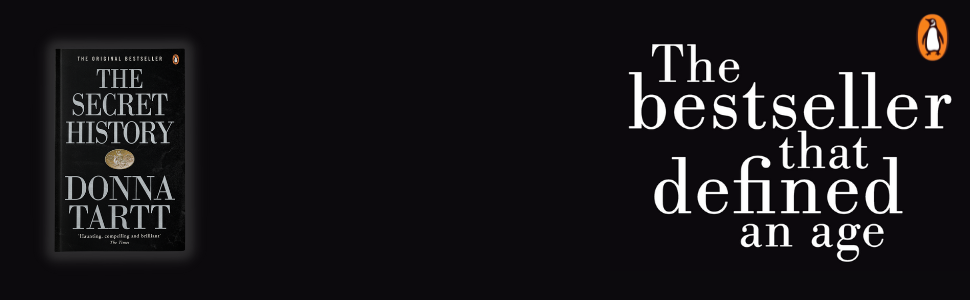
From the Publisher Review: Won't be easily forgotten - The moment I know I’ll love a book is when I’m going about my everyday life and, suddenly, tiny occurrences pleasantly jerk my mind back to the book’s world. It’s been days since I finished Donna Tartt’s The Secret History (1992) and I still find myself constantly daydreaming about this exquisite novel. The curious thing is that I didn’t love The Secret History the way I love most books I read. I didn’t sit in bed overnight reading just to reach the end and expecting a big twist or climax (which, to my pleasant surprise, it had), only to be momentarily relieved or disappointed before closing the book and returning to reality. As many readers have admitted before me, what kept me engrossed in this book was not what was going to happen, but how it would happen. Inexplicably, I wanted to live and breathe in that world, to stay in it for as long as possible and cling to every word and thought as much as I could. For that reason, I devoured it slowly—about three weeks passed until I’d read the book from start to finish. And still I can’t explain the emptiness after finishing, or the feeling that it’ll be hard to find a book that moves me in quite the same way this one did. The book centers on the recollections of Richard Papen regarding his dark experiences at the fictional Hampden College, a small liberal arts college in Vermont. Richard, a self-conscious and naïve student from a blue-collar background in Plano, California, arrives at Hampden with merely a suitcase and a desire to escape his miserable childhood home. At Hampden, Richard is, after some time and effort, accepted into the highly exclusive Classics major under the patriarchal and eccentric Professor Julian Morrow. Through the small group’s weekly meetings reminiscent of a secret society (there are merely 6 students in the major), he falls in with the cluster of seemingly unapproachable, picturesque scholars whose souls seem to have stepped out of an ancient Greek play. There’s group leader Henry Winter, tall and brooding, a clever linguist always sporting a suit. The others are red-haired and elegant Francis Abernathy, spritely and enigmatic twins Charles and Camilla Macaulay, and jovial, freeloading Edmund “Bunny” Corcoran. To fit in, Richard invents a backstory packed with Californian wealth, despite being the only one without family connections or a stable financial background. While submersed in the intellectual beauty of his studies and peers, combined with their frequent visits to Francis’ family’s empty, historic, relic-filled country house, Richard seems to be living a Classic dream come true. But after a bizarre, Dionysian bacchanal (basically a drug-induced, spiritual orgy in the woods) ends in both an accidental and, eventually, a premeditated murder, Richard begins to realize that his childish and somewhat shallow infatuation with the group may not be enough for him to swallow their treasure chest of dark secrets. After reading merely the first sentence, we are told (what we believe to be) the book’s climax. But what we don’t know is why or how their lives will fall apart, one by one, as if on the Devil’s very own hit list, as a result of a single moment in time. Ultimately, Richard’s superficial obsession to fit in, his “morbid longing for the picturesque at all costs,” proves to be not only his fatal flaw, as he himself admits, but his doorway into a dark, living, breathing world of heartache, melancholy, and never-ending nightmares. I’ll start by saying that I am by no means proficient in or even familiar with the Classics. I’m aware of the basics, of the idea of a “fatal flaw” and such, but not enough to feel comfortable writing about them with confidence. Therefore, for those of you debating whether to read this book because of this element, I can tell you now—the substance is not in this aspect, but in the character development and plot. The book does in many ways parallel a Greek tragedy, and those who are familiar with Classics will likely have an enhanced reading experience. However, by no means does it exclude readers without this background. The emphasis is strongly on the deterioration of a group of friends, not on Greek philosophy. Now, most critics of the book are quick to attack its seemingly pretentious aura, claiming that real 90’s college students would never talk like these do (“For a few minutes—goodness, how confusing this was—I thought of digging a grave but then I realized it would be madness” is an actual quote from a student) dress in European suits, or smoke 500 cigarette packs a day while they throw back expensive whiskey like its water. They’d never skip a college party of free-flowing beer, fluorescent lights, and sticky floors to sit in a country house and practice the box step, or discuss “whether Hesiod’s primordial Chaos was simply empty space or chaos in the sense of the modern world” while they play cards. But in a sense, I beg to differ. Yes, these characters can be slightly exaggerated, mostly in the first half of the book, which details their frequent gatherings and esoteric conversations (towards the end they notably start speaking in more colloquial terms). Yes, they can be irritating, despicable, and downright disturbing at times. But to be honest, this never bothered me as I was reading—in fact, it made the book even more fascinating. If you can’t handle some deliciously evil characters that pose as charming members of society, you probably won’t like many books out there. I see this pompousness as merely a way of cynically showing us that these students, with superficially beautiful minds and faces, with a seemingly supreme moral compass, are not only flawed and human, but often much worse than that. The premature deification of the group only serves to make their fall from grace that much more powerful, sad, and disquieting. Another point of contention regarding the novel is its tendency to ramble, to spend precious time illustrating minute details of the characters’ personalities, surroundings, thoughts, etc. Once again, this is true to a certain extent. This book is not written as an action novel or crime thriller, where everything is based on people running around solving things or shooting guns. If you can’t stand description and only want action, this book may not be for you. But to me, Tartt creates a world that’s tangible, where every description explains things so poignantly that you often feel you couldn’t have worded it better yourself. Yes, there are many words, but every word is there for a reason if you stop to examine it. And Tartt’s talent shines not only in her prose, but in her timing and in her ability to develop tension such that each secret revealed seems like a bomb dropped, no matter how small. It’s is the juxtaposition of the realistic ambiance and the perfectly timed reveals that, for me, makes The Secret History so moving and so difficult to leave. As a reader, you feel Richard’s nostalgia the way you recall your own sharp childhood memories that you long to go back to, and the way you often stop to consider the other paths that your life could’ve taken if only things had been different. I rarely experience emotions this strong when reading any book, and as much as I’d like to I can’t put my finger on what exactly about this book did it for me—and in that same way, I can’t guarantee the same for every reader. But I can say that if you’re looking for an intellectual, modern classic, a haunting psychological thriller, a mix between Lord of the Flies, The Perks of Being a Wallflower, and Dead Poets Society, or simply a book that will linger in your mind as you lay in bed each night — it’s sitting right in front of you. Review: Excellent but Not Sweet - Published in 1992 this book is famous (infamous?) for providing impetus to the "dark academia" movement - if it can be called that. The story is, more or less, fashioned after a Greek tragedy with deeply flawed characters ultimately facing the consequences of their decisions and actions. Indeed, the characters are grim - they aren't decent human beings at all. The story is not uplifting so it's not a good choice if you are looking for something to improve your mood. There is a lot of alcohol, drugs, and perversity in the story - which is more or less required to get on the New York Times bestselling list. In that respect the story hits all the right notes. There are a few things that are unrealistic - one is the sway one of the characters has over the others, another is that the story takes place at a university, but the "students" seem to study or attend class very little and still manage to matriculate term after term. Of course, writing about students studying would not be interesting reading. Finally, if any college student consumed as much alcohol as depicted by the characters in this story, they would have died of alcohol poisoning before the second term. All that said, the prose is superb. Sooth as butter, the writing whisks you into the story and keeps you engrossed until the end. In fact, The Secret History is so well written that you almost forget you are reading. So, did I like the story? No. Was I entertained and captivated? Yes. I'd have preferred at least one decent, incorruptible, semi-Tom Bombadil type character to shed some light and hope. As it is, Francis was right when he said, "I am looking forward to asking him why the hell he didn't just shoot us all and get it over with."

| Best Sellers Rank | #677,700 in Books ( See Top 100 in Books ) #42 in Classic Literature & Fiction #80 in Suspense Thrillers #185 in Literary Fiction (Books) |
| Customer Reviews | 4.2 out of 5 stars 51,293 Reviews |
F**B
Won't be easily forgotten
The moment I know I’ll love a book is when I’m going about my everyday life and, suddenly, tiny occurrences pleasantly jerk my mind back to the book’s world. It’s been days since I finished Donna Tartt’s The Secret History (1992) and I still find myself constantly daydreaming about this exquisite novel. The curious thing is that I didn’t love The Secret History the way I love most books I read. I didn’t sit in bed overnight reading just to reach the end and expecting a big twist or climax (which, to my pleasant surprise, it had), only to be momentarily relieved or disappointed before closing the book and returning to reality. As many readers have admitted before me, what kept me engrossed in this book was not what was going to happen, but how it would happen. Inexplicably, I wanted to live and breathe in that world, to stay in it for as long as possible and cling to every word and thought as much as I could. For that reason, I devoured it slowly—about three weeks passed until I’d read the book from start to finish. And still I can’t explain the emptiness after finishing, or the feeling that it’ll be hard to find a book that moves me in quite the same way this one did. The book centers on the recollections of Richard Papen regarding his dark experiences at the fictional Hampden College, a small liberal arts college in Vermont. Richard, a self-conscious and naïve student from a blue-collar background in Plano, California, arrives at Hampden with merely a suitcase and a desire to escape his miserable childhood home. At Hampden, Richard is, after some time and effort, accepted into the highly exclusive Classics major under the patriarchal and eccentric Professor Julian Morrow. Through the small group’s weekly meetings reminiscent of a secret society (there are merely 6 students in the major), he falls in with the cluster of seemingly unapproachable, picturesque scholars whose souls seem to have stepped out of an ancient Greek play. There’s group leader Henry Winter, tall and brooding, a clever linguist always sporting a suit. The others are red-haired and elegant Francis Abernathy, spritely and enigmatic twins Charles and Camilla Macaulay, and jovial, freeloading Edmund “Bunny” Corcoran. To fit in, Richard invents a backstory packed with Californian wealth, despite being the only one without family connections or a stable financial background. While submersed in the intellectual beauty of his studies and peers, combined with their frequent visits to Francis’ family’s empty, historic, relic-filled country house, Richard seems to be living a Classic dream come true. But after a bizarre, Dionysian bacchanal (basically a drug-induced, spiritual orgy in the woods) ends in both an accidental and, eventually, a premeditated murder, Richard begins to realize that his childish and somewhat shallow infatuation with the group may not be enough for him to swallow their treasure chest of dark secrets. After reading merely the first sentence, we are told (what we believe to be) the book’s climax. But what we don’t know is why or how their lives will fall apart, one by one, as if on the Devil’s very own hit list, as a result of a single moment in time. Ultimately, Richard’s superficial obsession to fit in, his “morbid longing for the picturesque at all costs,” proves to be not only his fatal flaw, as he himself admits, but his doorway into a dark, living, breathing world of heartache, melancholy, and never-ending nightmares. I’ll start by saying that I am by no means proficient in or even familiar with the Classics. I’m aware of the basics, of the idea of a “fatal flaw” and such, but not enough to feel comfortable writing about them with confidence. Therefore, for those of you debating whether to read this book because of this element, I can tell you now—the substance is not in this aspect, but in the character development and plot. The book does in many ways parallel a Greek tragedy, and those who are familiar with Classics will likely have an enhanced reading experience. However, by no means does it exclude readers without this background. The emphasis is strongly on the deterioration of a group of friends, not on Greek philosophy. Now, most critics of the book are quick to attack its seemingly pretentious aura, claiming that real 90’s college students would never talk like these do (“For a few minutes—goodness, how confusing this was—I thought of digging a grave but then I realized it would be madness” is an actual quote from a student) dress in European suits, or smoke 500 cigarette packs a day while they throw back expensive whiskey like its water. They’d never skip a college party of free-flowing beer, fluorescent lights, and sticky floors to sit in a country house and practice the box step, or discuss “whether Hesiod’s primordial Chaos was simply empty space or chaos in the sense of the modern world” while they play cards. But in a sense, I beg to differ. Yes, these characters can be slightly exaggerated, mostly in the first half of the book, which details their frequent gatherings and esoteric conversations (towards the end they notably start speaking in more colloquial terms). Yes, they can be irritating, despicable, and downright disturbing at times. But to be honest, this never bothered me as I was reading—in fact, it made the book even more fascinating. If you can’t handle some deliciously evil characters that pose as charming members of society, you probably won’t like many books out there. I see this pompousness as merely a way of cynically showing us that these students, with superficially beautiful minds and faces, with a seemingly supreme moral compass, are not only flawed and human, but often much worse than that. The premature deification of the group only serves to make their fall from grace that much more powerful, sad, and disquieting. Another point of contention regarding the novel is its tendency to ramble, to spend precious time illustrating minute details of the characters’ personalities, surroundings, thoughts, etc. Once again, this is true to a certain extent. This book is not written as an action novel or crime thriller, where everything is based on people running around solving things or shooting guns. If you can’t stand description and only want action, this book may not be for you. But to me, Tartt creates a world that’s tangible, where every description explains things so poignantly that you often feel you couldn’t have worded it better yourself. Yes, there are many words, but every word is there for a reason if you stop to examine it. And Tartt’s talent shines not only in her prose, but in her timing and in her ability to develop tension such that each secret revealed seems like a bomb dropped, no matter how small. It’s is the juxtaposition of the realistic ambiance and the perfectly timed reveals that, for me, makes The Secret History so moving and so difficult to leave. As a reader, you feel Richard’s nostalgia the way you recall your own sharp childhood memories that you long to go back to, and the way you often stop to consider the other paths that your life could’ve taken if only things had been different. I rarely experience emotions this strong when reading any book, and as much as I’d like to I can’t put my finger on what exactly about this book did it for me—and in that same way, I can’t guarantee the same for every reader. But I can say that if you’re looking for an intellectual, modern classic, a haunting psychological thriller, a mix between Lord of the Flies, The Perks of Being a Wallflower, and Dead Poets Society, or simply a book that will linger in your mind as you lay in bed each night — it’s sitting right in front of you.
J**0
Excellent but Not Sweet
Published in 1992 this book is famous (infamous?) for providing impetus to the "dark academia" movement - if it can be called that. The story is, more or less, fashioned after a Greek tragedy with deeply flawed characters ultimately facing the consequences of their decisions and actions. Indeed, the characters are grim - they aren't decent human beings at all. The story is not uplifting so it's not a good choice if you are looking for something to improve your mood. There is a lot of alcohol, drugs, and perversity in the story - which is more or less required to get on the New York Times bestselling list. In that respect the story hits all the right notes. There are a few things that are unrealistic - one is the sway one of the characters has over the others, another is that the story takes place at a university, but the "students" seem to study or attend class very little and still manage to matriculate term after term. Of course, writing about students studying would not be interesting reading. Finally, if any college student consumed as much alcohol as depicted by the characters in this story, they would have died of alcohol poisoning before the second term. All that said, the prose is superb. Sooth as butter, the writing whisks you into the story and keeps you engrossed until the end. In fact, The Secret History is so well written that you almost forget you are reading. So, did I like the story? No. Was I entertained and captivated? Yes. I'd have preferred at least one decent, incorruptible, semi-Tom Bombadil type character to shed some light and hope. As it is, Francis was right when he said, "I am looking forward to asking him why the hell he didn't just shoot us all and get it over with."
A**F
Greek Tragedy meets Comedy of Manners
Greek Tragedy meets Comedy of Manners. Crime and Punishment meets The Great Gatsby. In Cold Blood (the movie, not the book) meets A Night at the Opera (the movie, not the album). Donna Tartt’s The Secret History is a novel of breathtaking ambition, mixing literary genres the way a chemist mixes unstable compounds—carefully, brilliantly, and with the occasional explosion. At its core, this is a Greek tragedy in tweed and cashmere: a tale of hubris, fate, and the long, echoing consequences of a single act. But it’s also a darkly comedic study in pretension and privilege, a Comedy of Manners set in a cloistered college where everyone seems to have a martini in one hand and a Euripides quote in the other. Tartt’s prose is crisp, ornate without being showy, and often chilling in its control. The narrator, Richard Papen, is a West Coast outsider seduced by an elite circle of classics students at a small Vermont college—a clique so rarefied they feel less like classmates and more like decadent aristocrats teleported in from a lost Fitzgerald novel. (Crime and Punishment meets The Great Gatsby, indeed—where moral rot hides beneath sophistication, and where beauty and lofty ideals walk hand-in-hand with Dyonisian violence.) The book operates on a slow burn, turning up the psychological temperature degree by degree. By the time blood is spilled, you feel complicit. Tartt isn’t writing a whodunit so much as a whydunit—and then a what-happens-to-everyone-after. Stylistically, the novel blends gothic dread with drawing-room wit. It’s In Cold Blood (the film, with its bleak detachment of rain shadows for tears) filtered through the off-kilter absurdity of A Night at the Opera—though in this case, Groucho’s anti-aristocratic quips are replaced by Bunny’s provocations. Beneath all this, The Secret History is a meditation on elitism—not just academic elitism, but the dangerous, intoxicating belief that intelligence, taste, and beauty can lift one above consequence. Tartt shows us how that illusion of detachment leads not to enlightenment, but to moral collapse. It’s a book that feels like a warning, a confession, and a dare. It reminds us that brilliance without grounding is just a more elegant kind of madness.
M**E
A secret that doesn't bear repeating
I had a bit of a hard time deciding how to rate this book. Unlike most of Donna Tartt's fans, I read The Goldfinch before The Secret History, and was very taken with that one, not in small part owing to the wonderful characterizations, most particularly of Boris and Hobie, but also of Theo, despite his numerous flaws. In The Secret History, the stylistic trademarks (or tics, depending on your point of view) that pepper Tartt's later writing are in dense concentration here: the quaint, quasi-English choice of words ("round," rather than "around"), the quaint, oddly anachronistic habit of dressing in suits, drinking Scotch and Bourbon during the average college day, and addressing one another as "old boy"; but also the textured, detailed descriptiveness of setting and character, which swept me up and carried me along, almost despite myself. The biggest problem for me, crucially, was the characters, and their self-serving, melodramatic, frankly unbelievable actions which drive the plot. While Theo's secret hoarding of the painting, and continued need to keep it in hiding out of fear, was portrayed in an authentic way in The Goldfinch, the ostensible protagonists of The Secret History behaved in such a self-consciously novelistic manner that it was difficult to accept them as real people, and to care much about their fate. Conversing in ancient Greek; invoking Dionysus out in the woods on a moonlit night? Really? As the first-person narrator, Richard, like Theo, is an observer; but whereas Theo's lack of action regarding the painting is counterbalanced by the (albeit ill-conceived) decision to take action to redress the financial situation of his friend and mentor Hobie's shop, Richard never takes any decisive action at any point in the narrative. Even his participation in the terrible guilty act at plot's center is as an accessory (an act, by the way, that loses a good deal of its sting because its victim, like the perpetrators, is portrayed in an unsympathetic light.) Perhaps more unforgivable still is Richard's self-loathing snobbery. Elements of snobbery figure in Theo's behavior as well, but generally what comes through is his damaged, sad soul. On the other hand, Richard's comportment consists entirely of trying to hide (unsuccessfully) his working–class, nondescript upbringing in Plano, Ca. Oh, the horror. A superficial character who at least shows some wit or other grace might escape the glare of heavy criticism. This is a protagonist whose greatest flaw is his essential lack of a core, which unfortunately makes it difficult to place much stake in what happens to him and his dubious set of friends. And yet, there is the writing. Despite all the caveats, Tartt has chops. People justifiably called out JK Rowling for her highly derivative writing. I'm not really here to draw a parallel because these authors obviously are on very different terrain; but Tartt clearly shares Rowling's penchant for showing off her incredible breadth of knowledge, both literary and cultural. Where Rowling succeeded was in creating highly relatable characters readers felt they knew, or wanted to know. Tartt may not have had that as an aim in tackling her first outing, but it certainly would have helped to relieve the burden of pretentiousness that weighs down an otherwise impressively written novel.
E**S
A treat to read (no spoilers)
I bought this for my book club because they didn't have it in the library. I hadn't heard anything about it, so I just picked it up and started reading when it arrived. I have to say, I haven't enjoyed a book so much in a long time. Now that I've read other reviews, I can't say that it should be a "modern classic" or anything, but it has many elements that makes it so you can't wait to get home from work and pick it up again, especially if you're already a big book worm. For example, especially as you are starting the book, you will wish you could meet the protagonist's acquaintances in real life. The characters themselves are incredibly interesting, and even more so as there is so much mystery surrounding their enigmatic behavior. You will wish you could take classes the way they did, thinking deep, classical thoughts, a close-knit group sequestered in a garret filled with oriental rugs, roses, "the smell of bergamot, and black China tea, and a faint inky scent of camphor." Donna Tartt, not incidentally, is possessed of a wonderful turn of phrase, which is at once precise, seemingly effortless, and (thankfully) never ostentatious. The book offers its readers the vicarious enjoyment of the finer things in life, including peeps into the lives of the American 'upper class.' If you have any background in the classics--philosophy, languages, literature--being privy to Tartt's generous allusions will only further enrich your reading. The book is not perfect, of course. Its main failing is the weakness of the chain of events that drives the plot. Tartt badly needs the reader to believe that not only did Event A lead inextricably to Event B, but all along down the line to X, Y, and Z. The challenge is so great that of course there are questionable links. If you are someone who needs plot and character actions to be 100% credible, you'll have a hard time with this one. Additionally, as other reviewers have pointed out, the students' steady diet of alcohol, pills, and gross leftovers is unnecessary to the plot, hard to believe, and unpleasant to read about. More to the point, the storyline loses some of its tightness at the college's winter break and more often toward the end of the novel, as Tartt tangents into superfluous events that are either irrelevant or too drawn-out. This book is worth reading even if you have no one to read it with you, but if at all feasible, have a friend read it as well. The Secret History was a perfect choice for my book club because there are so many topics for possible conversation. They can range from the praise and criticism that I just gave to speculation over the assignment of blame for the crimes committed by the protagonists to suggesting different directions the story could have taken at the end. If you have been missing the experience of really losing yourself in a book, this is the one you should pick up. Enjoy!
J**R
I liked this better than The Goldfinch
I have to say, this story was much more engaging than "The Goldfinch" was. I had mixed expectations going into this because I've heard great things about this book, but reading "The Goldfinch" felt like slogging through waist-deep mud in a snowsuit. If I had been on Goodreads when reading The Goldfinch, I would have given it a generous 2.5 stars. Richard is one of those people who, to me, represents the color gray. Bleary, muted, not very interesting, but interesting things happen TO him, not BECAUSE of him. Speaking of the characters, the only two who had any personality at all were Francis and Bunny, and Bunny ends up dead. Henry definitely has an undiagnosed personality disorder, Richard is depressed with substance abuse issues, the twins have an unnatural and disturbing relationship with each other, and all of them are slowly sliding into substance abuse disorders. They all have an almost flat affect with a seemingly difficult time connecting to other people. From a psychological point of view, they're all rather interesting, but I wouldn't go so far as to say they're likable. Do not ask me why but I was cracking up at the part where Charles smashes a wasp with a prayer book on the church pew during Bunny's funeral. This book started off slow but started to gain speed once Richard gets to Hampden College and starts hanging out with the others. I liked the way the book ending, with Richard talking about a dream he has where one of his dead friends tells him that he's not dead, he's just having trouble with his passport. The book was long but it didn't feel like it dragged on needlessly. My only complaint is that Bunny's murder, and the complicity of the other characters, is a central theme for the majority of this book, yet we don't get to witness it. The scene ends with all of them standing next to a ravine and Henry taking a step toward Bunny, and that's it. Through context, you can more or less piece together what happened, but I wish there would have been more to that scene. I understand that since this story is told through Richard's POV, that's why we don't get to experience what happened, because Richard says that he blacked out the act itself and he refuses to think about it. That's my only complaint.
P**O
An absorbing book, start to end
Read this on recommendation from a site of memorable books and the warm memories of enjoying The Goldfinch. Reminded me of aspects of college, life, and young adulthood. A joy to experience in it's entirely. Solid, believable, and worth your time.
J**S
Well written; utterly depressing
I can't figure out what makes this a good book, aside from the fact that it is well written. It's high level intellectual stuff. You'll just have to assume the characters know what they're talking about because most readers will be lost in all the Greek and high minded scholarship. I didn't like any of the characters. It seems to reach the climax halfway through then slowly descend to the end. That said, it's hard to walk away from. It's all consuming and very disturbing.
TrustPilot
1 周前
1天前