We remain fully operational. Our teams are working around the clock to ensure your deliveries continue safely.

下载应用程序


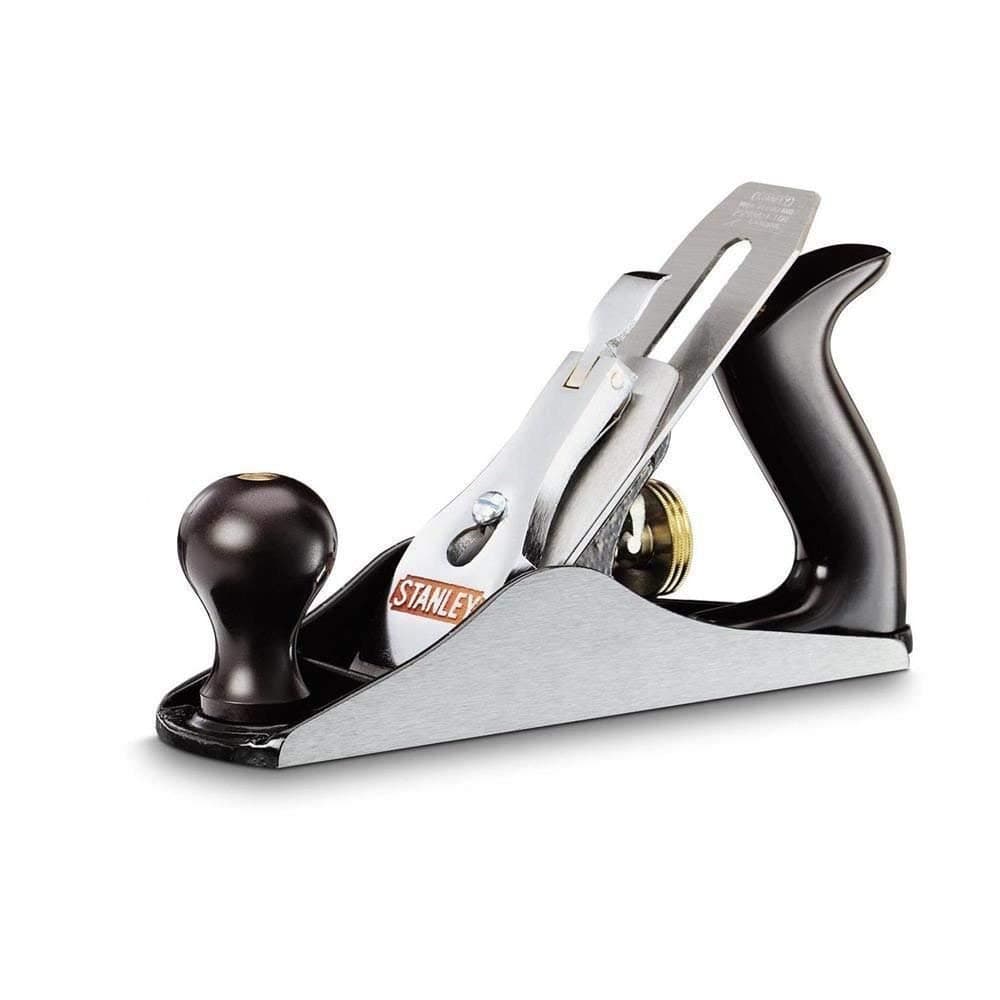
🪚 Elevate your craft with precision that speaks volumes.
The STANLEY No. 4 Bailey Bench Plane is a 245mm smoothing plane featuring a 45mm hardened chrome carbon steel blade and a precision cast grey iron base. Designed for fine finishing in cabinetry and joinery, it offers rapid fine adjustment for accurate blade control and long-lasting sharpness, making it a reliable tool for professionals and serious DIYers alike.













| ASIN | B0001GRVKU |
| Base Material | Iron |
| Best Sellers Rank | 124,713 in DIY & Tools ( See Top 100 in DIY & Tools ) 46 in Smoothing Planes |
| Brand | STANLEY |
| Colour | Multi-colour |
| Country of Origin | Mexico |
| Customer Reviews | 4.2 4.2 out of 5 stars (433) |
| Cutting Depth | 45 Millimeters |
| Cutting Width | 5 Centimeters |
| Global Trade Identification Number | 05000366120041 |
| Included Components | Smooth Plane |
| Item Dimensions L x W x H | 25.1L x 14.4W x 6.8H centimetres |
| Item Type Name | Smooth Plane Bailey No. 4 |
| Item Weight | 1.92 Kilograms |
| Manufacturer | Toolbank (First Order Account) |
| Material | Carbon Steel |
| Model Number | 1-12-004 |
| Power source | Manual |
| Style | Modern |
| UPC | 604310237677 027131845614 798256198892 |
| Unit Count | 1.0 count |
W**R
It's a Stanley - expect quality
It's a Stanley, so it works, it's stable, it's reliable. Having spent 20GBP on a cheap "Pound Shop" own brand plane, ones sees where the extra money goes on a quality product from a quality manufacturer. And one does not regret it. My "cheap" plane is now wedging the workshop door open (it's about all it's any use for.) There's an old adage "buy cheap, buy twice" - at least when it comes to tools. Lesson learned. Hand plane obsessives and/or collectors will no doubt opine that the totes are plastic and not wood, and this and that are some micrometers too big/small, the quality of the cutting iron , etc. - but for an average "handyman" (or woman or non gendered specific individual,) this just gets the job done. Like all planes (and cutting tools generally,) even "new" it will benefit from a bit of "setting up" - e.g. lap the base, soften/bevel the edged, sharpen the iron, check everything is lubricated - I also like to sand down the mould seems on the totes for extra comfort - but once done it's a joy to use. For newbies, there's plenty of YouTube vids showing how to set up a plane.
Y**O
Good quality plane but not perfect
This is a quality hand plane in overall. I give 4 star because the cap iron on my one (which I bought a few weeks ago) had a very rough finish at the front contact with cutter which sometimes traps wood chips when in a fine setting (very annoying). So I had to sand down and polish the front contact edge of the cap iron with sandpapers (240 to 2000 grades). Now the problem disappeared and it is a definitely nice hand plane.
P**T
Good item
Excellent tool
J**N
Takes time well spent to set up, works beautifully!
I bought this plane knowing it isn't top of the range but it was at the limit of my price range! I'm not disappointed and am really enjoying using it. It is well made, solid and good quality. I'm a novice plane-user and felt a little daunted by it, as I'd read negative reviews which said how long it took to set up. I think the key is, accept you need to spend a good bit of time setting it up before use, but enjoy learning about it too. Firstly the blade needs honing from 25° to 30°. And to do that you'll need to learn all components. Instructions are OK, but not ideal. So I checked out Matt Estleas YouTube channel, one of his videos titled "how to get silky smooth shavings from a plane". He has in fact 7 videos on settings up planes. He explains everything brilliantly and now my plane is set up perfectly❤️ It took a couple of hours perhaps but they were well spent and very pleasant!
V**U
Acceptable
This is my first hand plane, but I've read a lot before buying it. So, i decided to get a cheap Stanley firstly for training myself in tune it up. For sure, it was a good decision, because it was a lot of tuning to do. First of all, the sole wasn't flat at all. It required about 1 1/2 hours of flattening.The frog must be flatten to - another half an hour. The chip breaker must be trimmed off to eliminate gaps. The mouth must be filed out in order to let the shaving out. Off course, the iron must be sharpen and honed (finally I bought another 3.1 mm thick Juuma blade for best results and I kept the original as a spare). The most annoying issue was that the frog simply didn't stay parallel with the mouth - the alignment tab is really useless because doesn't guide the frog at all. It was a matter of 'eyeballing' for setting the blade parallel with the throat and it still is.The frog didn't sit firmly against the plane body, there were only a few square millimeters of contact between them. I've tried to increase the contact surface by rubbing the frog back and forth against the plane,using oil and lapping grit. Now it seams that the body supports the frog with all the intended surface and the rocking was eliminated (i have some pictures if needed), but the frog still doesn't slide parallel with body sides when acting the adjustment screw. So the final setup is somehow a matter of eyeballing. The blade adjustment screw has about 2-3 revolutions of dead heat, but as far as it is my first hand plane, i don't know if this behavior is normal or not. Now I can use it chatter free and it works smoothly but only in softwood. I don't know how it will work with some hardwoods. Definitely, could be a good choice for someone who wants to learn what a hand plane is and how to set it up !
A**Y
Nicely made and finished as what you would expect from ...
Arrived next day on prime. Nicely made and finished as what you would expect from Stanley. The main grip is of course composite plastic and not wooden so the the feel and grip is slightly compromised but I knew if would be. I will used it only occasionally so I'm happy with that. Ive tried it out and it performs as I would expect.
M**E
Good to Learn Plane Setup and Maintenance On
Although this plane worked right out the box it does actually need a fair bit of setup. However for I beginning plane I think that is a good idea as you learn a lot about plane setup and maintenance as you do it. The sole and sides are not finished smooth however as the plane body is still releasing the tensions from manufacture I do not regard this as a problem as at around sixth months from purchase it will need the sole and sides to be ground flat anyway. The only downside of the plane are the plastic handles. These shatter very easily. I dropped mine on the floor within a week of purchase and as a result had to carve a replacement tote out of some scrap wood I had to hand. However once properly set up this plane is as good as a pre war vintage one.
G**Y
Value for the price
This was brought for my husband. He was very pleased with plane and thought it was good value for the price. This seller was top marks for me. Fast trouble free buy. Would buy off him again.
A**R
I've been reassembling my woodworking toolkit (don't ask!) and this little fellow will be the core of it. The Stanley #4 is THE classic plane. I'm planning on using it for some fine work, so I've done some tuning, as out of the box, while it's entirely usable, it responds well to having its sole flattening and a couple of other tiny tweaks. Hence the four stars for accuracy and for beginners. If you're willing to invest some effort and time into this gem, it'll be a tool for life.
S**E
Front knob and back handle are made of very cheap plastic, they were broken into two pieces when i received. These tools are legend for woodworking for centuries. How come Stanely: The inventor" of this tool shamed them with cheap mentality by putting cheap plastic knob and handle?
A**R
Seems ok
ね**こ
中古扱いでっとても安く購入できました。 ですが中身はほとんど新品。週末に刃を研いで試し削りです
L**B
Visto de lejos causa muy buena impresión. Es un placer ver la inscripción "Stanley", y aún más "Bailey", el inventor del sistema de clasificación (este es el nº 4, un cepillo orientado al acabado fino, aunque es quizá el más polivalente de toda la serie). Al acercarse uno, se comienza a esfumar parte del encanto: Los dos soportes para la presa manual ya no son de madera, sino de resina, un asunto menor, pero también un presagio. Al intentar poner a punto el cepillo descubro un asunto que ya no es menor: La superficie inferior es descaradamente cóncava en sentido longitudinal, alrededor de 1 mm de desnivel en la parte media. No sólo eso, sino que tiene un estriado longitudinal burdo en el que puede uno "desbastarse" las uñas al frotarlas transversalmente, algo inaceptable para un cepillo orientado al acabado fino. Preparo la lija de 120 sobre un cristal, para asegurar un plano recto. Tras media hora de trabajo, me queda más del 70% por nivelar. Paso a lija de 80 con igual resultado. Llevo una buena parte de la tarde y calculo que al ritmo que voy va a tomarme una semana... Claudico, y lo paso por la lijadora de banda (de mesa), que trabaja mucho más deprisa (también con lija de 80). Pero cuidado: la inhalación de polvo de acero de fundición es muy nociva, así que mascarilla obligada. Luego vuelvo a las lijas sobre el cristal (de 120, 180, 320, 400, 600 y 1000). Después hay que redondear discretamente los cantos laterales, anterior y posterior, cosa que hago con lija de 320. Hay que regularizar también con una lima pequeña la ventana por donde sale la cuchilla. Al terminar el proceso anterior, afilar la cuchilla es un placer en comparación, y tras ajustar toda la tornillería (no hay una sola pieza que hayan atornillado de forma simétrica), el cepillo queda a pedir de boca y va como la seda, si bien no es posible todo el recorrido de la cuchilla de corte desde la posición de trabajo hasta quedar guardada, sin un ajuste adicional en la bayoneta exterior. ¿Qué habría pasado si en lugar del Stanley Bailey hubiera comprado el equivalente de Silverline, Faithful o Draper? Seguramente le habría dado las cinco estrellas, habría pagado menos de la mitad, me habría dado un trabajo similar de puesta a punto, y habría pensado: '¿por qué no compraría el Stanley?' Igual que las tres marcas citadas -que también vende Amazón-, me da la impresión de que este cepillo de Stanley es otro producto más de manufactura oriental, genérico, al que ponen la marca encima y lo cobran según cotización de quien puso la estampa. Desgraciadamente, Stanley cotiza bien. No estoy insatisfecho con el cepillo, puesto que finalmente va bien, pero si lo hubiera de volver a comprar, sería un Draper, Faithful o Silverline. Espero que esto pueda ayudar a alguien.