We remain fully operational. Our teams are working around the clock to ensure your deliveries continue safely.

下载应用程序


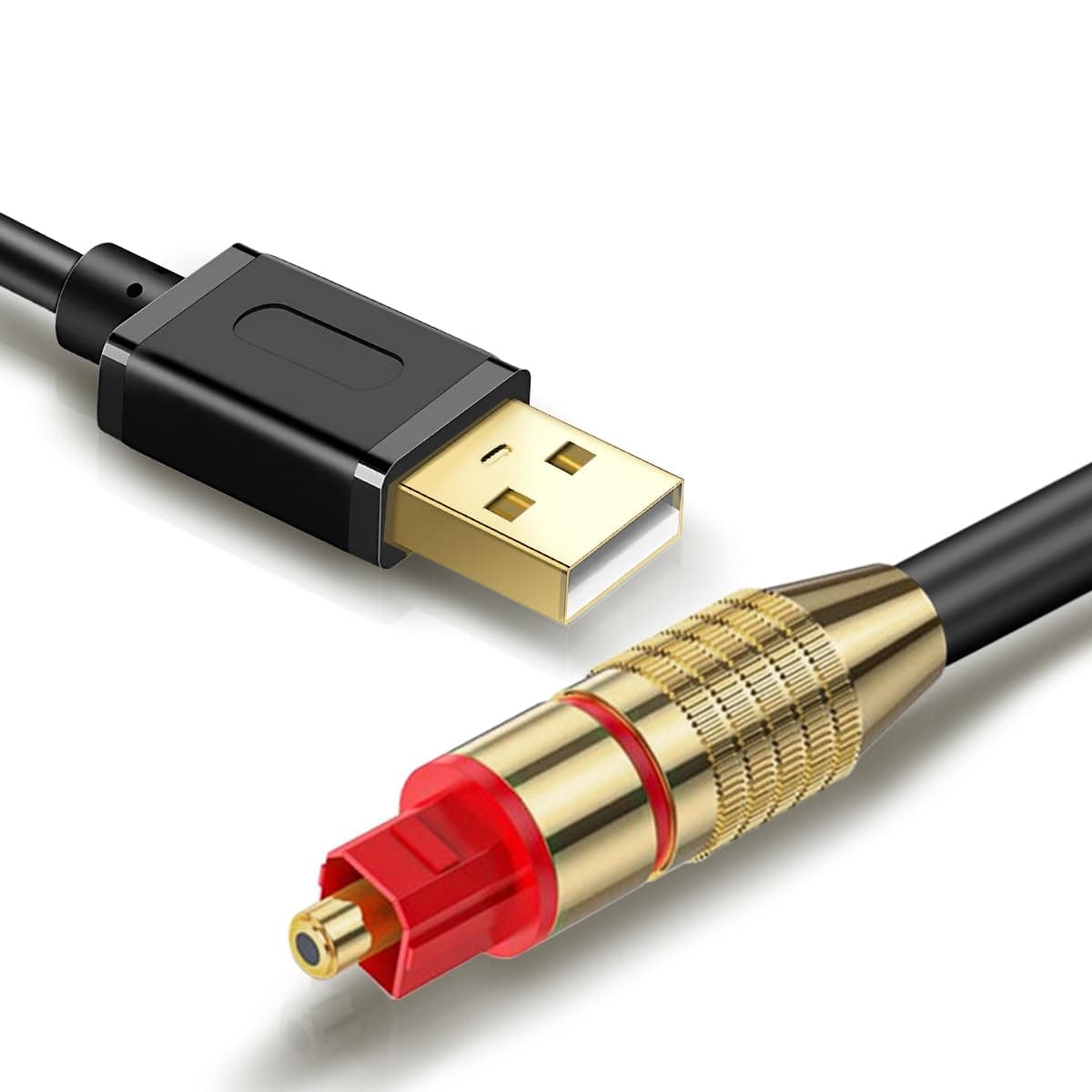
🎧 Elevate your sound game—connect, convert, and conquer your audio world!
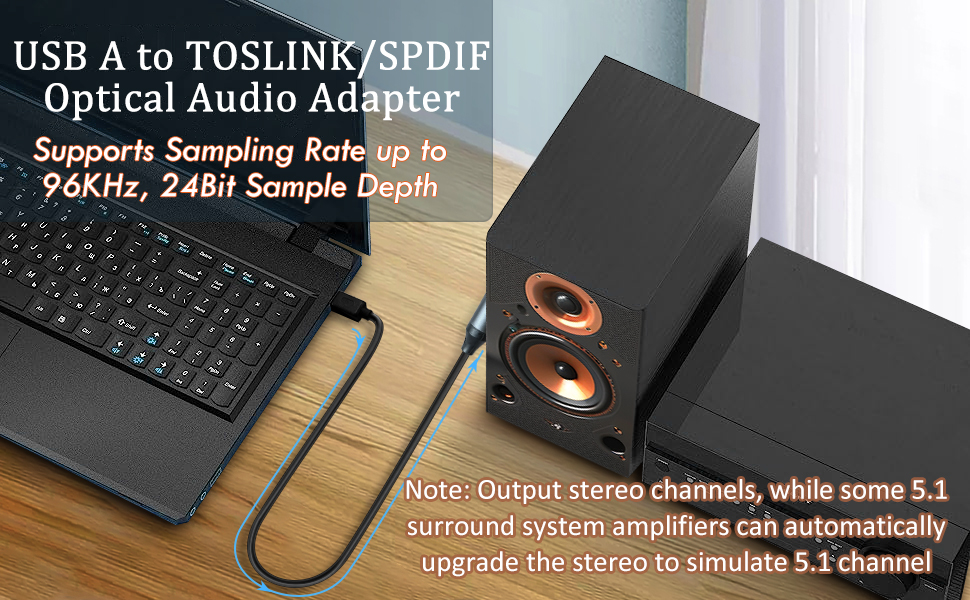
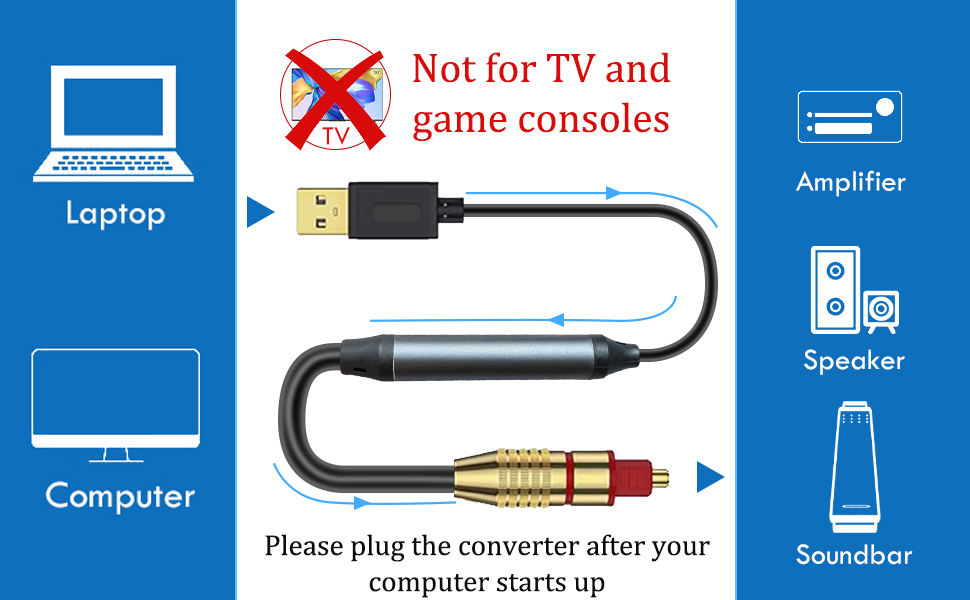
The Tackston USB A to TOSLINK Optical Audio Adapter is a unidirectional digital converter that effortlessly connects USB Type A devices—including Windows, Linux PCs, and PS5 consoles—to SPDIF optical audio systems. Delivering pristine 96kHz/24-bit lossless sound without the need for drivers or external power, it offers a clean, plug-and-play solution for audiophiles and gamers seeking superior audio clarity and hassle-free setup.




| ASIN | B0CGVK3MC1 |
| Best Sellers Rank | #68,400 in Electronics ( See Top 100 in Electronics ) #82 in Digital-Analog Converters |
| Item model number | USB to Optical 1.5M |
| Manufacturer | Tackston |
| Package Dimensions | 14.4 x 14 x 3.81 cm; 150 g |
C**F
Hab mir das Kabel bestellt weil die Ps5 kein optisch Eingang hat ,und es funktioniert wunderbar klare Kaufempfehlung
E**A
Funciona a la primera sin necesidad de alimentar externamente el dispositivo, la consola lo alimenta lo que hace que su instalación sea más limpia
H**Y
I was given a BOSE SOLO 5 soundbar from a friend. It sat in a box for nearly 6 months because this version is not AIRPLAY compatible and nearly every other audio device in my house is. It has Bluetooth, but that technology really only accepts a single connection vs AIRPLAY which will allow all compatible speakers to connect at the same time in different rooms with individual volume control and delay free audio transmission. Fast forward 6 months after a move and I start looking for some new PC speakers for my office. I had an old pair of DELL speakers with a small bass box and 2 desktop speakers that I think I've had for at least 15 years. They've worked well, but had developed an annoying hum whenever the power was turned on. I decided the BOSE SOLO 5 soundbar would be perfect for the office since it's a single connection and I'm very familiar with BOSE quality and sound since I have a 5.1.2 ATMOS BOSE surround sound setup in my living room. The BOSE SOLO 5 has 3 audio connections available: 1) A standard 1/8" headphone jack 2) A single RCA connection (the old red, white & yellow push in connectors which used to be on every TV & 3) An optical audio input. Of those 3 options, only the optical audio is truly a digital connection. I decided I wanted to use that connection directly to my PC for the best audio signal available. However, my PC motherboard doesn't have an optical audio out port on it. So, I did a quick search on Amazon and found this USB-A (standard flat USB connection) to an optical audio connector. My plan was to plug the USB port into the PC and the optical audio into the soundbar for all my PC audio. I ordered the cable and it was going to be several days before it arrived. In the meantime, I connected a standard 1/8th headphone jack cable to the PC audio output and into the same input on the soundbar. It worked perfectly and sounded great. When the optical audio cable arrived, I swapped out the cables and everything worked exactly as it was designed. The PC immediately recognized the USB audio device was connected and I was able to switch to that audio source by clicking the speaker icon at the bottom of the screen (within Windows), and selecting the USB AUDIO device from the provided list. Unfortunately, the way optical audio is configured on a PC, it was not the ideal setup for me (and I will get into the technical specifics below). Before I do, let me reiterate that this cable does EXACTLY what it's designed to do. It feels solid in your hand, the connections are secure and it 100% converts your digital USB-A connection to a digital optical audio connection that your receiver, soundbar or other audio device will accept and play. It's also reasonably priced for the quality and functionality, so for all those reasons, this cable is getting a 5-star review. Now, on to the reason I won't actually be using it. As I stated earlier, my desire was to get a digital audio signal to my soundbar. When I connected this cable to my PC and the soundbar, the volume controls on my PC (including my multi-media audio controls on my keyboard) become useless. Unlike a standard 1/8" headphone jack connection plugged into your computer, this optical audio setup only uses the audio source as your volume control. One would think that since the computer is your audio source for the optical audio, it would work just like any other connection. But that's not exactly true. The audio source on a PC is whatever is actually playing the audio. For example, to test my audio connection, I played music through Spotify on my PC. Spotify is an installed program and has it's own volume controls built into the player (as do most video & music players on a computer). So, Spotify is playing music and I'm very happy with the sound quality of the soundbar. But when I press the mute button on the keyboard (acknowledged by the PC with an "X" through the speaker icon in Windows) the music continues to play. The volume slider of the computer does not affect the soundbar volume in any way. The only way to adjust the volume of the soundbar is to adjust the Spotify volume slider within the program, or use the soundbar remote to change the volume up or down. As a PC speaker, my plan was to set the soundbar level (via soundbar remote) to roughly 75%, then use my PC audio controls to adjust daily volume (including the mute functionality) whenever I wanted. Since the volume controls don't change any volume with the optical audio into the soundbar, even the normal Windows chimes (new email notifications, window prompts, etc...) would come through at whatever volume the soundbar was set to...in this case very loudly. Not having full PC volume control was a deal breaker for me. As much as I love knowing I'm getting the best digital audio quality, this specific adapter technology is setup such that it is not conducive for a normal computer setup, unless you wanted to ONLY control your volume for a specific app or through the soundbar remote. If you are using your computer as a home theater setup, none of this would be an issue for you since you would probably plan to control your movie audio via the soundbar/receiver remote anyway. For my specific PC audio setup, it's just not what I wanted and have gone back to the 1/8" headphone jack connection for full audio control via my multi-media keyboard buttons. I do not know without testing it, if a built-in optical audio port on a PC motherboard, or a separate optical audio PCI card physically installed on your PC, would function the way I was hoping for or not. All I know for sure is, this adapter does not. Hope that helps someone looking to do the same thing.
A**T
Bilindiği üzere, dizüstü bilgisayarlarda optik ses sürücüsü bulunmuyor şayet optik ses girişi olan bir hoparlörünüz varsa bu bağlantıyla bilgisayardan ses alamıyorsunuz, ben bu dönüştürücüyü bu amaçla aldım ve gerçekten ses gücünden sesin netliğinden çok memnun kaldım, bana göre iki tane eksiği olmakla birlikte genel olarak iyi bir ürün, bu iki tane eksiklik Bir keşke tip C olsaydı USB C olsaydı ikincisi cihazımızın ses ayarını yapamıyoruz yani hoparlörün sesini bu dönüştür bu dönüştürücü üzerinden kısamıyoruz ancak kumandayla kısabiliyoruz
B**H
Plugged it from my DAC to PS5. Sounds SO much better than plugging the headphones into the controller.