We remain fully operational. Our teams are working around the clock to ensure your deliveries continue safely.

下载应用程序


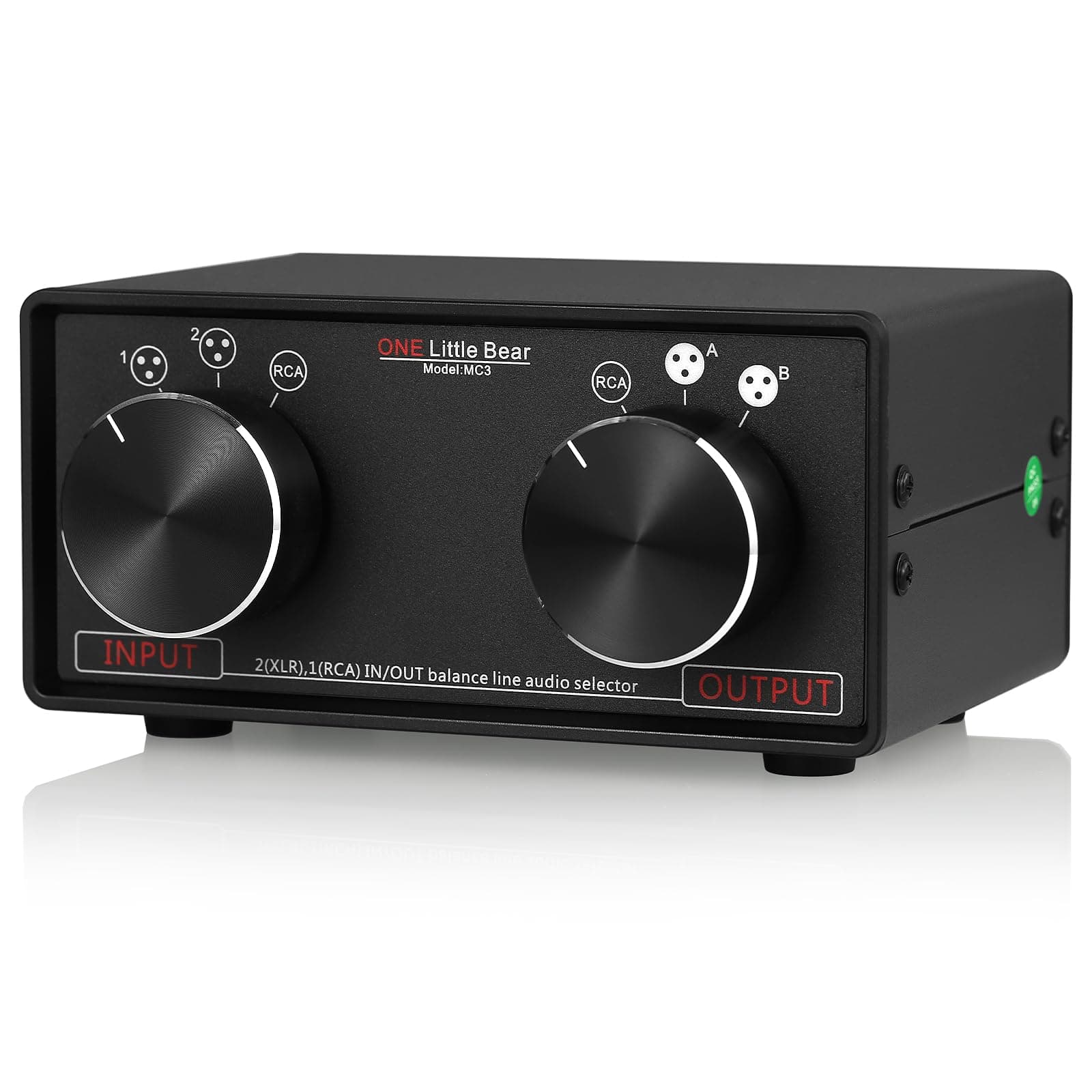
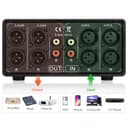

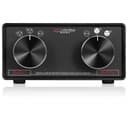
🎧 Elevate your audio game with seamless switching and zero compromise!
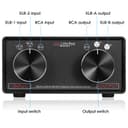
The Nobsound Little Bear MC3 is a compact, passive 3-in-3-out audio selector and splitter that flawlessly switches and converts between balanced XLR and unbalanced RCA signals. Designed for audiophiles and professionals, it offers high-quality rotary switching with no impact on sound integrity, making it ideal for desktop, home, or small office audio setups.
| ASIN | B07D7P7366 |
| Best Sellers Rank | #13,936 in Musical Instruments ( See Top 100 in Musical Instruments ) #20 in Recording Signal Converters |
| Brand | Nobsound |
| Cable Type | XLR |
| Color | XLR & RCA |
| Compatible Devices | PC |
| Connector Type | RCA |
| Connector Type Used on Cable | RCA |
| Customer Reviews | 4.5 out of 5 stars 138 Reviews |
| Item Dimensions D x W x H | 4.17"D x 5.91"W x 2.76"H |
| Manufacturer | Nobsound |
| Number of Ports | 3 |
| Unit Count | 1 Count |
L**7
Solid
Works great and made very well.
C**Y
Good quality 3 in 3 out balanced/RCA selector/router box.
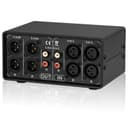
This is just a simple source and output selector. I am using it to route input signal from my two DACS; a Topping D30 and (not pictured) SMSL SU8 to my various amps. I'm considering getting another 2 in 1 out so I can connect the output of 2 amps and do quick a/b comparisons. It takes up a lot of space because it has 8 balanced connections and 4 RCA connections on the back. Knobs feel sturdy enough. This is an entirely passive source/output selector so, aside from any potential signal degradation you might get from the quality of the internal wiring this should be a fundamentally neutral device. As far as I can tell it's transparent and has not degraded the sound quality at all and made it much simpler to route inputs to desired outputs. It's a light weight unit. It's not built like a tank but, unless you're extremely hard on things, this should last you a very long time, and because it's so simple in design it should be very user serviceable if one of the selector switches, or input connectors ever fails. You'd just have to be relatively handy with a soldering iron. Highly recommend.
R**Z
A very versatile, simple and quality switchbox
Using in my studio to greatly expand my monitoring input possibilities. In my case: a turntable, CD player and 2nd AD-DA interface. I can send those either to my DAW or directly to my monitoring unit. Straight forward - great quality.
J**K
Good value
Woks well and as intended. No bleed through that i can hear. Next upgrade will be a custom job from Mapletree audio at hundreds beyond the cost of this unit but with triple and maybe more features and 15x the price. Can’t compare with the simpleness and ease of use of this unit. If you need a simple source multiplier this should be a solid go-to for you. Excellent value.
P**X
Transparent switching with great cable management
Transparent switching. Great because all the connections are on the back of the unit. Have another unit from the same company and the jacks are on both the front and the back, so it necessitated wires run to both its front and its back. That made for a real problem with cable management. Also nice that the unit has both RCA and XlR connections.
J**Y
If you are serious about sound, this is excellent
I’m very happy with this device! I need to bounce back and forth between my work laptop and DAW computer and had been swapping cables and adapters depending on what I was doing. Some connections caused audio issues, not to mention it was a pain the butt to switch back and forth. I have two nice Yamaha monitors for video/audio projects and only use XLR cables to connect them for balanced clean sound. This Little Bear unit ABSOLUTELY maintains audio integrity and sounds significantly clearer than my previous adapter approach. I use the RCA input for my non-DAW computer (aux to RCA cable). And again, XLRs from the bear to my Yamahas. I use an audio interface for my DAW work which i connect via XLR. Friggen LOVE this. Thank you ONE! There aren’t many solutions like this out there! I have to assume any negative reviews are the result of not understanding differences between cable types (i.e., TRS vs TR vs XLR) and balanced vs unbalanced signals, because cables tend to look the same even though they are not.
J**R
Almost perfect.
I love that this is analog, no volume control; simple 3in / 3out audio switcher. What I didn't care for is that with the RCA in and out used, I was getting noises from my wireless mouse and keyboard played through the speakers. I tried all sorts of things to work around it. Using the same cables, without this device, it was quiet, so it seems like it's all about this device as the culprit. As long as the combination wasn't RCA+RCA, the problem didn't persist. So, I had to send it back.
T**Y
Great RCA and RCA input to XLR and RCA output, NO clicks
Well made, make-before-switch so there is no click when switching, sturdy knob feel on switches. Excellent RCA connectors, Buying a second unit for a Professional Mix room without hesitation.