We remain fully operational. Our teams are working around the clock to ensure your deliveries continue safely.

下载应用程序


Buy anything from 5,000+ international stores. One checkout price. No surprise fees. Join 2M+ shoppers on Desertcart.
Desertcart purchases this item on your behalf and handles shipping, customs, and support to Hong Kong.
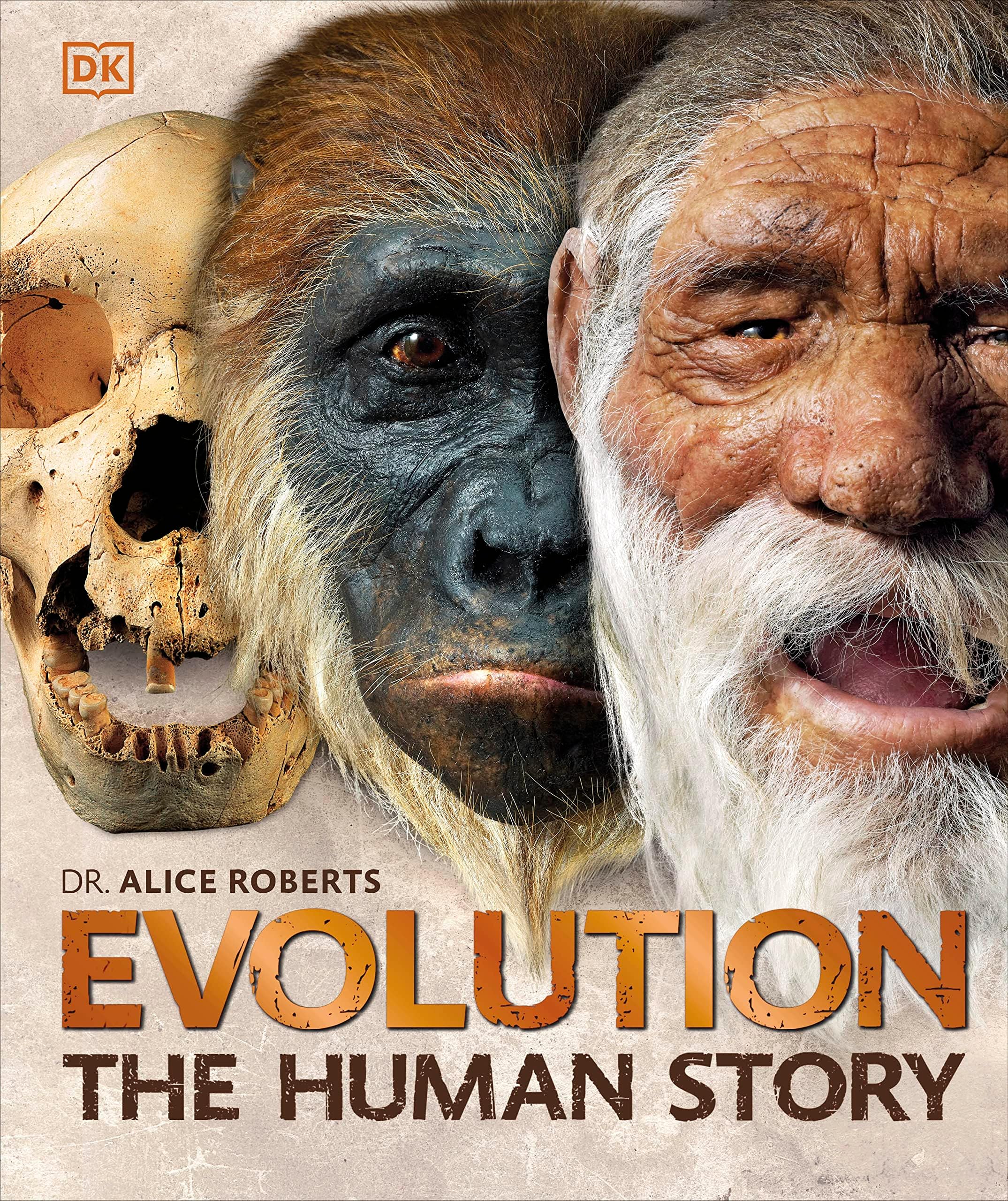
Buy Evolution: The Human Story, 2nd Edition on desertcart.com ✓ FREE SHIPPING on qualified orders Review: Best book on evolution - “Evolution: the Human History, 2nd edition” by Dr. Alice Roberts is by far the best work I’ve read on the topic of human evolution. The reason is simple: she clearly explains- shows- the course of human evolution over the last ten million years. I smile at myself as I write this, but the generous amount of large, high-quality photographs and renderings enlightened me more than whole books had done previously. These visual aids are accompanied by explanatory paragraphs that contextualize and clarify. The book is broken into five sections. The first sections basically are prologue to the emergence of primates, the genus to which humans belong. Ms. Parker includes some real nuggets in her writing. For instance, though I’ve been reading about the history of agriculture for over two years now, no book I’ve encountered has mentioned the deeper history of grasses, grasslands, and prairies, certainly worth knowing when studying the evolution of plants. Ms. Roberts notes that grasses first appeared around 55 million years ago, that grasslands expanded 35 million years ago, and that prairies evolved on all continents 25-20 million years ago. This establishes a terminus ante quem for when primates could leave the trees and begin living in savannahs, a habitat that favors walking on two instead of four limbs. Perhaps the heart of the books is Ms. Roberts’ detailed depiction and description of the evolution of apes into hominins. The photos and drawings show how all the important features changed: head, limbs, digits, rib cage, spine, pelvis, etc. She also explains why they changed, at least insofar as we can answer the question. Many questions remain unresolved and some seemingly sure answers will be revised in the future. The last two sections cover the spread of homo sapiens out of Africa and its colonization of every continent. Because this is the second edition, updated in 2018, Ms. Roberts could include the fact that Neanderthal and homo sapiens interbred as proven by DNA analysis, a very important discovery. She closes the book by broadly describing the first major civilizations in the Near East, China, and the Americas. Ms. Roberts book is the finest of its kind for the average reader. I would recommend this book to all age groups, but especially students in high school and college. It is wonderfully free of political cant- it talks about climate change (a constant since the beginning of earth) without any gratuitous assertions of man-made global warming. It grabs and holds the reader’s attention and broadly traces themes and ideas that other books can explain with more depth. It’s an achievement. Review: Great Book - A great book on the latest research of evolution. Great pictures and gives alot of information though not in depth information,but it is a great stepping stone.




























| Best Sellers Rank | #28,924 in Books ( See Top 100 in Books ) #9 in Scientific Reference #82 in History & Philosophy of Science (Books) #93 in Biology (Books) |
| Customer Reviews | 4.7 4.7 out of 5 stars (1,155) |
| Dimensions | 10.2 x 0.91 x 12.17 inches |
| Edition | 2nd |
| ISBN-10 | 1465474013 |
| ISBN-13 | 978-1465474018 |
| Item Weight | 3.56 pounds |
| Language | English |
| Print length | 256 pages |
| Publication date | July 10, 2018 |
| Publisher | DK |
F**N
Best book on evolution
“Evolution: the Human History, 2nd edition” by Dr. Alice Roberts is by far the best work I’ve read on the topic of human evolution. The reason is simple: she clearly explains- shows- the course of human evolution over the last ten million years. I smile at myself as I write this, but the generous amount of large, high-quality photographs and renderings enlightened me more than whole books had done previously. These visual aids are accompanied by explanatory paragraphs that contextualize and clarify. The book is broken into five sections. The first sections basically are prologue to the emergence of primates, the genus to which humans belong. Ms. Parker includes some real nuggets in her writing. For instance, though I’ve been reading about the history of agriculture for over two years now, no book I’ve encountered has mentioned the deeper history of grasses, grasslands, and prairies, certainly worth knowing when studying the evolution of plants. Ms. Roberts notes that grasses first appeared around 55 million years ago, that grasslands expanded 35 million years ago, and that prairies evolved on all continents 25-20 million years ago. This establishes a terminus ante quem for when primates could leave the trees and begin living in savannahs, a habitat that favors walking on two instead of four limbs. Perhaps the heart of the books is Ms. Roberts’ detailed depiction and description of the evolution of apes into hominins. The photos and drawings show how all the important features changed: head, limbs, digits, rib cage, spine, pelvis, etc. She also explains why they changed, at least insofar as we can answer the question. Many questions remain unresolved and some seemingly sure answers will be revised in the future. The last two sections cover the spread of homo sapiens out of Africa and its colonization of every continent. Because this is the second edition, updated in 2018, Ms. Roberts could include the fact that Neanderthal and homo sapiens interbred as proven by DNA analysis, a very important discovery. She closes the book by broadly describing the first major civilizations in the Near East, China, and the Americas. Ms. Roberts book is the finest of its kind for the average reader. I would recommend this book to all age groups, but especially students in high school and college. It is wonderfully free of political cant- it talks about climate change (a constant since the beginning of earth) without any gratuitous assertions of man-made global warming. It grabs and holds the reader’s attention and broadly traces themes and ideas that other books can explain with more depth. It’s an achievement.
V**R
Great Book
A great book on the latest research of evolution. Great pictures and gives alot of information though not in depth information,but it is a great stepping stone.
C**E
More pics than text
This book is the best I've read on Human Evolution. Much more graphic than text. The text is very informative and covers most important points, but the graphics illustrate the concepts and context better than most. Simple and well explained processes early in the book, such as Geologic processes and Plate Tectonics, Geologic Time, and even the process of Fossilization are very well explained and graphically illustrated. Most of the latter part of the book consists of well explained and illustrated descriptions of the various fossils found thus far. These go from pre-human, even pre-Australopithecus, to early modern humans (Homo sapiens). All are well illustrated as well as a textual explanation. Brief behavioral explanations are also included, which become more and more suppositional as the earliest fossils are examined. Especially important are the well explained methods used to examine and attempt to explain their environment and behavior. A well recommended read!
W**H
Good review of the evolution of hominids
Very good review of the evolution of the hominid genius. Only problem is there are new discoveries constantly being made which sometime makes this excellent book automatically outdated. Still strongly recommended.
J**T
Good overall
Good content but came a bit damaged on the cover
M**F
Faces of our ancestors.
Evolution, the Human Story, ed. by Alice Roberts is the best illustrated book I have ever read. The amazing detailed reconstructions of our ancestors are fantastic and as accurate as the fossil skulls and post-cranial skeletons allow. The maps and photographs of artifacts accompanied by the expert commentaries are invaluable. It is unreasonable to expect that a single volume can cover so large a topic spanning several continents and several million years, but this book surpassed my expectations. The book should be in every school library. It was first published in 2011, too early for the authors to fully appreciate the development of DNA analyses of ancient fossils and the recognition of previously unknown species such as Homo denisova. H. denisova was the first hominin species to be revealed not by fossil classificattion but by mtDNA and nuclear DNA sequencing in 2010. Subsequently, more recent fossil fragments have yielded evidence of the species throughout Eastern Asia, Southeast Asia, and Melanesia, far beyond Denisova Cave in the Altai mountains of Siberia. However, DNA does not yield the direct physical evidence for illustrating the faces of our ancestors or much of our behavior. While early bipedal hominoids can be illustrated, language and music, our own most important defining communicative behaviors, left us with no visible traces. It has been my purpose in recent years to address this dearth of knowledge, but I have to assume that my readers are already familiar with the plethora of physical evidence so well illustrated in this book.
J**R
belongs in every students home and public library.
Nice large book with excellent drawings to supplement the written words. Evolution is not one straight line but an entanglement along the way.
J**N
Great overview.
This is a very helpful book for outlining the major primate fossil findings. The timeline starts with the creation of the earth and follows life's changes up to modern humans. I especially liked the maps locating important finds and the listing of recovered fossils. Pictures are well chosen and help tell a story. This is a good place to start for anyone who wants to know just what the archeologists have discovered.
R**G
Livre simple mais basé sur la science. Très bien illustré. Soit pour commencer à étudier le sujet (aucun point n'est approfondi), soit pour accompagner d'autres livres davantage documentés mais forcément plus difficiles à lire. En effet, la complexité des théories au sujet de l'évolution des primates et de l'homme font des livres simples et bien illustrés de bons compagnons. Cinq étoiles sans hésiter, si on le considère comme une excellent illustration d'autres livres qui permettent de réfléchir sur un sujet très complexe.
R**O
Libro muy recomendable para todos los interesados en la evolucion humana. Sobre todo por el despligue visual de documentacion grafica tan escatimada en la literatura academica de la materia, y que resulta tan sugestiva para entender el tema. Y barato!
"**I
Lectura básica para los aficionados a la Antropología , y especialmente nuestros mas cercanos antepasados. Lectura clara y didáctica a cargo de la Dra. Alice Roberts y las magnificas ilustraciones desarrolladas por Bob Nicholls. Es un libro para disfrutar leyendo.
R**E
Insanin evrimini görsel şölene çeviren harika bir kitap sorunsuz geldi
B**I
247 pagine (di testo) che sono una meraviglia dopo l'altra! Tutto ben spiegato soprattutto mediante figure a colori preziose nella loro precisione ed accuratezza. L'aggiornamento è notevole. Un unico "inconveniente": è scritto il lingua inglese, quindi tanti lettori, in particolare insegnanti di classi "medie", licei ecc. non potranno utilizzarlo per lezioni in classe se non conoscono la lingua. C'è da augurarsi che almeno i presidi degli Istituti facciano acquistare il libro perchè già dalle figure si possono trarre spunti per ottime lezioni. Anche antropologi "profani" (come il sottoscritto) lo troveranno utilissimo per chiarire molti aspetti della complessa ma avvincente materia di studio. A questi consiglio anche l'acquisto del recente, ultimo volume di Ian Tattersall "I signori del pianeta", per ora disponibile solo come supplemento alla rivista italiana "Le Scienze" numero di Aprile 2013 (in attesa che l'editore Codice Edizioni di Torino lo metta in vendita nelle librerie (e presso AMAZON!!). Tale edizione supera tutte le precedenti per via delle numerose citazioni e l'inquadramento storico di siti archeologici recentemente scoperti e studiati.
TrustPilot
1 个月前
4天前