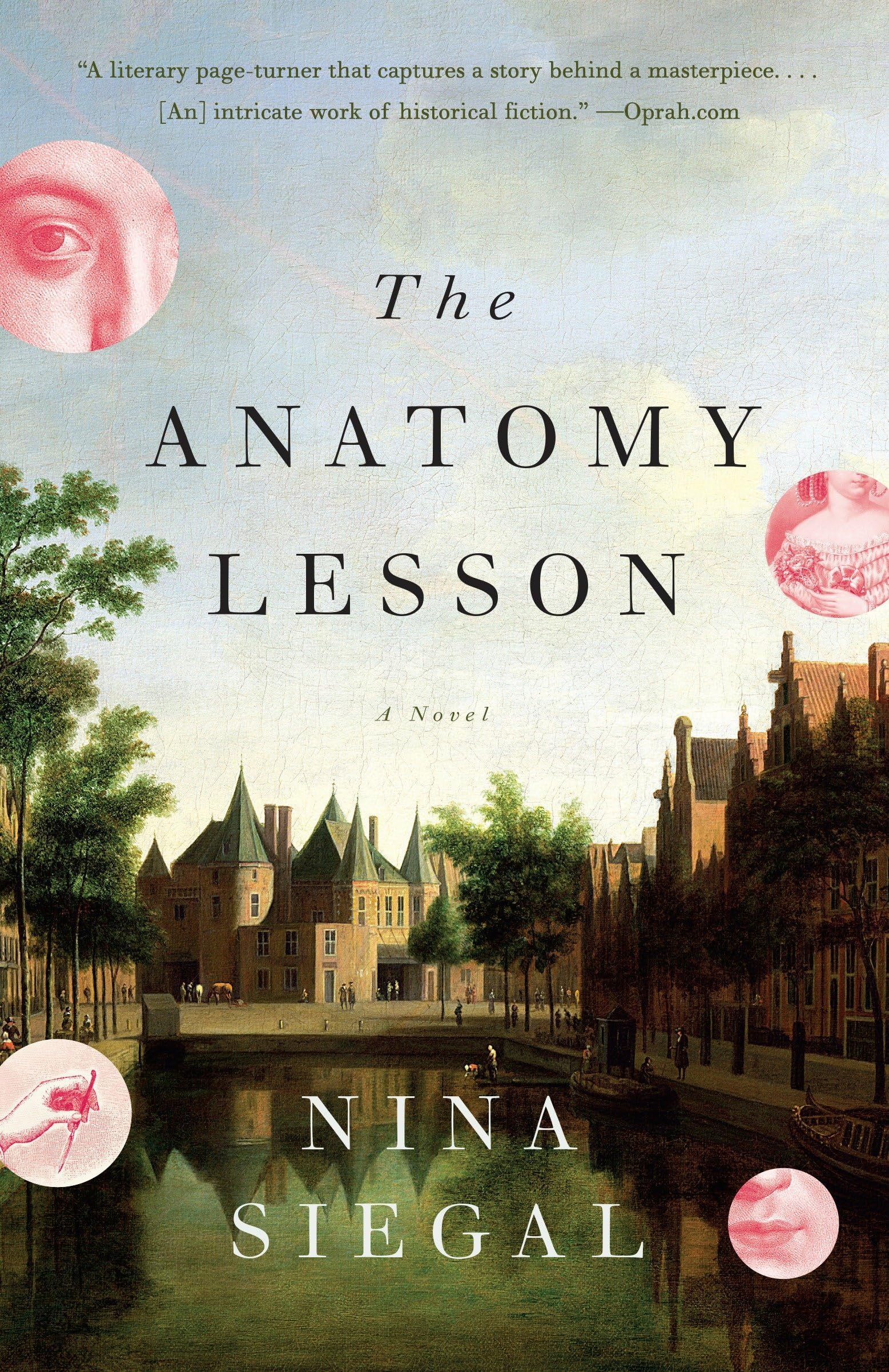
The Anatomy Lesson
Product ID: 11038823
Buy anything from 5,000+ international stores. One checkout price. No surprise fees. Join 2M+ shoppers on Desertcart.
Desertcart purchases this item on your behalf and handles shipping, customs, and support to Hong Kong.
Full description not available
J**E
Hard to relate to these characters
Interesting to have seven characters speak in the first person and ID them with body parts, butit slowed me down as each chapter began..Always had to stop and think, "now who is "eyes? " "Who is "hand?" Etc. "Body" and "Heart" were easy. The others took some getting used to.I failed to engage with these characters, in part, I think because they seemed cartoonishand as if they were living in medieval times, not the 17th century Golden Age I so adore.Call me a sap, but my favorite reads are ones that leave me longing for the charactersafter the book is over. For several days after I've read the last page of such a book, I keep returning to the last two chapters. It's like returning to dear friends you're being forced to give up. With The Anatomy Lesson, I was happy to say good-by to all these characters. It was a relief to be done with them.I also think the portrayal of Rembrandt was off. Perhaps his reputation for crustiness developed later for this is a young (about 26, I believe) Rembrandt. Perhaps he was capable of more pleasant interaction at that age.That said, there was ONE scene in the book which moved me tremendously - the scene where Rembrandt'smother protects him - and his hands in particular - from harm. It's a beautifully written portrayal of a mother's understanding of her son's gift and her ferociousness and determination to help him develop that gift.The rest of the narrative I found rather dry. Even tedious.
G**O
An Historical Mystery, Told in a Unique Way
What if the most striking feature of one of the world's most famous paintings was a lie? Like the best historical fiction, Nina Siegal starts with a surprising new fact: the corpse in 'The Anatomy Lesson' was actually missing its hand. Rembrandt, a pioneer of realism, faked this one detail: why? It reminds me of an author who wondered if DaVinci's paintings hid some kind of code... Siegal is not Dan Brown, and the book doesn't read like a cliffhanger. But if you embrace Siegal's background as an art historian, this book is an insightful and fascinating retelling of the creation of a masterpiece, and indeed all modern painting. For me, this book got better as I read it. The autopsy's mission - to find the location of the human soul - was a failure. But Siegal delights in demonstrating how Rembrandt actually succeeded.
L**S
Weirdly Wonderful
I love historical fiction and this one took me on a ride through art history and 15th century medical science! While the dissecting of corpses isn't a topic I thought would be appealing, I was wrong! When mixed with the real life Rembrandt, and the story of each of the characters portrayed in one of his famous paintings, it was fascinating and fun. I've never read a book quite like this one (which is saying a lot) and I really enjoyed the imaginative story line of unknown people from an Old Masters painting. She really brought both the artist and that period alive with details of everyday life in old Amsterdam. If you're looking for something different, I highly recommend this slightly gory tour of human anatomy and the artist Rembrandt's world!
P**M
The redemptive artist
When a young thief is hanged on the eve of the festival which celebrates a disection demonstration at the college of surgeons, Rembrandt the artist and Descartes the scholar are witnesses both to the disection and to the scene which follows when the young man's pregnant "other" comes too late to save him. All she wants, she says, is for her man to be made whole again. Rembrandt manages to find a way to make that happen for her. With glimpses of life in Amsterdam in the 15th century, and an examination of attitudes and superstitions; with some careful discussion of the artist Rembrandt's work itself, the book is fascinating for the history or art details included.
B**R
An anatomy lesson of life
Remarkably reconstructed tale of not only a superb painting but of the characters include in this masterpiece. How does an artist revise reality on his canvas that is closer to divine reality than history? Each character Is fully developed to make the story seem true. The underlying truth that the human spirit can elevate even the abject thief and that true love can redeem the unredeemable. It is important to continually view the original Rembrandt painting.
F**U
Aghast at Public Dissection
If you don't know the Dutch or German languages, the names of people and places are a bit challenging to navigate and understand the chronology and movement of the characters through the novel. However, some fascinating little-known facts are revealed in the setting and customs of the times to make the events highly credible--events remarkably occurring in one day. Siegal fleshes out the story with some helpful flashbacks and, at times, confusing speakers. Some background in art and medicine along with knowledge of the language and streets of Amsterdam would be helpful.
C**D
A dissection of the human experience of a day in 17th century Amsterdam
I chose this book because I like historical novels and I thought it would be interesting to read some background on this celebrated Rembrandt painting. To my surprise, I found it considerably more rewarding than I had imagined. Particularly satisfying were the explorations of the inner lives of a few very distinct and different personalities from different strata of society interacting on one day in Amsterdam that is memorable now only for this painting of a scene that tells more about 17th century social life than about medicine. The novel is much more than an entertainment; the stories of just a few characters of a particular time and place display a wealth of insight into what is timelessly human.
W**S
Bringing a painting to life
Inspired by the Rembrandt painting of the same name Ms. Siegel did a masterful job in bringing the famous characters of the time and place to life (or death). The recitivist petty thief and the woman carrying his unborn baby play a role in revealing the plight of the common man in 1623 Holland. Science, art and philosophy are undergoing dramatic changes as well.
G**C
Fascinating!
Can’t believe this novel hasn’t received more and greater acclaim. Underrated it seems but invaludly so, I feel. Essence and plot covered extensively in other reviews so will only implore others keen readers of literary fiction to read it for themselves. I loved it!
E**G
Interesting novel
This is a very well-written and imaginative novel with 'contributions' from a number of narrators including Rembrandt, Descartes, Dr Nicolaes Tulp, the character who is the subject of the anatomy lesson and several others. Despite the fact that the corpse on the dissecting table - albeit 'idealised' by Rembrandt in the novel - did not seem to me to be a good match for the character created by Siegal, I enjoyed reading it very much.
M**.
a fascinating story so beautifully told. What a gem
If this subject interests you, a fascinating story so beautifully told. What a gem, I shall treasure this book.
D**R
Refreshing read in many ways but a little too extended-I ...
Refreshing read in many ways but a little too extended-I found my enthusiasm reduced by the time I reached the end.
M**N
Five Stars
Excellent
Trustpilot
2 months ago
1 month ago