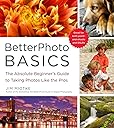
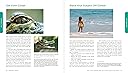
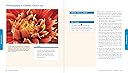

BetterPhoto Basics: The Absolute Beginner's Guide to Taking Photos Like a Pro [Miotke, Jim] on desertcart.com. *FREE* shipping on qualifying offers. BetterPhoto Basics: The Absolute Beginner's Guide to Taking Photos Like a Pro Review: Great book for beginners - Summary You will most likely find this book useful if: - You are 100% beginner - You want to learn how to improve your photos, regardless of the camera type or manufacturer (including P&S, DSLR, and even mobile-phone camera) - You need well written and easy to follow reference - you need some ideas and photography assignment that you can do for self-training You will most likely find this book less interesting if: - you are anything above beginner photographer - you want to learn in-depth about light and exposure - you are willing to spend time and effort to collect this information from online resources, provided that you know what (and where) to look. I received this book from desertcart couple of months back. It was, along with two other books, my first readings material in photography. I found this one much more useful than the other two titles. First, This book is for total beginners just like myself, and it assumes no prior knowledge or experience in photography. So if you know something about how to take photos, you probably won't like this one. The main focus of this book is to teach you the basic guidelines about photo composition. It provides more than 40 tips on how to make your photos look better (e.g. rule of thirds, lead space, simple backgrounds, focusing on one subject at a time...etc). Following those tips, you, and your audience if have any, will immediately notice improvement on your photos. The way those tips are presented is very logical and easy to follow. Although the writer doesn't mention this explicitly, you will notice at some point that the you can't follow all those rules at the same time and you have to select the ones that fit the situation. The book also introduces the reader to different types of photography and what they exactly refer to. Another good thing is that, unlike other books, it gives you two version of each example, the one that follows the guidelines, and the other one that doesn't so that you can compare and understand the impact you are making. Almost all examples in the book are for simple stuff that you can do your self (e.g. your kids by the pool, a nice building on your way home, a field trip in vacation...etc). You can clearly tell that the focus of the book is to teach you photography, rather than showing authors work. This is backed up by the author style in writing. He'll start by telling what he did at the beginning, just as if he is a beginner himself, but when he followed a certain guideline, he achieved better result. The only downside I found, is that you will grow up very quickly on the material. If you start to get this feeling, it of course means that the book did its job perfectly. However, it could have been better if the author included more advanced and challenging material for the readers who are ready to move to the next step. Overall, this is a great book for beginners and I highly recommend it Review: Very useful! - I'm very pleased with the way this book is written and organized. Most photography books go through long, involved explanations of a lot of technical photography terminology before they get to actual photography. This book keeps it simple. For example, last week I wanted to take some pics of the daffodils blooming in my yard, the pond, etc. It was quite foggy in the morning, so I looked up "fog" in the book and was directed to a page with suggestions for taking pics in foggy conditions. I was able to set up my camera in a few seconds to catch some nice pics before the fog burned off. The book is written in a nice conversational style. It is organized into chapters that cover the whole process of photography, from what to shoot, to camera modes, composition, flashes, camera settings, focusing, and a chapter of photo assignments that covers nature, portraits, animals, and art. From there, the book goes on to disuss lighting, aperture, shutter speed and focal length, advanced techniques, and, digital editting. It covers a lot of ground and the way it is organized makes it easy to either read it from cover-to-cover or pick out one topic and only read what you need to know at the moment. I think this is a good book for those of us who have no training in photography to be able to take good photos. I'm not interested in f-stops and aperture, I just want to take nice photos of things and people. It enables me to use my DSLR much more effectively. I use the book's suggested camera settings and photo set-ups and ideas, take the pics and then I'm able to analyze what I like or don't like about the photos. For example, if it suggests using a certain filter and settings, I will take a certain number of photos with the suggested settings and some without and compare the results. Usually, this leads to my researching more of the technical aspects of photography and this makes it much more interesting than trying to sift out the information for which I'm looking. Overall, this book was well worth the price and I would recommend it.


| Best Sellers Rank | #582,347 in Books ( See Top 100 in Books ) #292 in Photography Equipment (Books) #460 in Photography Reference (Books) #545 in Digital Photography (Books) |
| Customer Reviews | 4.6 out of 5 stars 695 Reviews |
M**H
Great book for beginners
Summary You will most likely find this book useful if: - You are 100% beginner - You want to learn how to improve your photos, regardless of the camera type or manufacturer (including P&S, DSLR, and even mobile-phone camera) - You need well written and easy to follow reference - you need some ideas and photography assignment that you can do for self-training You will most likely find this book less interesting if: - you are anything above beginner photographer - you want to learn in-depth about light and exposure - you are willing to spend time and effort to collect this information from online resources, provided that you know what (and where) to look. I received this book from Amazon couple of months back. It was, along with two other books, my first readings material in photography. I found this one much more useful than the other two titles. First, This book is for total beginners just like myself, and it assumes no prior knowledge or experience in photography. So if you know something about how to take photos, you probably won't like this one. The main focus of this book is to teach you the basic guidelines about photo composition. It provides more than 40 tips on how to make your photos look better (e.g. rule of thirds, lead space, simple backgrounds, focusing on one subject at a time...etc). Following those tips, you, and your audience if have any, will immediately notice improvement on your photos. The way those tips are presented is very logical and easy to follow. Although the writer doesn't mention this explicitly, you will notice at some point that the you can't follow all those rules at the same time and you have to select the ones that fit the situation. The book also introduces the reader to different types of photography and what they exactly refer to. Another good thing is that, unlike other books, it gives you two version of each example, the one that follows the guidelines, and the other one that doesn't so that you can compare and understand the impact you are making. Almost all examples in the book are for simple stuff that you can do your self (e.g. your kids by the pool, a nice building on your way home, a field trip in vacation...etc). You can clearly tell that the focus of the book is to teach you photography, rather than showing authors work. This is backed up by the author style in writing. He'll start by telling what he did at the beginning, just as if he is a beginner himself, but when he followed a certain guideline, he achieved better result. The only downside I found, is that you will grow up very quickly on the material. If you start to get this feeling, it of course means that the book did its job perfectly. However, it could have been better if the author included more advanced and challenging material for the readers who are ready to move to the next step. Overall, this is a great book for beginners and I highly recommend it
L**R
Very useful!
I'm very pleased with the way this book is written and organized. Most photography books go through long, involved explanations of a lot of technical photography terminology before they get to actual photography. This book keeps it simple. For example, last week I wanted to take some pics of the daffodils blooming in my yard, the pond, etc. It was quite foggy in the morning, so I looked up "fog" in the book and was directed to a page with suggestions for taking pics in foggy conditions. I was able to set up my camera in a few seconds to catch some nice pics before the fog burned off. The book is written in a nice conversational style. It is organized into chapters that cover the whole process of photography, from what to shoot, to camera modes, composition, flashes, camera settings, focusing, and a chapter of photo assignments that covers nature, portraits, animals, and art. From there, the book goes on to disuss lighting, aperture, shutter speed and focal length, advanced techniques, and, digital editting. It covers a lot of ground and the way it is organized makes it easy to either read it from cover-to-cover or pick out one topic and only read what you need to know at the moment. I think this is a good book for those of us who have no training in photography to be able to take good photos. I'm not interested in f-stops and aperture, I just want to take nice photos of things and people. It enables me to use my DSLR much more effectively. I use the book's suggested camera settings and photo set-ups and ideas, take the pics and then I'm able to analyze what I like or don't like about the photos. For example, if it suggests using a certain filter and settings, I will take a certain number of photos with the suggested settings and some without and compare the results. Usually, this leads to my researching more of the technical aspects of photography and this makes it much more interesting than trying to sift out the information for which I'm looking. Overall, this book was well worth the price and I would recommend it.
A**E
great beginner book
I've been working on teaching myself how to take pictures. Mainly taking them with different settings and seeing what they look like when I get home. Learning and reapplying on the next pictures. Most of this book is good at explaining the basics. Good tips on taking pictures. It's not a photo editing book. It's not supposed to be. I don't think I'm going to be a pro overnight but I do think I'll be taking some better pictures in the future. Overall nice color photos. Good explanations. You can see the settings used for the photos at the end for more learning. It's also inexpensive compared to the DSLR you probably have. I count this as a good investment for learning.
C**G
Great photography book for beginners!
My book showed up in perfect shape, brand new. I have been eagerly awaiting it for two whole days (wink) and as soon as it arrived, I dove right in. I love photography but have never considered it as more than an amateur hobby before now. I recently ordered a new DSLR camera and have been looking into online courses and community college courses. I figured this book would be a great start to become familiar with photography terms ie; iso, shutter speed...etc. and tips for beginning photographers. The first thing that really impressed me was the crisp, colorful images throughout the book. The second thing I like is the easy-to-understand language. I like that the author included not-so-perfect images along with perfect ones (in his opinion) and showed why it could have been better and how he made it look more professional and appealing to look at. I only started this book this morning and am already half way through. I'd be further along if I didn't have a toddler to take care of. Another bonus is that there are optional assignments to put into practice some of my new-found photography knowledge. I can't wait for my camera to arrive so that I can start creating my own masterpieces! I was thinking about ordering this book on my Kindle because it was available, but would have missed out on the colorful images. I am glad I ordered the book. I am very happy with this purchase and would definitely recommend it to anyone starting out in photography.
C**B
A Good Book for Novice Photographers
I recently purchased a new digital camera and got this book as a guide to help me understand the intricacies of using my new camera. This book does an excellent job of introducing you to the world of digital cameras. Beginning with the first chapter where Miotke, introduces you to the various modes on digital cameras, the book is easy to understand and follow. I especially liked his chapter on "Twenty Popular Photo Assignments" and have been following each of the assignments, not only to get to know my camera, but also to improve my skills. All of these assignments are completed using your digital cameras basic settings. No need to deal with aperture, shutter speed, etc. Although the book also includes two chapters on those very subjects if you want to get more advanced in your photography. For the time being I am happy just learning how to take better photos with my cameras automatic settings. I definitely recommend this book to anyone who wants to learn how to take better photos with a digital camera.
M**N
reviewing the most important fundamentals is not just for novices
I have been a photographer, not necessarily a good one, for many years. I own some good cameras, such as the Nikon D750 and D7000. Recently, I took a trip to Europe for five weeks during which I took thousands of photographs. This renewed my interest in photography and, getting home, I dragged out my books on Photoshop and photography, some specifically on my Nikon cameras. Reviewing a number of books on the subject, I found that Jim Miotke’s book jumped out at me as one of the best written and most useful in terms of going over important principles and practical tips. The greatest athletes and coaches, such as John Wooden and Ben Hogan, always spent a lot of time each year reviewing the fundamentals. I don’t think photography is any different, and the reviewers who assert that Miotke’s book is useful only for novices do a disservice to any photographer wanting to improve his craft.
M**M
A book for a begginer
I think the title of the books says it pretty clear "better photo BASICS" if you know how to manage your camera if you had read other introductory books I would mind reading this one. It is too basic. Also I think it lacks connection with its readership. You will learn but its kind of a boring book.
E**D
Better Photo Basics is a book for anyone who wants take excellent pictures
I've had this book about a month now, and can honestly say that I am very happy I bought it. I am an amateur photographer, and when I say amateur I mean amateur. I bought ( Better Photo Basics ) to learn pointers on taking betters pictures and that's exactly what it taught me. The book is easy to understand and got me thinking, with the example pictures it showed me, as to the mistakes I made with the previous pictures I took. It also explains the different things I can do with my bridge camera as far as settings so I get the best results while taking pictures. I bought the electronic book from Amazon because my eyes aren't that good reading small print, This way I can enlarge the print on my imac and I have the Kindle icon on my desk for easy access.
Trustpilot
1 month ago
3 weeks ago