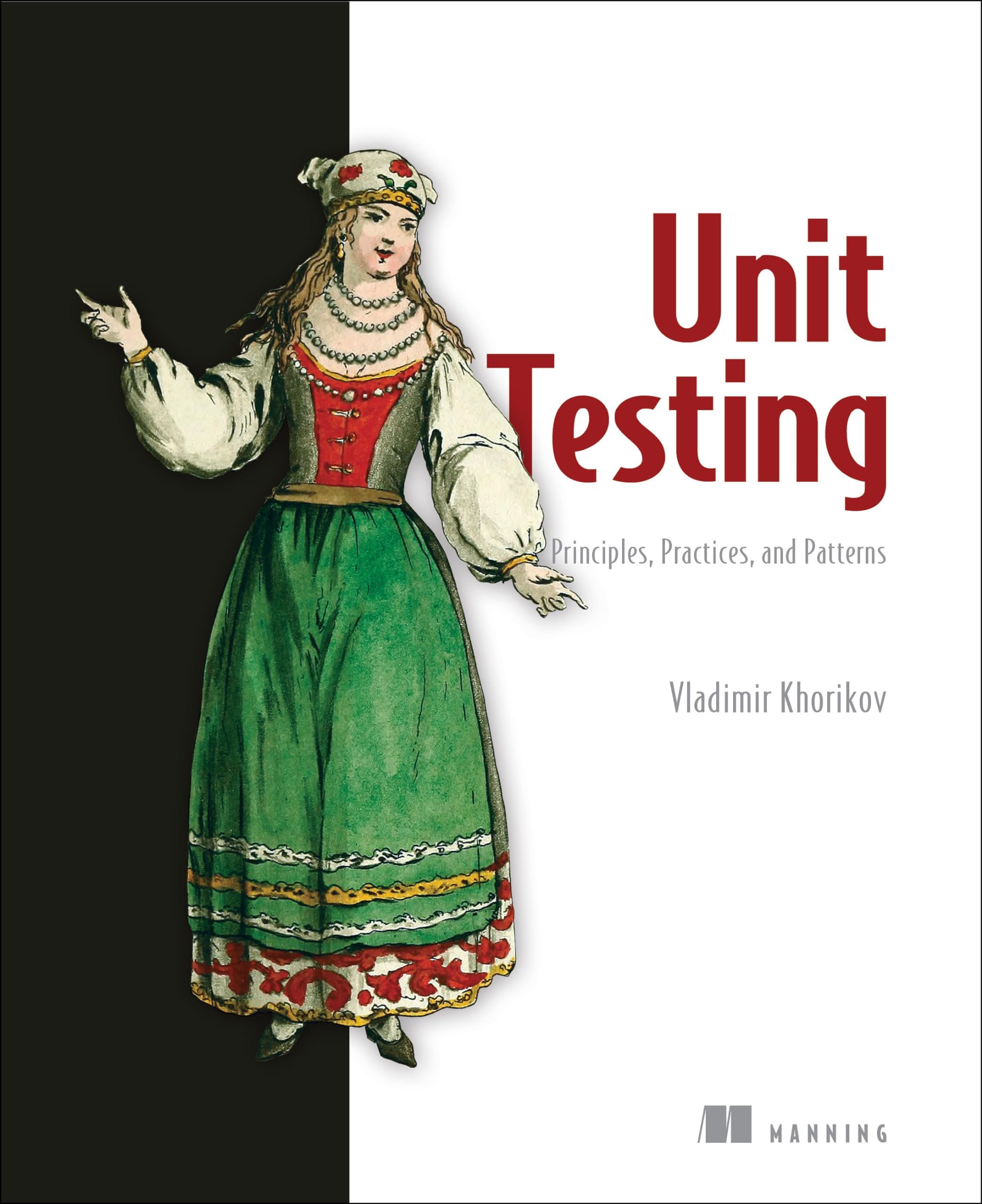

From the brand Manning is a publisher of computer books, videos and projects for software developers, engineers, architects, system administrators, managers and all who are professionally involved with the computer business. We also publish for students and young programmers, including occasionally for children. How we get our start? We published our first book in 1993 and have been learning from our successes, and even more from our mistakes, ever since. Every new book teaches us something that helps us improve. What makes our products unique? "Independent" means we are not owned by a large corporate entity and are free to make our own decisions. This has allowed us to innovate and be flexible and to quickly adjust what we do as we go. What do we publish? We publish standalone titles as well as a number of book series. How we get our start? We published our first book in 1993 and have been learning from our successes, and even more from our mistakes, ever since. Every new book teaches us something that helps us improve. What makes our products unique? "Independent" means we are not owned by a large corporate entity and are free to make our own decisions. This has allowed us to innovate and be flexible and to quickly adjust what we do as we go. What do we publish? We publish standalone titles as well as a number of book series. More from Manning Visit the store More from Manning Visit the store In Action Books Introduces new technologies to working technical professionals. Typically intermediate level. In Action Books Introduces new technologies to working technical professionals. Typically intermediate level. In Practice Books Cook-book-style references, generally organized in order of difficulty. Typically intermediate level. In Practice Books Cook-book-style references, generally organized in order of difficulty. In Depth Books “second” books on technical topics that cover key areas a greater levels of depth and detail. Typically intermediate-advanced level. In Depth Books “second” books on technical topics that cover key areas a greater levels of depth and detail. Typically intermediate-advanced level. In a Month of Lunches Books Introduces core technical topics via a series of small lab-based lessons that should each take about 30-45 minutes to complete. In a Month of Lunches Books Introduces core technical topics via a series of small lab-based lessons that should each take about 30-45 minutes to complete. Grokking Books Tutorials with a graphical teaching style designed to offer a deep understanding of a technologies foundations. Grokking Books Tutorials with a graphical teaching style designed to offer a deep understanding of a technologies foundations. Get Programming Books Structured tutorials built around hands-on exercises and progressively more difficult capstone projects Get Programming Books Structured tutorials built around hands-on exercises and progressively more difficult capstone projects Bookcamp Books Collections of 6-10 medium-sized projects similar to what a reader will face on the job. Typically intermediate level. Bookcamp Books Collections of 6-10 medium-sized projects similar to what a reader will face on the job. Hello! Books Designed to be a gentle first book on a technical topic. Beginner level. Hello! Books Designed to be a gentle first book on a technical topic. Beginner level. Review: Seminal, pragmatic work - Finally a book about testing that's written by someone who's taken a step back to actually think about it! Previously I had embraced the "abstract and mock everything" approach but found many of the test suites I wrote to be horrible to understand and maintain. They were easily broken by refactoring. This book explains why that approach is bad, by taking an abstract and theoretical view upon testing. This book is particularly useful in terms of: * determining which tests are useful and which are pointless * when to use mocking and stubs, and when not to * separating the "model" (aka business logic) from interactions with other (sub)systems by using a collaborator ("controller"), to simplify testability * making as much of the "model" functional as possible, to further simplify testability The examples are written in C# but it's easy to apply the principles to most other languages. Review: Excellent resource and enjoyable read - I bought this book after finding the authors online courses excellent and have been writing unit tests of varying merit for several years. I found the book extremely easy to read, especially for essentially a text book. I was actually gripped and read the whole book in 48 hours. The concepts in the book come with very good, clear examples and was easy to follow. The structure makes sense and each section comes with a useful summary for referring back to when done. If you want to understand more about effective unit testing or like me just feel like your unit tests are a bit dubious at times this is an essential resource.


| Best Sellers Rank | 391,461 in Books ( See Top 100 in Books ) 45 in Microsoft Windows Programming 518 in Introduction to Programming 550 in Software Design & Development |
| Customer reviews | 4.7 4.7 out of 5 stars (197) |
| Dimensions | 18.75 x 1.78 x 23.5 cm |
| Edition | 1st |
| ISBN-10 | 1617296279 |
| ISBN-13 | 978-1617296277 |
| Item weight | 499 g |
| Language | English |
| Print length | 304 pages |
| Publication date | 16 Mar. 2020 |
| Publisher | Manning Publications |
B**Z
Seminal, pragmatic work
Finally a book about testing that's written by someone who's taken a step back to actually think about it! Previously I had embraced the "abstract and mock everything" approach but found many of the test suites I wrote to be horrible to understand and maintain. They were easily broken by refactoring. This book explains why that approach is bad, by taking an abstract and theoretical view upon testing. This book is particularly useful in terms of: * determining which tests are useful and which are pointless * when to use mocking and stubs, and when not to * separating the "model" (aka business logic) from interactions with other (sub)systems by using a collaborator ("controller"), to simplify testability * making as much of the "model" functional as possible, to further simplify testability The examples are written in C# but it's easy to apply the principles to most other languages.
R**T
Excellent resource and enjoyable read
I bought this book after finding the authors online courses excellent and have been writing unit tests of varying merit for several years. I found the book extremely easy to read, especially for essentially a text book. I was actually gripped and read the whole book in 48 hours. The concepts in the book come with very good, clear examples and was easy to follow. The structure makes sense and each section comes with a useful summary for referring back to when done. If you want to understand more about effective unit testing or like me just feel like your unit tests are a bit dubious at times this is an essential resource.
M**Y
Useful introduction and great reference
I found this to be the best overview of the subject of unit testing full of great insights and advice. Useful as an introduction to the topic and as a reference.
O**N
This it now my go-to book for unit testing
Explains the trade-offs and variations clearly, completely, and concisely. It's the first book I recommend to others when asked about unit testing.
P**E
Do you want a great test suite? Then read this.
This book is a must read for anyone serious about unit testing. If you're not serious about unit testing then consider another job! So many times, in my career, I’ve encountered tests suits that are hard to maintain, grapple with, turn red and go back to green for no explicit reason. I’ve seen developers comment out large bunch of tests because they can’t fix them but are eager to build and release. These test suites gradually degrade and has the look and feel of a vandalized area. Personally, I’m always bothered about creating a poor test suite and agonizing over difference approaches. This book instills a mindset and provides what approach to take and when. Vladimir is lawyer-esque in taking a problem, breaking it down to it parts, analyzing them and putting it all back together with clear conclusions. The beauty of what Vladimir does it to take a difficult topic and make it explainable to any level of developer. Following the practices in this book will not only improve your tests but will also improve the way you think about coding a solution or refactor it.
D**G
Get the First Edition, the second edition is a little pointless
Get the First Edition, the second edition is a little pointless. The first edition is a must have.
H**Z
Good content. Provides a good framework on unit testing, integration testing and refactoring. Also touches on system architecture a bit, in terms of testing. Examples are few but to the point. Recommend it to mid to senior developers that is seeking to form a formal basis on unit testing
T**N
Excellent Book on Unit testing pcrinciples. But be aware that you Need already be comfortable with the technical Side of testing. Other than that the Book very clearly explains how to Write Good Unit tests that will help you have a refactoring Safety net for your application. This is done by elaborating on the 4 pillars of good tests and the difference between different unit test schools and styles. To sum it up it is an excellent read and I learnt a lot, I have not been aware of before even though I practiced TDD and testing in general. So buy it if you want to write better tests is my advice.
F**H
One of the best books I've ever read, excellent content
E**Z
Después de leerlo, puedo decir que es de mis libros que de encuentran en mi top 5 en materia de desarrollo de software.
A**S
Explains very well why unit tests are important and goes into detail about different ways of writing them, as well as good practices and things to avoid. Was able to apply to my work
Trustpilot
2 days ago
5 days ago