


Desertcart purchases this item on your behalf and handles shipping, customs, and support to Hong Kong.
🖨️ Print Tough, Print Light, Print Right — Elevate Your 3D Game!
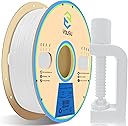
YOUSU Polypropylene PP Filament is a premium 1.75mm, 1kg spool designed for professional-grade FDM 3D printing. It combines exceptional toughness, chemical resistance, and fatigue endurance with a lightweight profile 26% lighter than PLA. The filament’s precise diameter tolerance and included PP build sheets ensure reliable, warp-minimized prints compatible with most major 3D printers. Ideal for durable, flexible parts requiring high mechanical performance and chemical stability.


| ASIN | B09QQGG6SY |
| Additional Features | 1.75mm, 1kg, High Temperature, High Toughness, Low Density, Chemical Resistance, Mechanical compon |
| Best Sellers Rank | #5,336 in Industrial & Scientific ( See Top 100 in Industrial & Scientific ) #248 in 3D Printing Filament |
| Brand | Yousu |
| Brand Name | Yousu |
| Color | White |
| Customer Reviews | 3.7 out of 5 stars 29 Reviews |
| Item Diameter | 1.75 millimeters |
| Item Weight | 1 kg |
| Manufacturer | Yousu |
| Manufacturer Part Number | YS-PP-1.75MM-1KG-WHITE |
| Material | Polypropylene |
| Material Type | Polypropylene |
| Model Number | YS-PP-1.75MM-1KG-WHITE |
| Number of Items | 1 |
| Special Feature | 1.75mm, 1kg, High Temperature, High Toughness, Low Density, Chemical Resistance, Mechanical compon |
| UPC | 791598481332 |
| Unit Count | 35.27 Ounce |
V**L
A bit denser than your run-of-the-mill polypropylene, but easier to print
This filament prints very well for polypropylene. The filament size is consistent, it extrudes easier, and it seems to adhere better than your usual roll of PP. They even provide a handful of sheets that you can stick to your build plate, which is likely a film also made from polypropylene. And no, you don't have to worry about the adhesive having a death grip or leaving behind tacky residue. I just want to make it's clear that this filament is pretty high quality, but there are some things that you should know about it first. Since you are also likely looking specifically for polypropylene, which is a pretty uncommon printer filament, I would assume you are also chasing after its unique resilient properties. Let me quell some of your concern and give you the details so you know what you're buying. Full transparency: I bought this roll of filament because my usual source of polypropylene was out of stock. Getting your hands on 1.75mm PP filament right now seems to leave you with very few choices. Usually all you can find is expensive international options or expensive gimmicky rolls with some sort of color or filler like carbon fiber. The bright white color of this polypropylene is a red flag since it is usually quite translucent. The full 1kg roll is also a concern since polypropylene is usually only sold in 0.7kg quantities. This has to do with the density of polypropylene being much lighter than PLA or ABS. After doing a print, I did indeed confirm this filament is denser than pure, raw polypropylene by about 13%, something that was not made clear in the listing at the time. Let me be clear, this is still lighter than PLA. I talked with the manufacturers about this since the part I printed was obviously heavier than a part printed with pure PP, and they were very helpful and patient with me. I was informed that, yes, this polypropylene is heavier than pure PP because of some of the additives. These additives are used to help the filament in all the ways I mentioned before, namely extrusion and bed adhesion. According to what they told me, this filament still retains the toughness, chemical resistance, and similar rigidity to pure polypropylene. I can attest that yes, the toughness and rigidity is very similar, but I am unsure about the chemical resistance. And even though they, and many other PP distributors say these material is food safe, I wouldn't EVER drink or eat off of a mystery plastic unless it's been through some kind of legitimate certification process, which I don't think exists for printer filament. One last note, this polypropylene also has the same layer adhesion just like pure PP, you just need to make sure you're printing at a high enough temperature to get those layers to really stick together. If you've never printed with PP before, the layer adhesion strength is amazing. It's almost like the part is completely homogeneous. Layer separation is quite difficult if not impossible to even forcefully induce in some cases. It'll be much stronger than PLA or ABS in this way. Maybe better than any other readily made printer filament. So in short, here's the pros and cons. Pros: -Actually consistent filament diameter. A lot of manufacturers say this but don't deliver. These rolls are actually good. -Slightly better bed adhesion than raw polypropylene (use their film or PP packing tape). -Better extrusion characteristics (didn't need to adjust or crank flow rate as much for a good print). -Comes with bed adhesion films so you don't have to hunt down tape or buy expensive adhesive. Neutral: -Denser than raw PP by 13~%, but take that number with a small grain of salt. -Opaque white color -Unknown additives that result in the above property changes. -Sweet print smell. Cons: -No obvious cons. Any of the neutral points could be considered cons, and for me, the extra density of the filament WAS a con, but it completely depends on what you need the filament for. If you do your due diligence and are looking at this review or others, you'll know more or less what you're getting, and how different this stuff will be from pure polypropylene.
E**R
Printable, though not "easy"
I was able to print with this filament using the supplied PP film. It comes with 5 pcs PP sticky sheets (I think they are 150*150 mm), which from my experience each one is only good for a single use since the print fuses with it and you essentially tear it when removing the print with part of it remaining on the print. Printing is feasible, I was able to print a 100mm long part. However, warpage is significant, and the only thing helping with it is the part literally fusing with the PP sheet, but the edges still get pulled a bit, the bottom of the print is not flat. And should be noted that I was printing on an enclosed printer with 45°C chamber temperature.
M**R
Nice filament, performs well.
This appears not to be a pure PP filament, other sources claim it is slightly denser than pure PP and has additives to make it easier to print... Well, whatever they are, they work! This filament has fairly typical PP bed adhesion issues, and it can, and will warp in certain situations, but it's remarkably easy to print and manage. Layer adhesion is incredibly strong, just like pure PP, and it produces a semi-flexible print, but it strings and ozzes very little and flows extremely well, even at moderately high speeds. This seems like a quality filament if you need the resilience and chemical resistance of PP, just a bit easier to print. Don't forget to check the bottom of the box for the included PP adhesion stickers. I use Magigoo on a textured PEI bed, so I haven't tried the stickers, but if you have a smooth bed it's nice that they include them.
M**N
This stuff is garbage
I tried this on an AnkerMake M5. I used the film that is supposed to attach to the plate, but it won't stick once the print starts. According to Yousu, I need to use these settings: Hot End Temperature: 225 - 235 Bed Temp: 85 Printing Speed: 30mm/s Nozzle: 0.04 Bed Surface: Clear Build Film On my first test print, the build film warped and my nozzle burned through it. I adjusted the temp down thinking that my bed might be hotter than others. After multiple attempts going all the way down to 50, it won't stick. The film warps and the nozzle burns through and tears when I try to pull the failed parts off the film. I tried using tape and the tape didn't warp, but when I checked the print, the PP had curved and warped. The first pic is what I got when I stopped printing. That is pure garbage. After multiple attempts at various settings, I have given up. This stuff is useless and a giant waste of time. Do not buy it.
F**8
Clogs Your Hot End
I don't like leaving negative reviews, but I am convinced this filament has "chunks" that regularly clog your hot end. PP is hard enough to print as is. Dealing with random clogs that cannot be mitigated through any setting changes (at least on a Bambu X1C w/ a 0.4mm nozzle) is a deal breaker. That said, it seems people have luck printing this with a 0.6mm.nozzle - again suggesting that "chunks" are an issue. In the end, I bought some Verbatim Natural PP and found it prints beautifully. No clogs, crystal clear, and just as easy to print as this stuff. I recommend going with Verbatim and never looking back.
C**R
Tough filament to print, but Worth it
While this filament can be tough to print, if you slow it down as described and use the PP sheets included in the package, it prints great. I printed a small little keychain container as you'll see in the pictures below and I put a piece of paper in it, held the container underwater for about 10 to 15 seconds and the paper was still completely dry so it does really well with sealing and keeping moisture out, which is pretty awesome. This filament is flexible and stretchy so I would advise against using in the AMS and to use the exterior holder which is what I did and it did work out that way. It has a lot of great detail on the container with going the slow speeds so it printed well per the dimensions laid out in the design.
S**E
Great for Big PP Prints—Just Skip the Smooth Plate and Included Sheets!
I picked up this YOUSU White PP Filament to print a custom straw holder/dispenser for my wife, who has an absolute obsession with straws (I don't quite get the obsession, but hey, it keeps her happy!). Polypropylene is notoriously tricky to print due to severe warping, but this spool handled it remarkably well with the right enclosure environment. I ran this on my Bambu Lab X1C using YOUSU’s recommended PP filament settings, setting the bed to 105°C and utilizing my Panda Breathe chamber heater set to 60°C. With those ambient temperatures dialed in, the print completed with zero warping or layer splitting. The finished part is semi-flexible, ultra-tough, and feels like it’s going to last forever. A few critical tips on bed adhesion if you're printing something large: • Included Build Sheets: The box includes 5 stick-on build sheets, which is a nice touch, but my straw holder was larger than the sheet dimensions, so I couldn't use them for this build. • Bed Surface Matters: Don't bother with a smooth plate for large prints. I initially tried a smooth plate with Magigoo PP adhesive, but the first layer popped off almost instantly. • The Winning Combo: Switch to a Textured PEI plate applied with Magigoo MPP2018 (PP Adhesive). Paired with a hot bed (105°C) and a heated chamber (60°C), the initial layer locked down solid, didn't pull up at the corners during the long print, and released cleanly once cooled down. If you have your bed adhesion strategy and chamber temperatures dialed in, this filament yields incredibly tough, functional, chemical-resistant parts. Highly recommended!
J**R
NOT the same as other PP I have used in the past..."grittier" and less durable.
While this is called Polypropylene, it seems to be different than the Poly pro I have used in the past....it is FAR more breakable...previous PP I printed with, while much more difficult to print, withstood tremendous abuse without breaking...this stuff is super easy to print....but acts more like PLA or PETG than PP as far as durability goes....weight-wise (which is my primary reason for using PP) it is also much heavier than other PP I have used....for my purposes...I am not sure I would purchase this again.
Trustpilot
1 week ago
2 weeks ago