Some deliveries may take a little longer than usual due to regional shipping conditions.

DOWNLOAD THE APP


Customer Services
Copyright © 2025 Desertcart Holdings Limited
DOWNLOAD THE APP
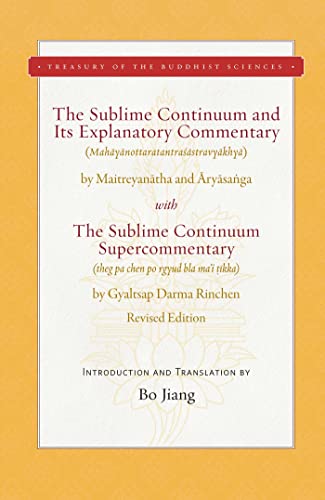
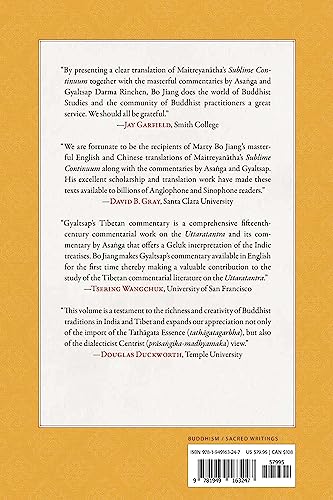
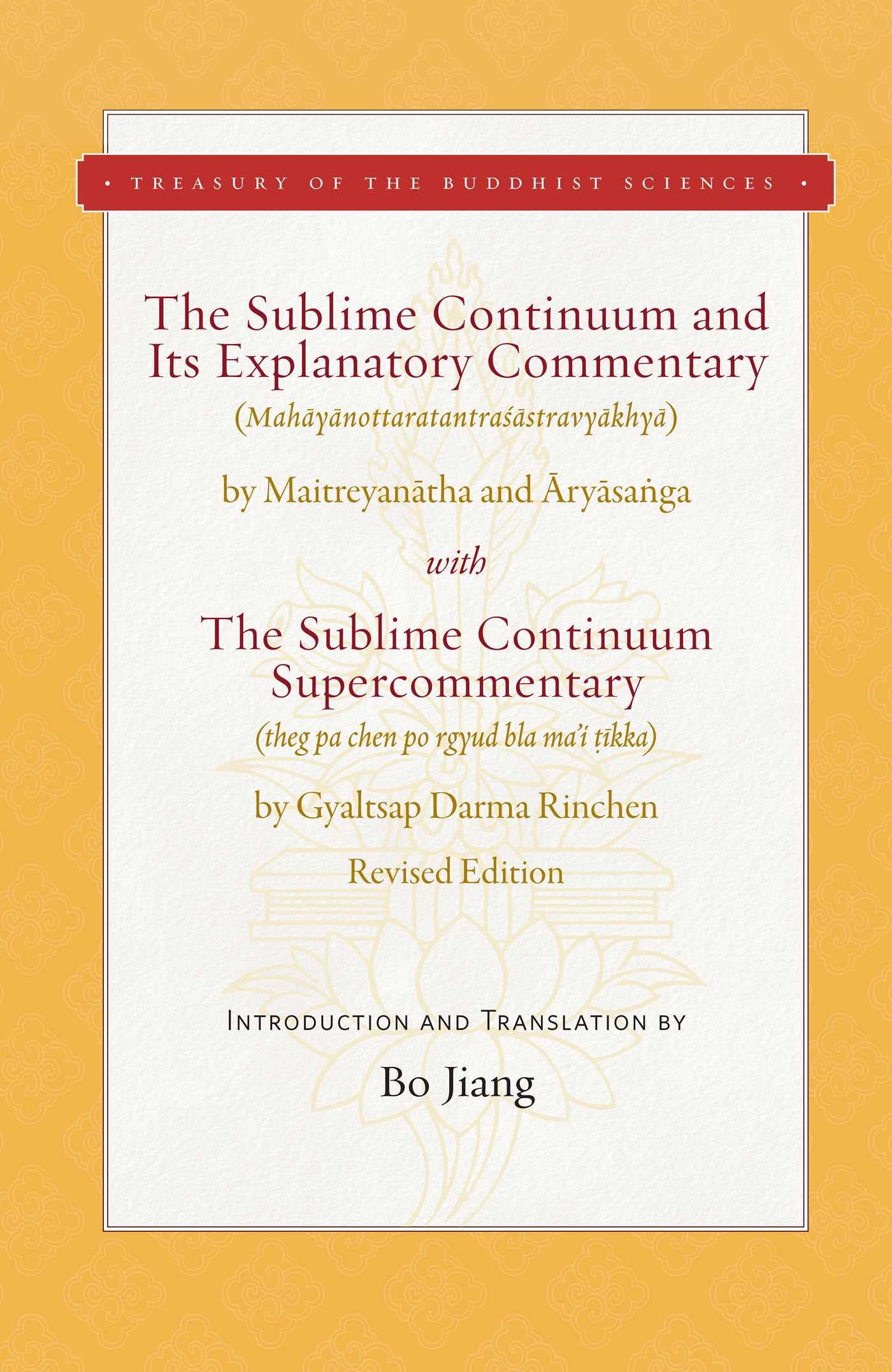
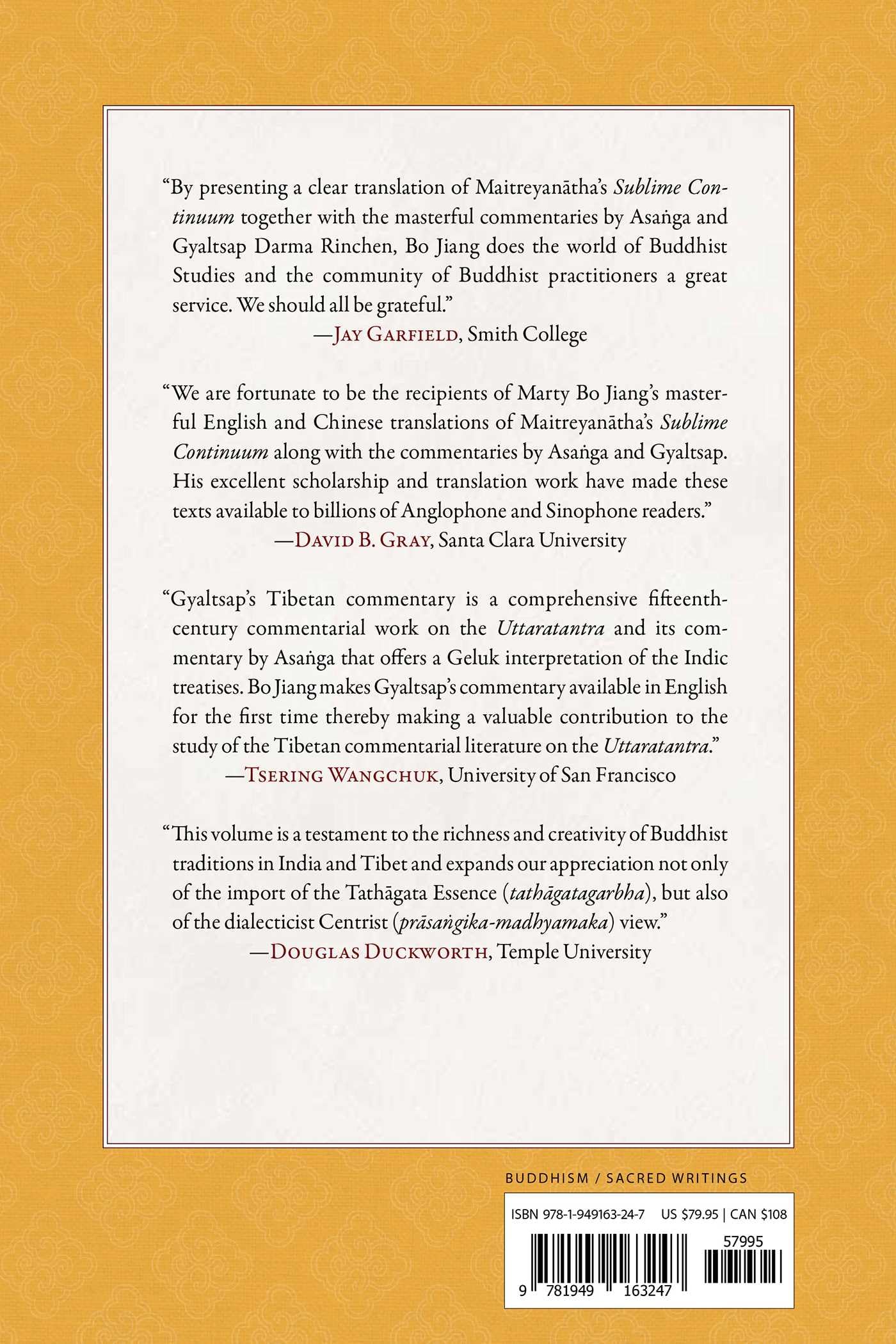
desertcart.in - Buy The Sublime Continuum and Its Explanatory Commentary: With the Sublime Continuum Supercommentary (Treasury of the Buddhist Sciences) book online at best prices in India on desertcart.in. Read The Sublime Continuum and Its Explanatory Commentary: With the Sublime Continuum Supercommentary (Treasury of the Buddhist Sciences) book reviews & author details and more at desertcart.in. Free delivery on qualified orders. Review: Translation of the root text of Ratnagotravibhāga with self-commentary by indian scholar Asaṅga (4th century), plus commentary on both by tibetan scholar Gyaltsab Dharma Rinchen (15th century). SInce the root text and commentary were already available in english rendition (Takasaki, 1966), the supercommentary by Gyaltsab-je was of greater interest. I will not go into the details of the translation, its largely ok, for someone who knows the meaning fairly well already, even if more standardized and consistent choices of words would have been profitable for a text which constantly operates within very fine distinctions betwenn conventional and ultimate, wisdom and the nature of wisdom, the relationship between the two, the exact meanings and dividions of similes. Just for example, expressing the selflessness of phenomena as "selflessness of objective things" is simply sloppy, since not all (non-person) phenomena are objects and not all are things...or the term "material bodies" for rūpakāya, when the text itself says many times that the form-bodies are not material (made of atoms)...and many of those — never mind. What I find almost an insult for the reader is the enumeration system with up to 16 numbers or so, without any interpunctuation, or letters...its practically useless as an orientation aid. Another annoyment derives from the total absence of verse numbers in the supercommentary. Since the text closely relates to root text and self-commentary, it would have been highly desirable to be able to relate the commantary to the former two, after all, that's the purpose, since without root text, the commentary is hardly meaningful. Another shortcoming is the almost total absence of explanatory foot- or end notes, which would clarify unclear points for the reader. And as a last point of ctitique: the index has clearly been done without any effort to help the reader find key terms in context. Key term...list of many page numbers, no context. Given the fact that the supercommentary was the relevant addition to contemporary scholarship, I must say it falls heavily short of academic precision. The problem is not only in the work itself, but also in the fact that a fairly (!) good translation such as this stands in the way of possible far better works in a near future, since no academic untertakes the task of producing a translation of an already translated text, unless the latter is completely useless. The work by Bo Jiang is not useless, but not excellent either. It could have served a greater purpose had it been done with more accuracy both in terminology and formalities.
| Best Sellers Rank | #1,230,260 in Books ( See Top 100 in Books ) #7,449 in Buddhism (Books) #11,007 in Philosophy (Books) |
| Customer Reviews | 4.0 4.0 out of 5 stars (2) |
| Dimensions | 15.24 x 5.08 x 22.86 cm |
| Hardcover | 602 pages |
| ISBN-10 | 1949163245 |
| ISBN-13 | 978-1949163247 |
| Importer | Bookswagon, 2/13 Ansari Road, Daryaganj, New Delhi 110002, [email protected] , 01140159253 |
| Item Weight | 1 kg 50 g |
| Language | English |
| Packer | Bookswagon, 2/13 Ansari Road, Daryaganj, New Delhi 110002, [email protected] , 01140159253 |
| Publisher | Wisdom Pubns; Revised edition (6 June 2023) |
T**D
Translation of the root text of Ratnagotravibhāga with self-commentary by indian scholar Asaṅga (4th century), plus commentary on both by tibetan scholar Gyaltsab Dharma Rinchen (15th century). SInce the root text and commentary were already available in english rendition (Takasaki, 1966), the supercommentary by Gyaltsab-je was of greater interest. I will not go into the details of the translation, its largely ok, for someone who knows the meaning fairly well already, even if more standardized and consistent choices of words would have been profitable for a text which constantly operates within very fine distinctions betwenn conventional and ultimate, wisdom and the nature of wisdom, the relationship between the two, the exact meanings and dividions of similes. Just for example, expressing the selflessness of phenomena as "selflessness of objective things" is simply sloppy, since not all (non-person) phenomena are objects and not all are things...or the term "material bodies" for rūpakāya, when the text itself says many times that the form-bodies are not material (made of atoms)...and many of those — never mind. What I find almost an insult for the reader is the enumeration system with up to 16 numbers or so, without any interpunctuation, or letters...its practically useless as an orientation aid. Another annoyment derives from the total absence of verse numbers in the supercommentary. Since the text closely relates to root text and self-commentary, it would have been highly desirable to be able to relate the commantary to the former two, after all, that's the purpose, since without root text, the commentary is hardly meaningful. Another shortcoming is the almost total absence of explanatory foot- or end notes, which would clarify unclear points for the reader. And as a last point of ctitique: the index has clearly been done without any effort to help the reader find key terms in context. Key term...list of many page numbers, no context. Given the fact that the supercommentary was the relevant addition to contemporary scholarship, I must say it falls heavily short of academic precision. The problem is not only in the work itself, but also in the fact that a fairly (!) good translation such as this stands in the way of possible far better works in a near future, since no academic untertakes the task of producing a translation of an already translated text, unless the latter is completely useless. The work by Bo Jiang is not useless, but not excellent either. It could have served a greater purpose had it been done with more accuracy both in terminology and formalities.
Trustpilot
3 weeks ago
2 months ago