We remain fully operational. Our teams are working around the clock to ensure your deliveries continue safely.

下载应用程序



⚔️ When every second counts, trust the manual that saves lives in the harshest battles.
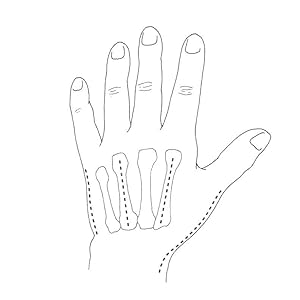
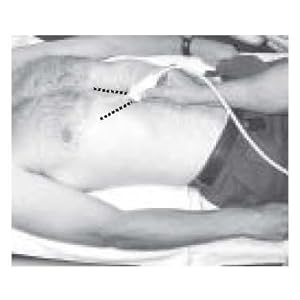
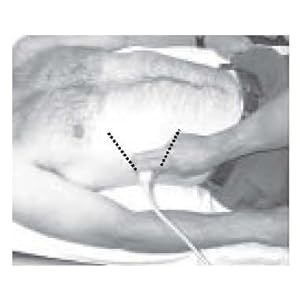
Emergency War Surgery is the official US Army medical desk reference featuring nearly 200 detailed surgical illustrations. It provides authoritative, practical guidance on trauma care and emergency surgery in austere, high-pressure environments. Ranked top in Safety & First Aid, this manual is essential for professionals and serious survivalists preparing for extreme medical emergencies.
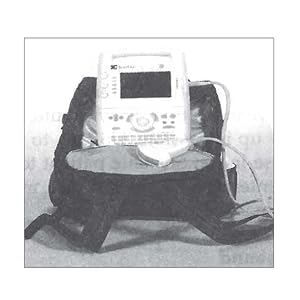

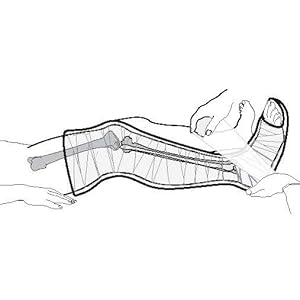
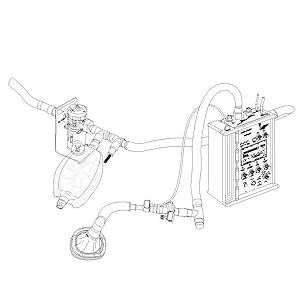
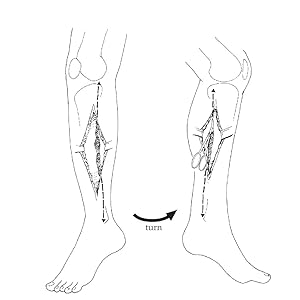

| Best Sellers Rank | #20,972 in Books ( See Top 100 in Books ) #7 in Safety & First Aid (Books) #24 in Survival & Emergency Preparedness #33 in Hiking & Camping Instructional Guides |
| Customer Reviews | 4.6 out of 5 stars 859 Reviews |
E**A
Beyond First Aid: Anticipating a Deep Dive into Field Medical Expertise
This "Emergency War Surgery" manual sounds less like casual reading and more like a critical piece of field knowledge condensed into book form. The fact that it's the illustrated, official guide used by US Army doctors and soldiers in active duty speaks volumes about its authority and practicality. Forget your run-of-the-mill first-aid pamphlet; this delves into the serious stuff: infections, head trauma, fractures, burns – the realities of austere environments. It's positioned not just for medics but for anyone who might face extreme survival scenarios, which is a compelling thought. The glimpse into the contents – hemorrhage control, anesthesia in less-than-ideal circumstances, injuries from biological and chemical agents – paints a picture of a resource that doesn't shy away from the harsh realities of emergency medicine in the field. With nearly 200 illustrations promising to clarify complex procedures, this isn't just theory; it's a visual guide to potentially life-saving interventions. My initial impression is that this book isn't just interesting; it's a deep dive into a world of high-stakes medical decisions, and I anticipate dedicating a significant amount of time to absorbing its knowledge. It feels less like a book and more like a vital toolkit for the unthinkable. This review represents my personal opinion and experience with this product. I am not affiliated with the manufacturer or seller, and this review should not be interpreted as an endorsement or professional advice. Any reliance on the information provided is at your own risk.
C**N
"Medical Desk Reference", NOT "Bubba Bushcraft's Post-Apocalyptic First Aid Guide"
A lot of the negative reviews seem to be along the lines of "not what I expected...". I'd like to know what exactly these people expected from a book titled EMERGENCY WAR SURGERY. This is a book written by army doctors for army doctors to help treat people in war zones. I'm really loathe to say a book covers everything...but this really does seem to cover everything you could possibly run into - here's hoping I never need to refer to the chapters on cesarean sections and neonatal resuscitation. If this book were a house, it'd come with the kitchen sink (never mind that houses usually come with kitchen sinks as a standard option; it's an idiom, it doesn't have to make sense). Again, this book is a REFERENCE MANUAL FOR PROFESSIONALS, NOT A FIRST-AID GUIDE FOR CAMPERS. If you are a "true" survivalist who wants to be able to create a fully self-sufficient community in the event of a total system failure then yes, you should absolutely have this book...to give to your community doctor, not to reference yourself. As it says right in the subtitle: it's a desk reference, not a "for dummies" guide. It assumes you know your anterior from your posterior, your superior from your inferior, your duodenum from your jejunum. It assumes you have access to the proper tools required to perform the tasks described. If you understood all those terms (or at least took the time to look them up and say "hmm, I should definitely take a class on this") then this book might just help you save someone's life one day. For everyone else, it's something you can read before bed to help put you to sleep if you don't have a doctor to give it to.
A**C
If you did not get the book you expected, it is not for you.
To begin with, I was made aware of this book from the bibliography of another essential book for PHCP professionals titled "Ditch Medicine" which I believe is now out of print. That book, which is not up for review here today, is an excellent reference for providers who, out of necessity, must turn their tent, truck, or whatever they have, into a temporary ICU for more "long-term" care then they want. "Emergency War Surgery" is the same kind of reference. If you purchased it and do not understand it, seek training. It is not a classroom textbook as much as an "Oh, yeah, that's how I need to do that." I am a PHCP in Alaska that is already "remote" by definition of most, given that the closest hospital facility is 2 hours away with good weather. I have found that books like this one, the previous one mentioned, "Where there are no Doctors", and others available from Amazon, need to be in your library if you are, or expect to need to provide diagnosis and treatment of injury to loved ones and others in a remote, wilderness, or off-grid setting. Books do not replace training. They are there for reminder and reference. There is alot more to say on this topic, but I shall keep this "breif", so as to not offend any Bards out there.
H**E
Put this in your bug-out shelter library, but not in your "Go Bag"
Firstly, I'm a prepper, with military, survival, and a fair degree of medical experience and training. I also train and teach that stuff. Even so, much of this book is far and away too technical for even my skills and probably unusable by anyone without at least EMT level training. Notwithstanding that, I strongly recommend that anyone who is serious about prepping get it because it may well save your - or somebody's, whom you love, life. This is a very, very thorough book covering surgical procedures for almost any problem subject to surgical treatment or amelioration. It is well organized, with step by step procedures for prepping, opening, repairing, closing, and post-surgical care for each kind of surgery. It is, however, NOT "jargon free" and those without a fair amount of knowledge of medical terminology and anatomy are going to find it a "hard slog". The illustrations are also both sparse and far from clear. The book also presumes access to equipment and medications which the average person neither has nor has access to. Even a well equipped Corpsman won't have the necessary gear to carry out most of these procedures, many of which require at least a "MASH" level facility (for which type of facility this book appears to have been written). SO, with all those "negatives" and "caveats", why would I urge the would be prepper/survivalist to get this book (and I DO recommend that)? Here's the thing - I have personal "bug-out bags" for myself and everyone in my family, which are designed to ensure that they can live at least 1 week on the run from even the worst imaginable societal breakdown. In addition, I have a "family bug-out" bag which will carry all of us for another month (with enough basic gear to set us up to carry on thereafter). However, I don't plan on conveniently dying a week or even 5 weeks after the SHTF, to which end I have a "bug-out" location. It is highly likely, if I and/or my family survive past that initial month and a week, that, at some point, somebody is going to get seriously hurt or sick and somebody is going to need surgical care, to which end my shelter is being ever more and better equipped to handle these types of medical problems. Among the meds and surgical tables and gear, I have this book, along with a current copy of "Grey's Anatomy" and a "Dorland's Medical Dictionary" ("Tabor's" is also good). If someone in my group suddenly develops appendicitis, this is the book I'm going to use to go in and fix 'em. Provided I can keep them stabilized for a day or two in which to study the procedures and familiarize myself with the anatomy, this book will, in fact, allow me to walk through the necessary procedure, something I could not do without it. I cannot possibly memorize every procedure contained herein, but, with this book, I don't have to. It is well enough written that it can reduce even fairly complex surgery to the level of intelligibility (and difficulty) one has to deal with putting together an IKEA entertainment center. Without it, they are going to die. With it, they have a chance and, should we be actually faced with "TEOTWAWKI", this book may be the "critical edge" I need to save them. I have found no other "surgical guide" which answers the issue or fills the need so well as this one. If you're serious about living then plan on getting this book and using it as a guide to putting together your "post-apocalypse" medical facility, then start preparing yourself mentally for becoming the "doc" because I suspect that real MD's are going to be in short supply during the "End of Days".
S**F
Cheap insurance.
Right now I’m not in an emergency, I’m not in a war, and I’m not a surgeon. But the way things are going you never know and this book could be worth its weight in gold. When times are good is when you prepare. If you wait until things are bad to try and help yourself it’s too late and you’ll have a bad time.
L**.
Essential Reading for Preppers and Adventurers.
Excellent resource that one hopes we would never need. However in an emergency this book will be essential. The criticism that the Handbook is too technical is only true if you have no medical training. In that case you should defer to someone who knows more about emergency medical interventions any way. While the fantasy of saving someones life by miraculous skills and insight, (just like on TV!) may be founded on good intentions, the reality is that emergency interventions are fast, immediate, and usually very messy, and have very little to so with holding honorable intentions. You really have to know what you are doing. This book is quick to the point, and does not elaborate. If the writers did dumb it down to an easier read, they couldn't possibly cover so many important topics. The amount of critical material in this little book is amazing. For people off the grid of society or planning wilderness or third world excursions, don't leave home with out this book..
M**E
Expected different, not really impressed with what I got.
I'm going to go the other direction from the good review written by E.G. Hally (above). I agree that it's not what I expected but from the other side of things. It's too complex for a lay person but far too basic for anyone who has a strong emergency medical background (ER doc, medic, etc). This would be ideal for a nurse or dentist. Someone who is generally familiar with medical concepts and terms but not really ready to treat trauma. From my standpoint (as a medic) it was far too heavy on education/concept and much too light on managements and interventions. I would like to have seen more pictures and interventions for actual war surgery. Beyond placing chest tubes and the section on pinning a femur, there is not much useful direction or procedures (other then things that assume you have an ultrasound machine, etc). What would have been far more helpful is a series of procedures that you might be reasonably expected to need and use in a "war" or SHTF situation on a flip chart - Pericardiocentesis, Apendectomy, C-Section, Vaginal repair, Ingrown toe nail removal, Tooth Extraction, burn debridement, bullet removal, fracture reduction, muscle/tendon repair, etc. Things that I or a similar level provider theoretically know how to do but have not actually done since training (or in simulation). Indications, considerations, management and follow up/post op. So, it's going on the shelf, not the bag.
T**G
Knowledge packed
Knowledge packed is an understatement. I have some emergency medical training. And I have one brother who is an EMT another is a paramedic. This book has information over all of our heads, thank God there are illustrations to help guide you. I would advise you study this book before you need it. Otherwise someone may die while you're learning how to do a procedure. Definitely study it and then if you need it reference it, quickly. Excellent source of knowledge though excellent purchase for the money I spent.