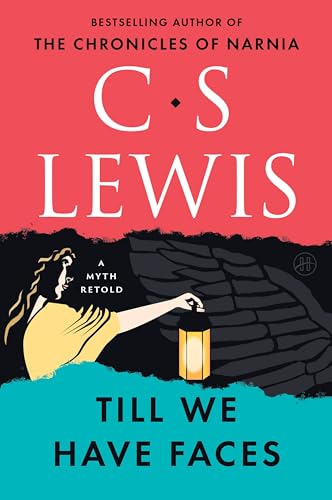
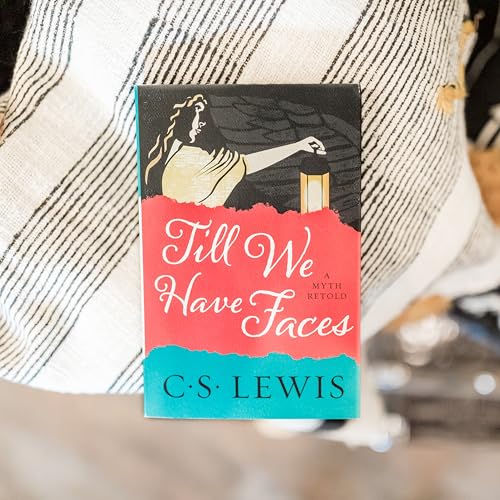


Till We Have Faces: A Myth Retold [Lewis, C. S.] on desertcart.com. *FREE* shipping on qualifying offers. Till We Have Faces: A Myth Retold Review: Seeking our Say in the Court of the Universe - As posted on my blog, Victoria's Reading Alcove at Wordpress There are many among us who have suffered some life changing event; an event that changes us in quick or slow ways, forever. These are the kinds of events that cause us to build “public faces.” More often than not, these changes build a wall between us and others at least in part because we do not wish to allow ourselves to be vulnerable to suffer more pain, or its repercussions, ever again. We also build these walls in our choice to push those who are suffering away. Much like Job’s friends, we seek, in whatever way accessible, to understand the cause and effect of what we see. As humans we are creatures always in search of order. We cannot tolerate the arbitrary, we must find a pattern. In some of us that results in a search for God (or gods), in others it is the explicit effort to eradicate even the hint of the divine from our lives. I believe, in some way, this was the seed to human sacrifice. In our ancient civilizations, with vastly less understanding than we have today, there was a strong belief that the gods must demand blood and restitution for the shortcomings of mankind. After all; there were famines, natural disasters, accidents, pestilence, and all sorts of ways to die. Perhaps, in their ignorance, they thought to choose those to send to the gods in order to save their own hides. We have, of course, changed this view over the last several millennium or so. Although the Aztecs were hard at it in the early centuries CE, there had arisen a culture in the Middle East that looked on the sacrifice of human life as an abomination. They did, however, hold tightly to the sacrifice of blood offerings. This interpretation of divine demand remained through the birth of Christianity. There was still a strong conviction that someone somewhere had to pay the price for all that was not right with the world. One of the problems we seem to face most consistently is what constitutes restitution and what constitutes the natural course of the universe and is there a difference? This weekend, I decided to re-read a favorite tale I had read many years ago. There are times when I go through stages of hunting down everything by a particular author and read through it all. This remembered stage was a search for C. S. Lewis. He is best known for titles such as the Narnina series, the Space Trilogy and Christian apologetics. The subject of my blog is a bit off the usual track. It is a retelling of the tale of Psyche and Cupid. I found it quite intriguing at the time and deeply thought provoking now. Let’s visit Glome and meet the Queen whose thoughts and actions may touch your dreams and your fears. Perhaps you’ll find a treasure to take back home. The story of Cupid and Psyche is quite old. We know it best from the Latin novel, Metamorphoses (The Golden Ass) written in the 2nd century CE by Apoleius. The tale itself must be quite ancient since depictions of Eros (Cupid) and Psyche appear in Greek art as early as the 4th century BCE. The basic story is about a king with three daughters, each quite beautiful but none as beautiful as the youngest. Although the older sisters marry, the youngest finds only worshipers and no lovers. So much is the attention she receives she draws the ire of Venus. Venus sends her son Cupid to end the competition, but Cupid falls in love and takes her away to a hiding place. His only request is that she never tries to discover his identity. Time passes and the young bride tires of being alone all of the time and begs to see her sisters. The visit is disastrous. As a result of their jealousy of her new style of living, her sisters coerce her into revealing the identity of her husband. By exposing him, she brings the wrath of Venus upon them both and Psyche is forced to wander in a quest to meet the demands of this very jealous goddess. She wins in the end and is restored to her beloved Cupid. I don’t want to give you all the story twists of Lewis’ retelling; it’s really a charming read. What I will do is tell you something of what I found within the pages of this rather different interpretation of the tale. You see in this story the elder sister does not see the palace, except through the mist in the middle of the night of betrayal. She believes her young half-sister to be quite mad. She seeks some way to believe, some way to find an answer from her goddess or her Greek philosophical training and finds only contradiction and doubt. She finally makes the decision to coerce her sister into revealing the identity her new found husband. The results are disastrous as Orual discovers her sister was quite sane and she is now responsible for sending the young lady into the wilderness to be tested by a jealous goddess. Princess Orual returns home to become Queen Orual on the death of her father only a few days later. Shaken to the core, she vows to always wear a veil, so that none can see how homely she is, and to slowly extinguish that part of her that was the caring and loving protector of her beloved little sister. She lives her life in constant fear that the gods will strike her down. And she never allows herself to love again. Queen Orual is a wise ruler. She reverses the policies of her father and finds ways to protect the country from the vagaries of nature, to build their treasury and to protect their borders. An excellent fighter, she rides with her armies when required. The kingdom finds peace, and yet she suffers. It is by chance that during a casual trip, taken for pleasure, she happens upon a temple, built in honor of her little sister Istra (Psyche in Greek). The tale she hears is nothing like the story she knows and she vows to write her own story, the truth. She vows to seek justice from the gods. I find the tale compelling because it is a search for a very elusive thing; something that we are so sure we know, and yet we face trials, suffering, and retribution. Like Job, we believe we are doing our best, that we make appropriate decisions based on the knowledge we have, only to discover we didn’t have all the facts. No matter how hard we seek answers, we only see darkly the things in this world. And, like Job, we reach a point where we begin to demand answers. Not because we don’t believe, but because we do. In the book the Queen muses as she writes, “There must, whether the gods see it or not, be something great in the mortal soul. For suffering, it seems, is infinite and our capacity without limit.” No, not so different from the world we live in. Seeking guidance, following precepts and yet suffering. Seeing a world in pain, and noting that much of what happens is an accident of birth. Is it any wonder that our highly developed, rational minds seek answers? That we reach a point when we stop and demand of the universe, of God, “Why?” Our Queen sets out her tale in order to challenge the gods, to ask them to tell her what more she could have done with the information she had. In the end she learns that her love for her sister, her suffering throughout her life, brought solace during the years of Istra’s wandering. It provided support during times of trial, and that when the final test came her sister had grown to the point that even her dearest and most loved could not sway her from the task at hand. Istra (Psyche) does, in the end, earn the approval of the gods and win back her place at Cupid’s side. Orual brings us to the lesson that although we often suffer the consequences of ill informed decisions, we still have a chance to build on our failures and turn them into something productive. We gain “face” if you will by what we do about suffering, how we treat those in pain, how we use the tools we are given to make the world a better place, however small that improvement may be. It is when we strive in this way that we earn the right, the obligation to stand, “gird our loins like a [rational being]” so that when we are asked we can inform. That search for understanding can never end; else why are we given these incredible gifts of a rational mind, a spirit of wonder, and a will to seek truth? ”I saw well why the gods do not speak to us openly, nor let us answer. Till that word can be dug out of us, why should they hear the babble that we think we mean? How can they meet us face to face till we have faces?” Review: Interesting book - I am reading this in a book club I am in. At first it was hard to read, and I had to read the first chapter twice to follow it. The other Club members felt the same way. Now that I have read more, I am starting to enjoy it more. Knowing the author, there will be some sort of redemption or moral in the end.



| Best Sellers Rank | #3,516 in Books ( See Top 100 in Books ) #8 in Christian Classics & Allegories (Books) #206 in Classic Literature & Fiction #325 in Literary Fiction (Books) |
| Customer Reviews | 4.6 4.6 out of 5 stars (4,484) |
| Dimensions | 5.31 x 0.83 x 8 inches |
| Edition | Reissue |
| ISBN-10 | 0062565419 |
| ISBN-13 | 978-0062565419 |
| Item Weight | 2.31 pounds |
| Language | English |
| Print length | 368 pages |
| Publication date | February 14, 2017 |
| Publisher | HarperOne |
M**Y
Seeking our Say in the Court of the Universe
As posted on my blog, Victoria's Reading Alcove at Wordpress There are many among us who have suffered some life changing event; an event that changes us in quick or slow ways, forever. These are the kinds of events that cause us to build “public faces.” More often than not, these changes build a wall between us and others at least in part because we do not wish to allow ourselves to be vulnerable to suffer more pain, or its repercussions, ever again. We also build these walls in our choice to push those who are suffering away. Much like Job’s friends, we seek, in whatever way accessible, to understand the cause and effect of what we see. As humans we are creatures always in search of order. We cannot tolerate the arbitrary, we must find a pattern. In some of us that results in a search for God (or gods), in others it is the explicit effort to eradicate even the hint of the divine from our lives. I believe, in some way, this was the seed to human sacrifice. In our ancient civilizations, with vastly less understanding than we have today, there was a strong belief that the gods must demand blood and restitution for the shortcomings of mankind. After all; there were famines, natural disasters, accidents, pestilence, and all sorts of ways to die. Perhaps, in their ignorance, they thought to choose those to send to the gods in order to save their own hides. We have, of course, changed this view over the last several millennium or so. Although the Aztecs were hard at it in the early centuries CE, there had arisen a culture in the Middle East that looked on the sacrifice of human life as an abomination. They did, however, hold tightly to the sacrifice of blood offerings. This interpretation of divine demand remained through the birth of Christianity. There was still a strong conviction that someone somewhere had to pay the price for all that was not right with the world. One of the problems we seem to face most consistently is what constitutes restitution and what constitutes the natural course of the universe and is there a difference? This weekend, I decided to re-read a favorite tale I had read many years ago. There are times when I go through stages of hunting down everything by a particular author and read through it all. This remembered stage was a search for C. S. Lewis. He is best known for titles such as the Narnina series, the Space Trilogy and Christian apologetics. The subject of my blog is a bit off the usual track. It is a retelling of the tale of Psyche and Cupid. I found it quite intriguing at the time and deeply thought provoking now. Let’s visit Glome and meet the Queen whose thoughts and actions may touch your dreams and your fears. Perhaps you’ll find a treasure to take back home. The story of Cupid and Psyche is quite old. We know it best from the Latin novel, Metamorphoses (The Golden Ass) written in the 2nd century CE by Apoleius. The tale itself must be quite ancient since depictions of Eros (Cupid) and Psyche appear in Greek art as early as the 4th century BCE. The basic story is about a king with three daughters, each quite beautiful but none as beautiful as the youngest. Although the older sisters marry, the youngest finds only worshipers and no lovers. So much is the attention she receives she draws the ire of Venus. Venus sends her son Cupid to end the competition, but Cupid falls in love and takes her away to a hiding place. His only request is that she never tries to discover his identity. Time passes and the young bride tires of being alone all of the time and begs to see her sisters. The visit is disastrous. As a result of their jealousy of her new style of living, her sisters coerce her into revealing the identity of her husband. By exposing him, she brings the wrath of Venus upon them both and Psyche is forced to wander in a quest to meet the demands of this very jealous goddess. She wins in the end and is restored to her beloved Cupid. I don’t want to give you all the story twists of Lewis’ retelling; it’s really a charming read. What I will do is tell you something of what I found within the pages of this rather different interpretation of the tale. You see in this story the elder sister does not see the palace, except through the mist in the middle of the night of betrayal. She believes her young half-sister to be quite mad. She seeks some way to believe, some way to find an answer from her goddess or her Greek philosophical training and finds only contradiction and doubt. She finally makes the decision to coerce her sister into revealing the identity her new found husband. The results are disastrous as Orual discovers her sister was quite sane and she is now responsible for sending the young lady into the wilderness to be tested by a jealous goddess. Princess Orual returns home to become Queen Orual on the death of her father only a few days later. Shaken to the core, she vows to always wear a veil, so that none can see how homely she is, and to slowly extinguish that part of her that was the caring and loving protector of her beloved little sister. She lives her life in constant fear that the gods will strike her down. And she never allows herself to love again. Queen Orual is a wise ruler. She reverses the policies of her father and finds ways to protect the country from the vagaries of nature, to build their treasury and to protect their borders. An excellent fighter, she rides with her armies when required. The kingdom finds peace, and yet she suffers. It is by chance that during a casual trip, taken for pleasure, she happens upon a temple, built in honor of her little sister Istra (Psyche in Greek). The tale she hears is nothing like the story she knows and she vows to write her own story, the truth. She vows to seek justice from the gods. I find the tale compelling because it is a search for a very elusive thing; something that we are so sure we know, and yet we face trials, suffering, and retribution. Like Job, we believe we are doing our best, that we make appropriate decisions based on the knowledge we have, only to discover we didn’t have all the facts. No matter how hard we seek answers, we only see darkly the things in this world. And, like Job, we reach a point where we begin to demand answers. Not because we don’t believe, but because we do. In the book the Queen muses as she writes, “There must, whether the gods see it or not, be something great in the mortal soul. For suffering, it seems, is infinite and our capacity without limit.” No, not so different from the world we live in. Seeking guidance, following precepts and yet suffering. Seeing a world in pain, and noting that much of what happens is an accident of birth. Is it any wonder that our highly developed, rational minds seek answers? That we reach a point when we stop and demand of the universe, of God, “Why?” Our Queen sets out her tale in order to challenge the gods, to ask them to tell her what more she could have done with the information she had. In the end she learns that her love for her sister, her suffering throughout her life, brought solace during the years of Istra’s wandering. It provided support during times of trial, and that when the final test came her sister had grown to the point that even her dearest and most loved could not sway her from the task at hand. Istra (Psyche) does, in the end, earn the approval of the gods and win back her place at Cupid’s side. Orual brings us to the lesson that although we often suffer the consequences of ill informed decisions, we still have a chance to build on our failures and turn them into something productive. We gain “face” if you will by what we do about suffering, how we treat those in pain, how we use the tools we are given to make the world a better place, however small that improvement may be. It is when we strive in this way that we earn the right, the obligation to stand, “gird our loins like a [rational being]” so that when we are asked we can inform. That search for understanding can never end; else why are we given these incredible gifts of a rational mind, a spirit of wonder, and a will to seek truth? ”I saw well why the gods do not speak to us openly, nor let us answer. Till that word can be dug out of us, why should they hear the babble that we think we mean? How can they meet us face to face till we have faces?”
S**C
Interesting book
I am reading this in a book club I am in. At first it was hard to read, and I had to read the first chapter twice to follow it. The other Club members felt the same way. Now that I have read more, I am starting to enjoy it more. Knowing the author, there will be some sort of redemption or moral in the end.
P**D
The Mask that Everyone Wears
Myths are often a distillation of human experience and knowledge, pared down to an easily digestible story that is both memorable and instructive. No less so here, as Lewis takes the tale of Cupid and Psyche and adds a small change to the basic tale - but that change reverberates and focuses the message that Lewis is imposing on the tale, a message about what love is versus what many normally think it is. Lewis sets the tale in the `barbarian' country of Glom, with a King obsessed with getting a son, and thereby cursed with three daughters. Orual is the supremely ugly one, Psyche just as beautiful as Orual is ugly, and the third sister is the personification of greed and petty jealousy. But it is Orual that the book follows, down deep into her basic outlook about herself, her relationship with the Gods, and most especially how her feelings for Psyche and her sense of propriety cause her to commit blackmail in the name of love. Lewis clearly shows that love that does not place the desires of the loved one above any personal sense of right/wrong/duty/honor is not a true love, but rather the product of selfishness, of the `I know what's best for my love' syndrome. But this is merely the beginning to the layers of philosophy present in this book, as it calls into question not only if there are gods, but just how mortals can or must perceive them if they exist, and how much `God' is present in everyone. Masks are a symbol here, from the veil that Orual takes to wearing, to those masks used by the priesthood when performing their embassies for their god, to the masks that everyone presents to the outside world. Also covered is the value of good deeds versus an irredeemable sin, what vital tasks man is burdened with during his short lifetime, and even the value of philosophy as a field of study. All this and more is hidden underneath this apparently simple story, with little direct exposition of these ideas until this last portion of the book, which is written as a dream allegory. The characterization of Orual is excellent - she is person you can recognize and feel with, and her dilemmas are ones we all have faced, though perhaps not in such grandiose terms. Psyche, the King, and Fox, the sister's Greek slave teacher, are drawn with enough depth to understand their motivations, and provide the proper environment so that each person's actions are understandable and the plot action inevitable. I did feel that the last section of book went a little too far in the way of symbolism and philosophy, that perhaps a more action-oriented explication of the points Lewis was trying to present in this section would have been better. But this is certainly a book that is good for more than one reading, with a timelessness to its messages, and told with skill and great thought. --- Reviewed by Patrick Shepherd (hyperpat)
A**A
El producto ha venido en un estado pésimo para el precio que tiene. Las hojas mal cortadas, salidas, los cantos de las hojas ennegrecidos, y los de la cubierta desgastados. Esto no es estado para vender un libro como "nuevo" en absoluto.
C**N
Scritto divinamente ( e non poteva essere altrimenti) Till we have faces unisce le due passioni di Lewis, la classicità e il fantasy. A tratti un po' noioso, sembra più adatto a chi conosce già il mito di Amore e psiche e vuole leggere l'ennesima variazione sul tema, e non è certamente l'ideale per tutti, ma più un divertissiment per classicisti; decolla dopo un po'.
N**M
It's a very interesting book ...set in Barbaric times ...
S**F
Parfait
友**鈴
著者C.S.ルイスが信仰心篤いキリスト教徒であって、また、著者自身が友人その他にあてた手紙や、キリスト教徒たちによる解説を読まなければ、キリスト教との接点が見えにくいストーリーだが、主人公オリュアルの哀しみが痛いように伝わってくる、心動かされる物語。 『ナルニア国物語』には、力強さがみなぎっており、読むことによって人格の陶冶が促されるという点で、キリスト教徒にとっては(キリスト教徒でなくとも)、まさに教科書的ともいえるファンタジーである。しかし、罪びとであるがゆえに、キリスト教徒であっても、心のなかに消そうとしても消すことのできない澱のようなものがあり、ふとしたときにそれを垣間見ることがある。 キリスト教弁証家として名高いC.S.ルイスだが、Till We Have Facesを読むと、彼でさえも心の奥底では葛藤を覚えていたのだろうかと思わざるを得ない。深い感動を与える一冊。
TrustPilot
3 周前
1天前