We remain fully operational. Our teams are working around the clock to ensure your deliveries continue safely.

下载应用程序


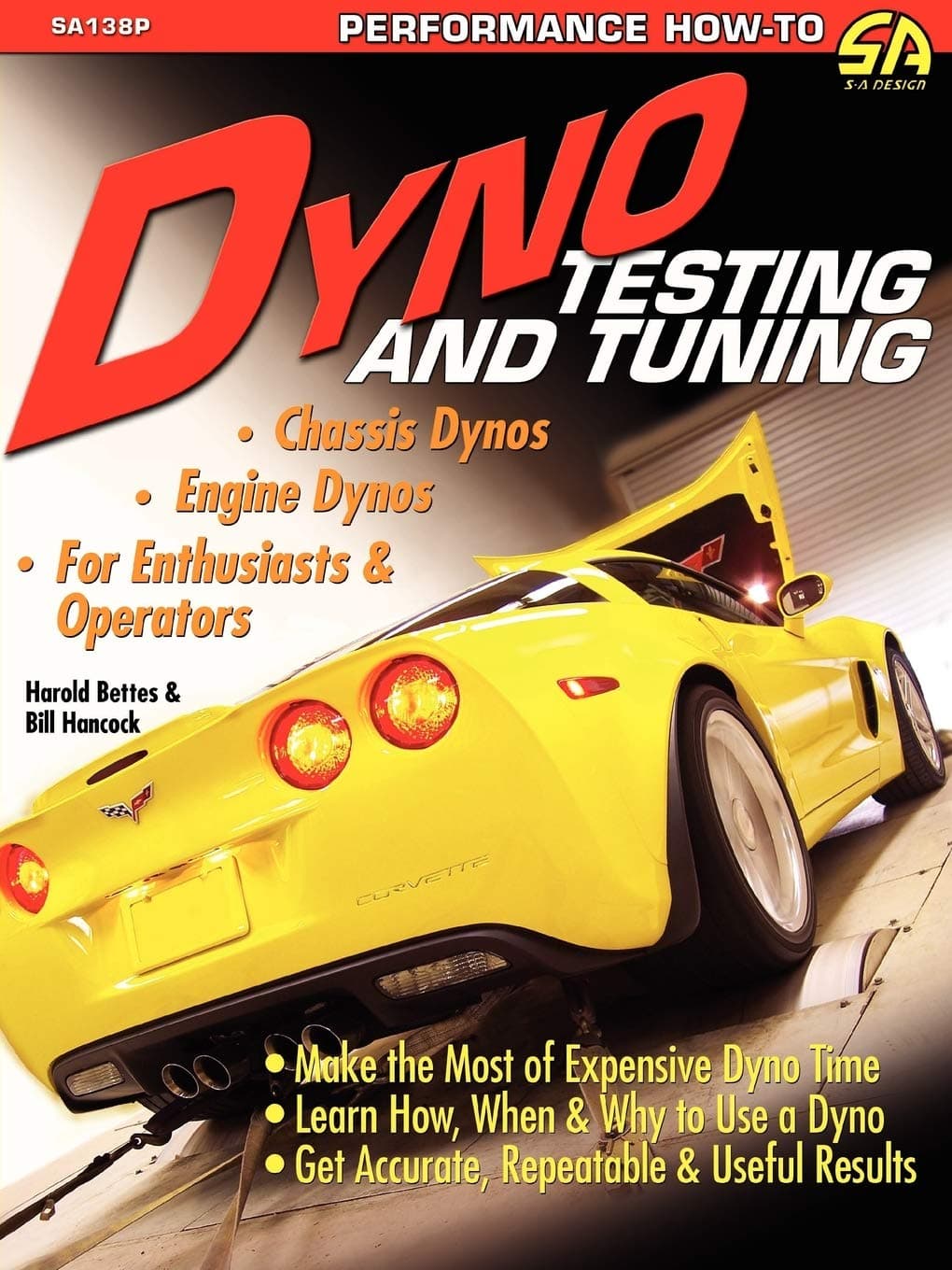
Full description not available
M**E
Good
Fast and good
A**R
Learned a lot from this book
Bought this book for college, cant beat amazon's pricing on books. Saves me a ton of money every semester.
K**G
Five Stars
Been looking for something like this for YEARS! Every performance geek should own a copy.
B**Y
Cartech reprints in black and white have cheap poor print quality
Should have bought this when it was in color. Cartech reprints in black and white have cheap poor print quality. Like a 1970s xerox copier
J**E
Must be read on the can
Great book for reading while on the can!!!
J**N
instructional
Not as informative as I had hoped. I can use much of the information, but I was hoping for more detail
E**E
Five Stars
Thanks
H**N
All you Need to Know about Dyno Testing is in this Book.
There are many books on tuning available to automotive enthusiasts...tuning engines with carburetors, tuning modern engine controls, tuning engines with superchargers, tuning engines with nitrous oxide...you name the engine configuration and there's probably a book about tuning it.Most tuning books cover dynamometer testing to some extent. Some do it in passing. Others may devote a chapter to it. However, none of the tuning books this reviewer has read in recent years discusses dynamometer testing at length and in detail. Not that there's never been books written on the subject--several college and graduate-level automotive engineering texts treat the subject. The problem has been that, until now, they're all mainly school books or references for engineering students and degreed engineers. What Corvetters--all car enthusiasts for that matter--have lacked is a book, written for automotive enthusiasts and DIYs, solely on dynamometer testing."Dyno Testing and Tuning", new from CarTech, a company seemingly intent upon being the leading publisher of instructional books for automotive enthusiasts, meets that need and does so exceedingly well. In 144 pages, it explains in detail virtually all aspects of dyno testing that enthusiasts need to know and then some. It covers the history, principles behind and construction of both engine and chassis dynamometers. It explains the physics which make dynamometers work. It details testing procedures. It explains how to use dyno testing to solve various tuning problems. It tells you what to do when your dyno testing program runs into problems. It includes a chapter on how to read dyno data. It has an excellent glossary and a good list of sources for additional information and dyno testing services. In short, everything a car nut could ever want to know about dynamometer testing is discussed in this book.If this title has a weakness it's that, in some cases, the level of detail, at times, seems a little overwhelming. In places, the Authors cover dyno testing in the manner that is it used by automotive manufacturers, top-drawer race teams and the best engine builders in the country. Sometimes, at the level some automotive enthusiasts work, the comprehensive, scientific-method approach while ideal, might be out of reach in a practical sense. That is, Joe Average, trying to do a little DIY tuning with HP Tuners and two hundred bucks for dyno time, might not be able to run a test program to the extent suggested in the book. Readers need to read all the theory, then apply it to their own test programs to the best extent they can.A big reason for this book's success is the two guys who wrote it. Harold Bettes is a dyno testing consultant with 35+ years of experience. He originated the famed "Advanced Engineering and Technology Conference." His email address is in the Blackberries of the engineers for scores of major race teams. His expertise in performance testing is based on almost half-a-century of involvement in various forms of motorsports from the grassroots to its highest echelons. Betts takes a hands-on approach based on common sense. He's often quoted as saying that dyno testing is one of the most valuable but least-understood tools available to the racer. After getting his ME degree, Bill Hancock went to work for Chrysler on its NASCAR program ending-up as the program coordinator. He lectured at Chrysler's Drag Racing seminars. Later, he formed Arrow Racing Engines, Inc. which, in 30 years, has become one Detroit's top engine builders and currently has six dynos that run constantly. Bill has delivered numerous technical papers and seminars, mostly on dynamometer testing. CarTech couldn't have picked two better Authors to write this book.Bottom line: if you are even a casual automotive DIY or professional tuner, you need to read "Dyno Testing and Tuning".
TrustPilot
2 周前
2 周前
3 周前
2 周前